Get our mobile app
Download on the App StoreGet it on Google Play

Military Readiness

Trump rejects Iran strike plans

US military completes planning for intensive three-day assault on strategic targets across Iran, but President says no action before November 3 midterms, even as three carrier groups deploy to the region

Trump Rejects Five Iran Strike Plans as Pentagon Readies Three-Day Operation

The United States military and the Pentagon have completed planning for a large-scale operation targeting strategic sites across Iran. Despite the massive military buildup and escalating Iranian attacks in the region, President Donald Trump continues to exercise caution, having already rejected five separate proposals for military action.

The President stated publicly that no strike will be carried out before the midterm congressional elections scheduled for November 3. "We are having productive discussions with the Islamic Republic of Iran," Trump wrote on Truth Social. "We will not strike Iran at any point before the midterm elections taking place in the United States on November 3."

According to American officials quoted in the New York Times, the Pentagon has developed a plan for a short, intensive operation lasting approximately three days. In security discussions held at Camp David, led by Vice President JD Vance and involving Defense Secretary Pete Hegseth, officials decided the strikes would focus on Iran's missile and drone systems, energy facilities, and Revolutionary Guard command infrastructure.

The Pentagon has directed US Central Command (CENTCOM) to complete immediate preparations for renewed large-scale combat operations against Iran, Channel 12 News reported. American and Israeli sources indicated that renewed fighting could occur even before the US midterm elections, and possibly before Israel's general elections.

Senior officials in the President's circle are divided on timing. Some support waiting to force Tehran into significant concessions without dragging the region into all-out war. Trump emphasized in his statement that Iran is in poor economic and military condition, and that the embargo will remain fully in force.

Alongside diplomatic contacts, the US military is executing a force deployment unprecedented in scale since the 2003 invasion of Iraq. By the end of October, three American aircraft carriers are expected in the region, the Theodore Roosevelt, George Washington, and George H.W. Bush. These vessels are accompanied by warships, hundreds of fighter jets, and more than 20,000 sailors and Marines.

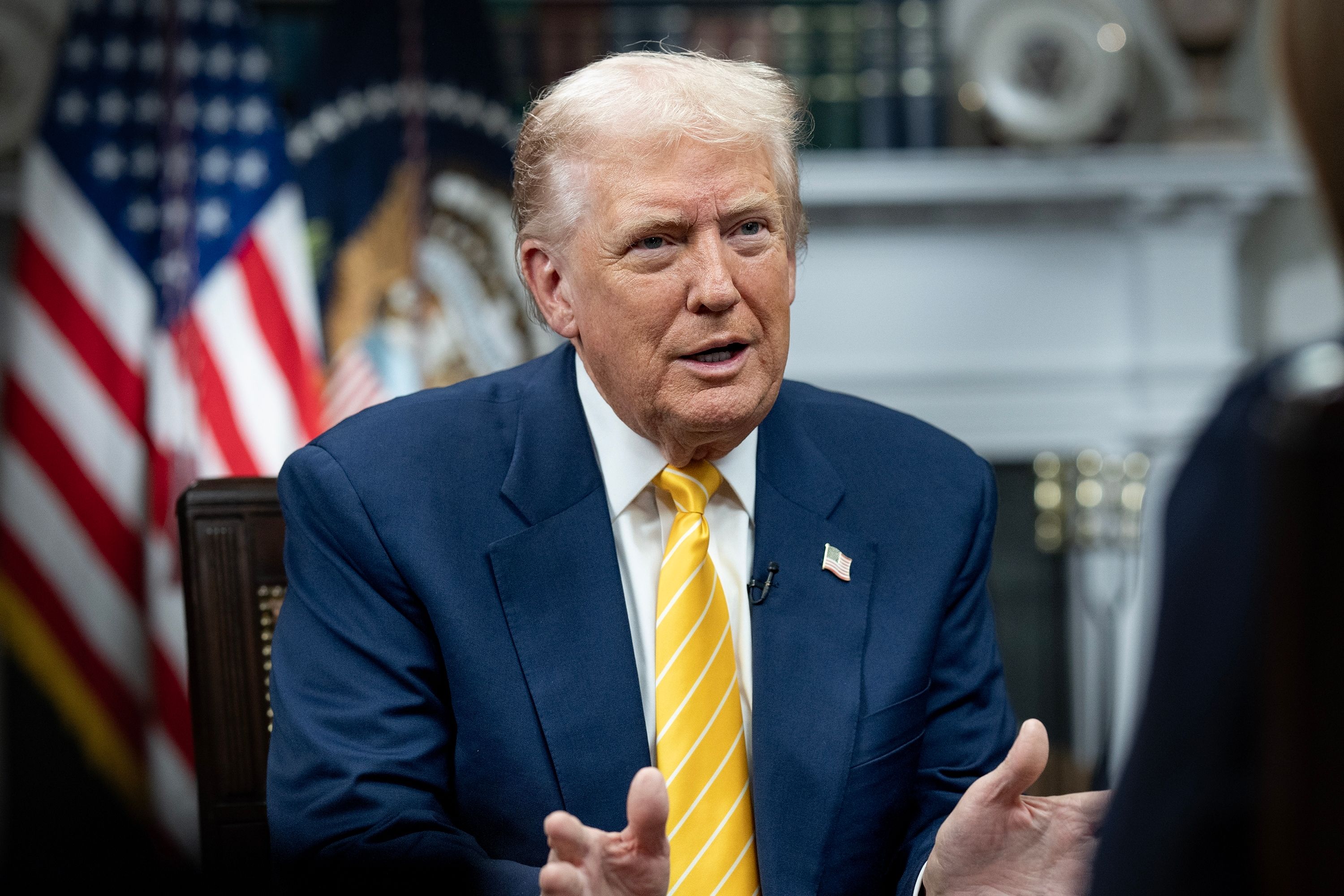
President Donald Trump
President Donald Trump (Photo: Shutterstock)

The massive concentration is intended to serve as a deterrent against Iran and ensure immediate response in case of escalation. However, the carrier Washington is expected to return to Japan later after overlapping with the Roosevelt.

One major factor in American hesitation is the marked improvement in Tehran's military capabilities. Iran has refined its attack tactics and uses satellite intelligence from Chinese companies to locate and precisely strike American bases in the region. As a result, US forces are compelled to use a growing number of interceptor missiles to counter Iranian barrages.

Senior US military officials express concern about the depletion of limited munitions stockpiles. This has forced Central Command (CENTCOM) to divert weapons systems and combat resources from other theaters worldwide, including Europe and Asia, to the Middle East.

The fighting in the Middle East is also spilling into maritime trade routes. According to intelligence reports, Iran has attacked nearly 20 vessels in the Persian Gulf and Strait of Hormuz since September, while continuing to operate a "shadow fleet" to smuggle oil in violation of sanctions. The US Treasury Department imposed sanctions on 17 additional vessels.

On the diplomatic front, the central dispute remains over the nuclear program: the United States demands to discuss it first, while Iran insists on postponing it to the end of negotiations while refusing to relinquish its uranium enrichment capabilities.

Strike decisions are also deeply influenced by domestic politics in the United States and Israel. Administration sources estimate that Trump is waiting not only for the US midterm elections but also for the conclusion of Israel's election campaign, scheduled for October 27. IDF Chief of Staff Eyal Zamir even warned American officials that a strike on Iran in the immediate timeframe could lead to a missile attack on Israel and necessarily force postponement of the elections there.

Ready for more?

Join our newsletter to receive updates on new articles and exclusive content.

We respect your privacy and will never share your information.

Enjoyed this article?

Yes (100%)
No (0%)
Follow Us:

Unmissable content


Loading comments...

Also of Interest