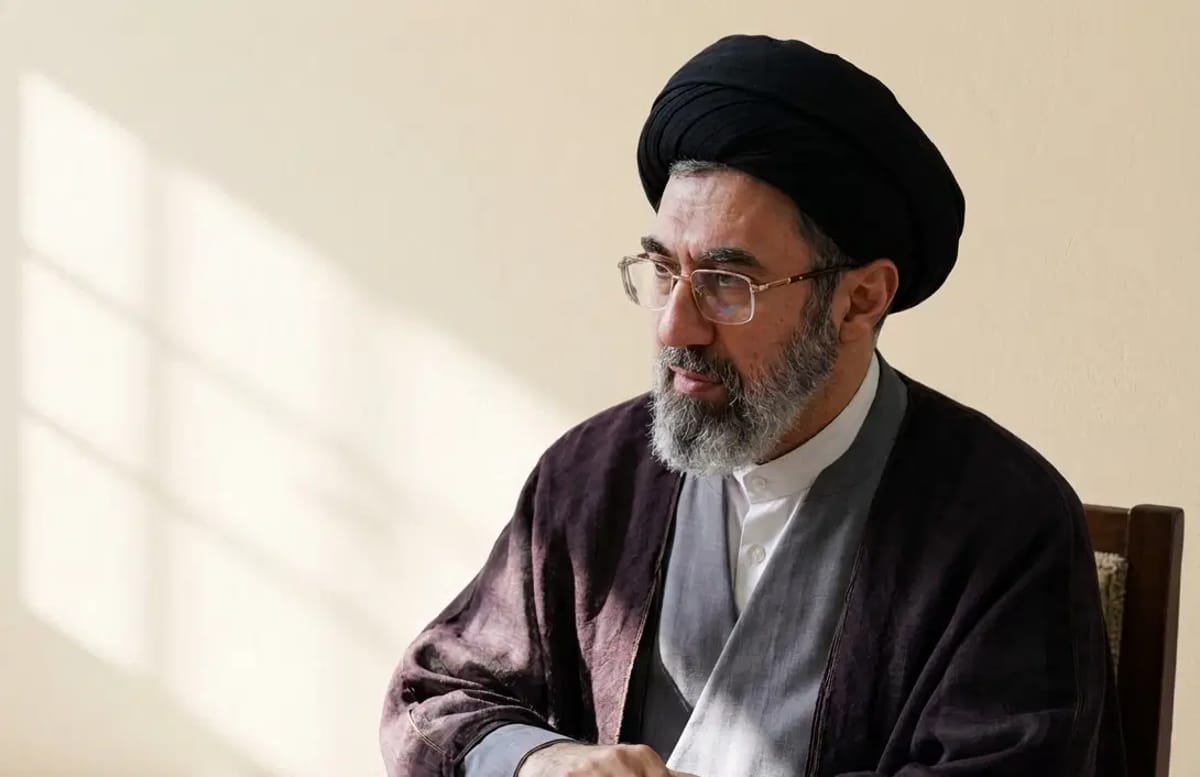
A profound leadership crisis is unfolding inside the Islamic Republic as international security agencies identify severe signs of weakness surrounding the Iranian Supreme Leader, Mojtaba Khamenei. National security officials have raised significant doubts regarding his physical and mental health. These concerns have intensified because the top leader has completely vanished from public view, while failing to address major political upheavals.
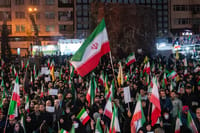
The supreme leader's prolonged absence comes amid extraordinary public anger and physical violence targeting top regime figures. During the recent funeral of the former leader, Ali Khamenei, angry crowds physically assaulted high-ranking political elites. Demonstrators threw heavy stones and hurled insults at Ali Larijani, while also targeting Iranian President Masoud Pezeshkian with aggressive shouting. Despite these physical attacks and deep rifts within the ruling class, Mojtaba Khamenei has failed to take a stance or protect his allies.
Security authorities note that the supreme leader's rare public statements are increasingly delayed and completely disconnected from active geopolitical developments. A senior defense source pointed out that the regime's behavior indicates a severe structural breakdown at the very top. "It is clear that he is not in good health, but the severity of his condition and mental state remains unclear," the security official stated. The source further explained the two primary possibilities, noting "either he is weak and afraid to take a stand, or he is not actually leading and senior Revolutionary Guard officials are controlling him".
The political instability has been worsened by a sudden wave of localized civilian protests across the country. Angry taxi drivers and medical professionals have taken to the streets in multiple cities to protest severe economic decline and rolling electricity blackouts. While defense analysts currently characterize these protests as isolated and contained, they demonstrate growing public frustration with the regime's inability to govern. The combination of domestic unrest, economic paralysis, and an invisible leader has created an unprecedented vacuum of power in Tehran.