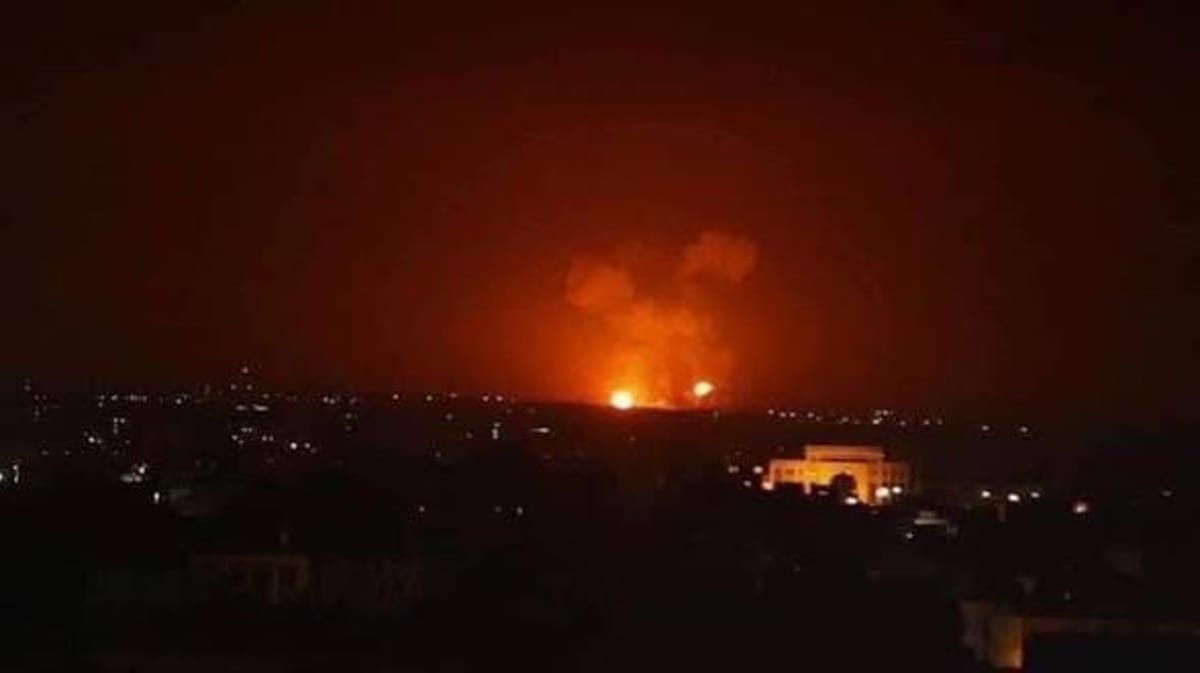
Israeli forces targeted positions near the Syrian town of Beit Jinn in the Damascus countryside with two artillery shells on Thursday evening, according to reports from Syrian media outlets. The target of the reported artillery strike remains unconfirmed, and Israeli military officials have not issued a formal statement regarding the incident.
The activity in the Damascus countryside follows a major Israeli airstrike conducted last week against the Abu al Duhur military base in eastern Idlib. Israeli authorities stated that the Idlib operation was executed after intelligence indicated Syria was moving to permit Turkish military forces to establish a presence at the base, violating prior operational understandings.
Following the Idlib operation, the Israeli Prime Minister's Office issued a statement outlining the national security rationale for military action. "Israel repeatedly warned Syria that such a deployment would pose a threat to Israel's security. Syria chose to ignore these warnings. Israel will not tolerate threats to its security, and would welcome a return to the status quo," the Prime Minister's Office stated.
Syrian Foreign Minister Asaad al Shaibani subsequently rejected Israel's security assessment regarding Turkish force deployments. Shaibani stated that Damascus had explicitly informed regional mediators that Turkey would not be granted authorization to construct a military base or maintain a permanent troop deployment at the Abu al Duhur site.
To manage escalating military tensions across the shared frontier, senior Israeli and Syrian officials convened in Jordan earlier this week for diplomatic discussions mediated by the United States. Syrian diplomatic sources confirmed that Foreign Minister Shaibani led the Syrian delegation, which included the heads of general intelligence and military intelligence.
Military analysts note that artillery activity near Beit Jinn underscores ongoing security friction along the border despite active diplomatic channels. Israeli defense officials, operating under Chief of Staff Eyal Zamir, continue to monitor troop movements and potential foreign military deployments throughout southern and eastern Syria.