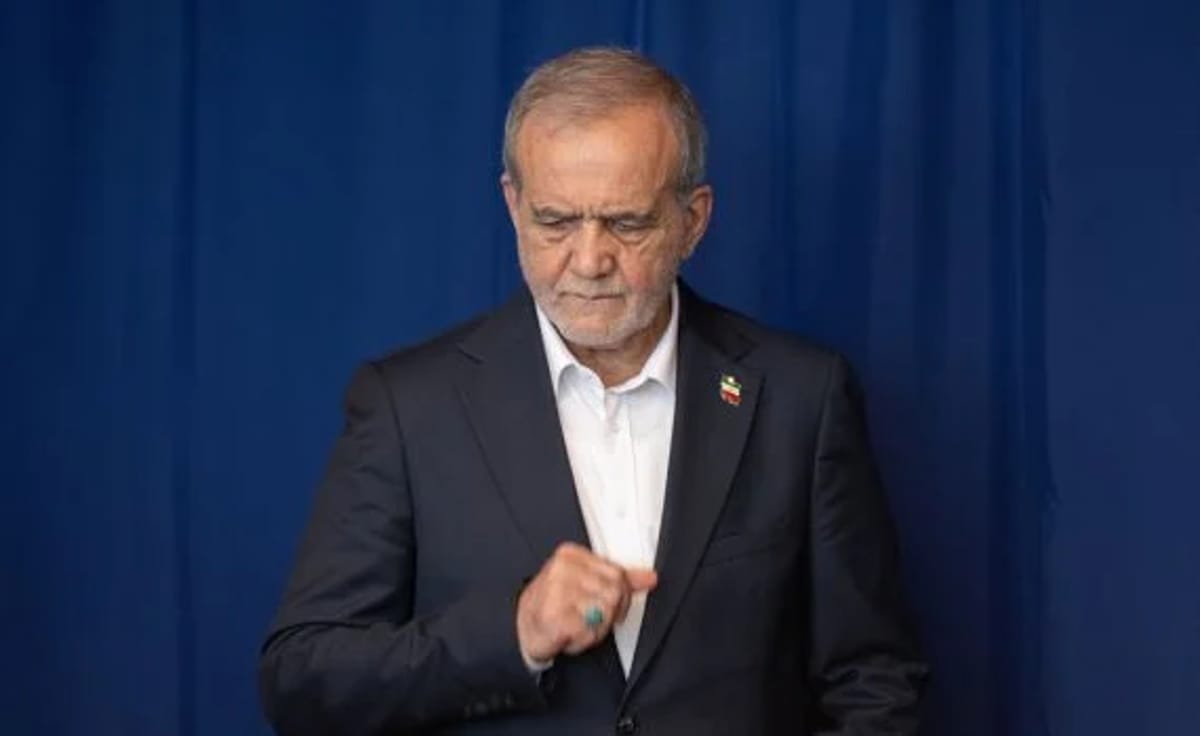
The Iranian regime has officially entered a state of emergency, implementing radical structural changes to its government as the threat of a direct military confrontation with the United States and Israel reaches a boiling point. President Masoud Pezeshkian has ordered an urgent decentralization of power, granting provincial governors unprecedented authority to manage food supplies and essential goods independently of Tehran. This move is designed to prevent a total national collapse should the central government or main transportation hubs be paralyzed by precision airstrikes. Simultaneously, the Revolutionary Guard has issued a chilling ultimatum regarding the Strait of Hormuz, claiming "total control" over the vital maritime artery and warning that any neighboring country allowing its territory to be used by American forces will be treated as a hostile combatant.
Preparing for the Siege
The shift in Iran’s internal governance, first reported by the Financial Times, reveals a leadership deeply concerned about the stability of its supply chains during a high-intensity war. By empowering local governors to bypass the central bureaucracy and communicate directly with the judiciary and top officials, Pezeshkian hopes to mitigate the risk of internal unrest fueled by shortages. The regime fears that a strike on Tehran’s infrastructure could lead to a localized famine or a total breakdown of order, which would embolden protesters who are already challenging the government’s legitimacy. This administrative pivot is being paired with a "maximum alert" status for Iran’s air defense networks, signaling that the regime views a strike on its soil as a matter of "when" rather than "if."
On the maritime front, the Deputy Commander of the Revolutionary Guard Navy has reinforced the regime's defiant posture. "We have full control in the air, above and below the sea in the Strait of Hormuz," the commander stated. While he claimed that Iran is not seeking war, he emphasized that the military is "fully prepared" and that "if a war breaks out, there will be no retreat even by one millimeter." The commander sent a clear message to the international community, noting that while they do not wish to harm the global economy, they will not allow the United States and its allies to "benefit from a war they started." He also warned that new, secret military capabilities would be unveiled at the "appropriate time."
The United Front of the Resistance
The escalation is not limited to Iranian territory. Recent reports from Lebanese and Iraqi sources indicate that leaders of the "Axis of Resistance" have held intensive, direct meetings under the supervision of the Quds Force to finalize a unified war plan. These meetings moved beyond simple assessments to a detailed division of labor between the Houthis in Yemen, various militias in Iraq, and Hezbollah in Lebanon. The objective is to ensure that any American attack on Iran is met with a "collective response," transforming a targeted strike into a regional, multi-front war that would stretch Western and Israeli defenses to their limits.
This shift from warnings to active military declarations is already visible. Public statements from these groups now reflect a coordinated policy, asserting that the fate of the entire axis is tied to the survival of the Iranian regime. The understandings reached in these secret summits dictate that the level of participation for each front will be tailored to its specific capabilities, but the commitment to a joint war remains absolute. As the Shiite axis prepares for what they call a "regional test," the Iranian message to its neighbors remains stark: any assistance to the American "armada" in the form of airspace or maritime access will be met with immediate and direct retaliation, turning the entire Middle East into a unified battlefield.