The Iranian military establishment is rapidly finalizing a high-volume, saturation-style war footing aimed at firing hundreds of advanced ballistic missiles each day at critical energy infrastructure across the Persian Gulf. Intelligence data reveals that Tehran has abandoned limited, tit-for-tat exchanges in favor of an aggressive doctrine designed to completely overwhelm regional air defenses and sever global energy export capacities within forty-eight hours.
The calculated strategy seeks to transform multi-billion-dollar ports and processing refineries into volatile geopolitical bargaining chips before western coalition forces can fully react.
A parallel and equally devastating front is currently opening across the Red Sea, where Yemen’s Houthi forces are fully positioned to enforce a total blockade on the strategic Bab el-Mandeb Strait. The narrow eighteen-mile passage funnels roughly twelve percent of all global seaborne trade directly toward the Suez Canal, serving as a vital artery for western economies.
Houthi officials have openly declared that they are conducting this maritime battle in progressive stages, confirming that the total closure of the strait remains their primary operational objective to counter western pressure.
The implementation of this dual-blockade strategy would create a catastrophic double chokepoint scenario, completely isolating the Persian Gulf from both its eastern and western commercial export routes. Saudi Arabia has already been forced to reroute approximately five million barrels of crude oil per day through the Red Sea port of Yanbu, but every single one of those barrels now sits well within the active strike range of Houthi missile batteries.
The ongoing maritime instability has already driven Brent crude prices past one hundred and ten dollars a barrel, with financial analysts warning that an active move against the strait will instantly push prices past one hundred and twenty dollars.
The economic fallout is radiating across the international shipping industry, forcing mega-corporations like Maersk and Hapag-Lloyd to entirely abandon the region and reroute their massive fleets around the southern Cape of Good Hope. This emergency detour adds up to fourteen days of travel time and attaches an astronomical one point eight million dollars in extra fuel costs per round trip.
Concurrently, war-risk insurance premiums for vessels operating anywhere near the Middle East have skyrocketed by more than one thousand percent since the outbreak of the war.
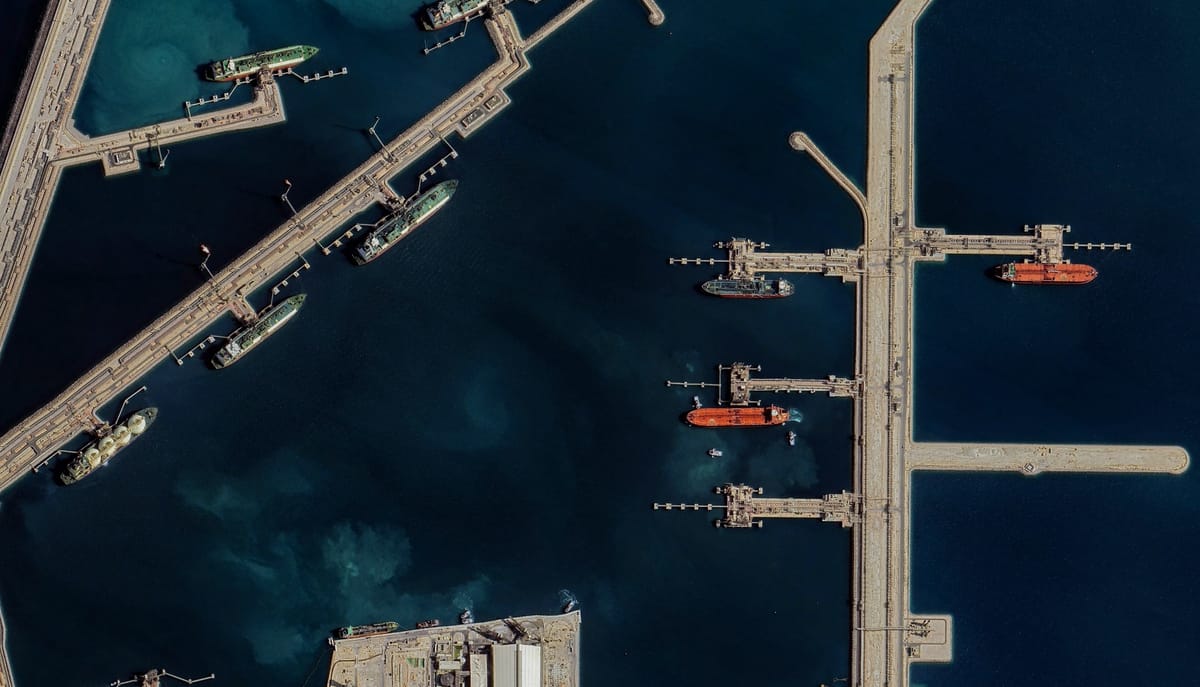
Regional energy production has already sustained immense structural damage, forcing entities like QatarEnergy to officially declare force majeure on long-term supply contracts after missile strikes caused massive fires at the Ras Laffan liquefied natural gas facility. Identical high-volume attacks have heavily damaged the largest natural gas processing hubs in the United Arab Emirates, along with major refineries in Kuwait, Bahrain, and northern Iraq.
While western forces have destroyed numerous mobile launchers, intelligence assessments confirm that the regime has successfully retained roughly seventy percent of its pre-war missile stockpiles hidden deep within fortified underground bunkers.