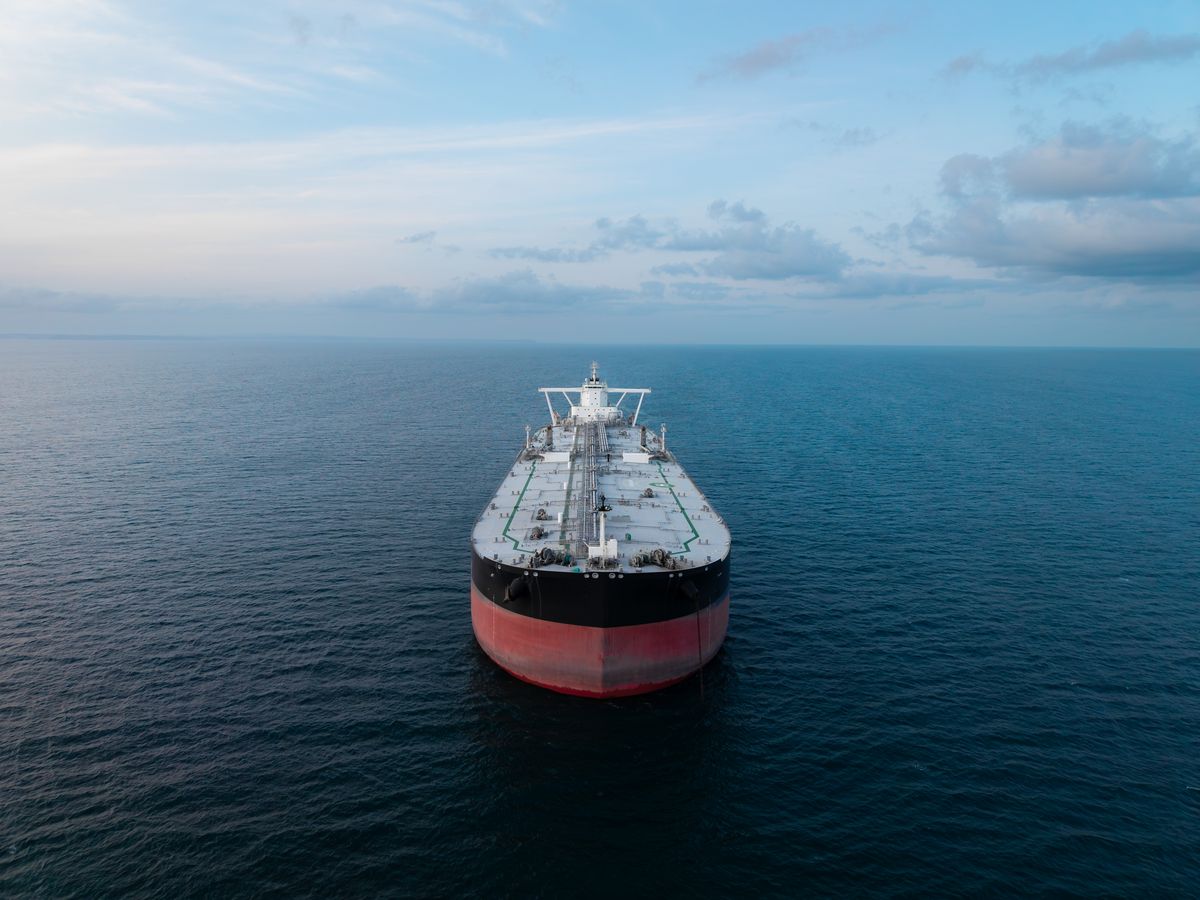
A coalition of more than 40 nations led by France and the United Kingdom is moving toward a formal escort mission in the Strait of Hormuz, with Bloomberg reporting that support is building among members, though significant divisions remain over how far the mission should go and whether it could drag participating nations into the broader US-Iran war.
The coalition met in Paris on May 11 to finalize early plans. According to Bloomberg and Euronews, the mission's planned capabilities include military escorts for commercial ships, demining operations to clear Iranian-laid naval mines, air policing, intelligence sharing, and radar coverage. France has already moved its Charles de Gaulle aircraft carrier to the Red Sea, where it is to be joined by vessels from partner nations, a deliberate signal that the coalition stands ready to act.
"The coalition wants to ensure this mission is not associated with the combatants, in this case, the US and Israel."
Person with knowledge of the preparations, via Euronews
Trump pushed NATO - and NATO moved
The coalition's accelerated planning was driven in part by direct pressure from President Trump. During NATO Secretary General Mark Rutte's visit to the White House, Trump made clear his frustration with allied inaction and demanded a plan "within days." A NATO source told Euronews there was "real frustration from Trump" and that Rutte left with specific conclusions from the conversation. Trump had previously demanded that NATO members and China help the US reopen the strait.
The mission's legal framework remains unresolved. A NATO mandate is considered unlikely because the coalition explicitly excludes the US and Israel — both parties to the conflict — in order to preserve the mission's defensive character and political legitimacy. A UN Security Council resolution has also been discussed, but would be nearly impossible to achieve given that China and Russia already vetoed a Bahraini-drafted resolution on the strait in April. Expanding the EU's existing Operation Aspides mandate is another option under consideration.
What the mission would look like
The coalition insists the mission would only become operational once a stable ceasefire is in place, it is not designed to force entry into a war zone. French President Emmanuel Macron has described it as a "strictly defensive mission" that would be "separate from the warring parties." According to Bloomberg, a French official confirmed the coalition is ready to begin escort operations the moment Iran agrees to a US proposal to end the war.
The participating countries include the bulk of NATO's European members plus South Korea, Australia, and Japan. However, naval capacity within the coalition is deeply uneven. According to geopolitical analysts cited by Fox News, only the UK and France possess the naval assets genuinely capable of operating in a high-risk environment. "Only England and France really have any type of naval power that could be helpful," one analyst said, noting other European navies are too small for sustained operations of this complexity.
The risks
Even with broad political support, experts warn the mission carries serious dangers. "There's always the possibility we'll be drawn into a broader conflict," Ed Arnold, senior research fellow of European security at the Royal United Services Institute (RUSI), told Euronews. Coordination under a unified rules of engagement framework is considered as important as the number of ships committed. Iranian naval mines laid during the conflict remain a persistent hazard. And Iran has warned that any escort operation would constitute a ceasefire violation.
Background: The Strait of Hormuz has been effectively closed to most international shipping since Iran shut it on March 2, 2026, in response to the US-Israel war. The IRGC has boarded and attacked merchant ships, laid sea mines, and threatened to set fire to any non-approved vessel. The US launched its own naval blockade of Iranian ports on April 13, creating a "dual blockade." The US briefly launched Project Freedom, a mission to escort stranded ships out of the Gulf, on May 4, before pausing it on May 6 citing diplomatic progress. At least 17 merchant ships have been damaged, 7 abandoned, and 12 seafarers killed or missing since the crisis began.