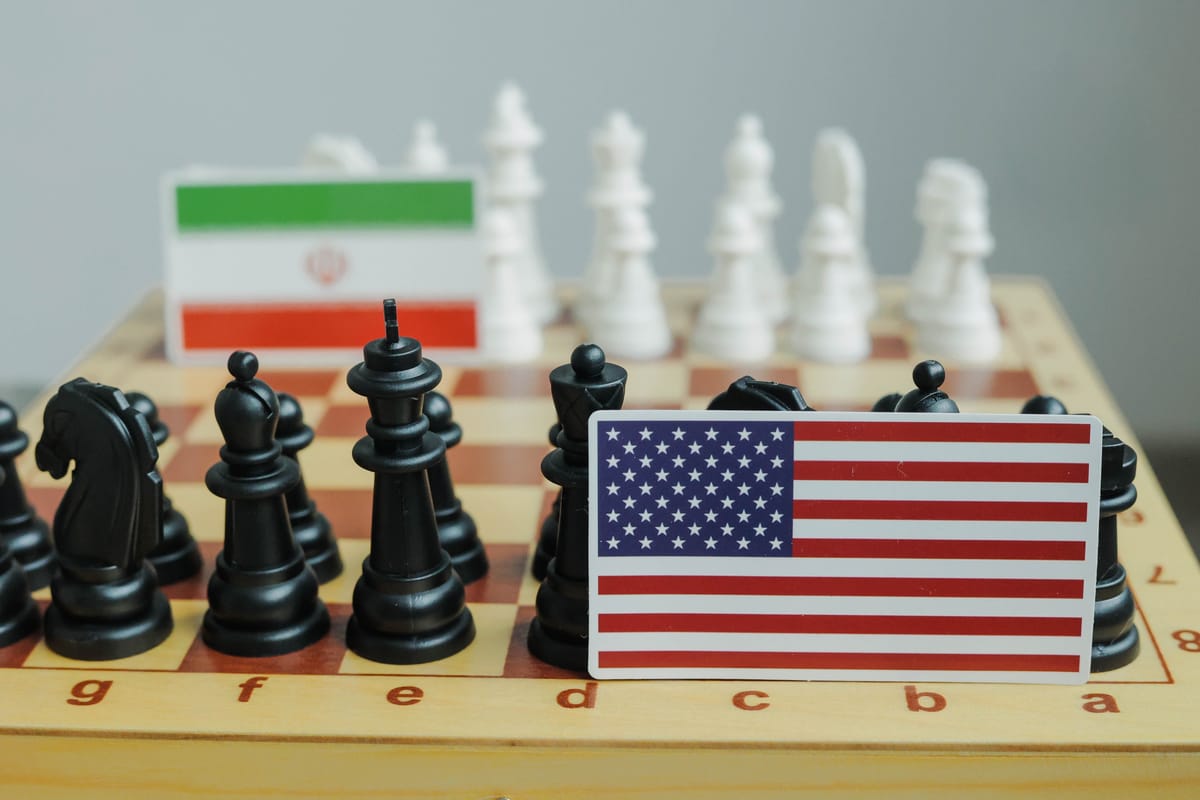
When President Donald Trump announced Monday that he was postponing planned strikes on Iran by "two to three days" at the request of Gulf leaders, the statement was framed as a diplomatic gesture. But according to Ynet's analysis by Itamar Eichner, multiple layered calculations, and perhaps genuine pressure,
Why Trump wants the delay
First and foremost, Trump wants a deal. He prefers a diplomatic resolution over renewed fighting, but not at any price. Every delay in striking buys time for negotiations and even if those negotiations fail, the repeated postponements strengthen his political legitimacy at home and abroad. He now appears to the world as the party trying to avoid war, while Iran is seen as pushing toward renewed hostilities.
Ynet's analysis notes that some argue Trump is attempting to deceive Iran with the delay announcement. But senior figures dismiss this as providing no real tactical advantage, Tehran has no ability to stop an effective American strike on any of its sites regardless of timing. Iran can respond wildly and cause significant regional and global economic damage, but it cannot stop incoming strikes. A few extra days change nothing militarily.
"Tehran is not really helping Trump climb down from the tree on this, they are almost forcing him to attack."
Ynet analysis, May 19, 2026
The latest postponement signals, according to Ynet, that Trump is in a genuine dilemma and possibly under real pressure. Given the volume of threats he posted in recent days, the announcement that Arab leaders persuaded him to hold off reveals plainly that he is in no rush to strike and Tehran understands this immediately. There is also a separate concern: Trump may ultimately accept any minimal Iranian concession and present it as a victory to declare an end to the war.
What Israel believes
In Israel, the prevailing assessment among many senior figures remains that a strike is more likely than a successful deal. The Iranians are entrenched in their positions and showing no flexibility, at least publicly. A few more days will not change the fundamental impasse: Iran will not surrender its nuclear program, and Trump cannot accept anything less than that.
One Israeli source told Ynet: "With Trump, nothing is certain. Even if Iran rejects his proposal again, it's not at all clear he will strike." A second Israeli source added: "With Trump there is no logic, mainly because he's Trump. In his understanding, the delay actually projects strength and willingness, and perhaps another attempt to persuade the Iranians."
Israel is preparing for all scenarios and understands that ultimately everything rests in Trump's hands. While Israel is readying for a possible US resumption of fighting, Foreign Minister Gideon Sa'ar's departure Tuesday evening to lead a diplomatic delegation to the Czech Republic may signal that Jerusalem does not expect an American strike to happen immediately.
Iran's military preparedness - a hardened adversary
US military officials quoted earlier Tuesday in the New York Times acknowledged that the Tehran regime has demonstrated significant resilience and a meaningful capacity to inflict damage on the region and the global economy. In the six weeks since the ceasefire took hold, Iran has used the pause to re-excavate dozens of bombed ballistic missile sites, reposition mobile launchers, and adapt its tactics for a possible renewal of strikes.
Many of Iran's ballistic missiles are positioned inside deep underground tunnels and facilities carved into granite mountains, making them extremely difficult for US aircraft to destroy outright. The US largely bombed the entrances to collapse and entomb the sites rather than destroying the facilities themselves. Iran has since re-excavated a significant number of these sites.
Iranian commanders, possibly with Russian assistance, have also studied US fighter jet and bomber flight patterns. The downing of an F-15E last month and a strike that hit an F-35 revealed that American flight tactics had become dangerously predictable, allowing Iran to defend against them more effectively.
Most critically, the US military source said, five weeks of intensive bombing eliminated Iranian leaders and commanders, but ultimately left behind a tougher, more resilient adversary, with repositioned forces that are convinced they can successfully resist the United States by blocking Hormuz, striking Gulf energy infrastructure, or threatening US aircraft.