There is a particular kind of courage required to make a show about the Israeli-Palestinian conflict right now, in the shadow of October 7, amid an ongoing war with Iran, with the region redrawn and the wounds still raw. Fauda has always had that courage. Season 5, which premiered on Yes TV yesterday, demonstrates from its very first episode that creators Lior Raz and Avi Issacharoff have not just kept pace with history, they have let it transform the show entirely.
The original script for this season was thrown out after October 7. The team spent a year rewriting from scratch. You feel every day of that process in this opener. This is not Fauda retrofitted for a new reality. This is Fauda rebuilt from the ground up by people who lived through what they are depicting.
The mission: revenge before duty
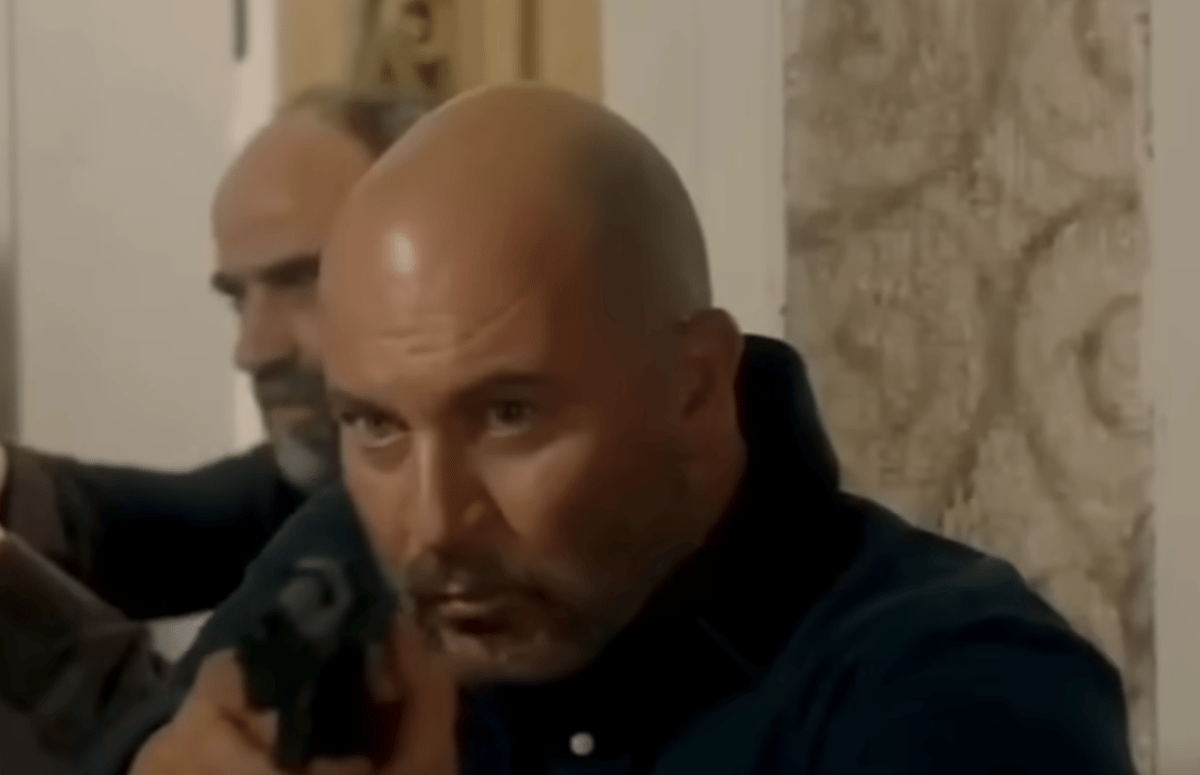
Ynet's review captures the episode's setup precisely. Eli, played by the sublime Yaakov Zada-Daniel, travels to Marseille with Salem, a Bedouin tracker played by Bian Anteer. Their private mission is to capture the Hamas operative who killed Salem's son and Eli's family, to avenge their dead. Kavillio and Steve join them as the journey grows more complex, evolving into what Ynet describes as "a struggle by former unit members against the very system they were once part of."
"They are still well-oiled, quick on the draw and fluent in Arabic, but they are no longer the fearless brave fighters they once were. This time, they are men with nothing to lose."
That line is the key to what makes this season opener so striking. Fauda has always been about the psychological cost of undercover work, the way it hollows out the men who do it, the marriages it destroys, the humanity it erodes. But previous seasons still operated within the framework of institutional purpose. The unit had a mission. The state had a need. The sacrifice, however brutal, was in service of something larger.
Season 5 tears that framework away. As Ynet puts it, these men are "no longer protecting Israeli civilians, at least not at first, but each other's broken hearts. They are there for the platoon, not the country." It is a devastating shift and a truthful one. Post-October 7 Israel is full of people for whom the state's failures have made blind institutional loyalty impossible. Fauda has found the dramatic language for that rupture.
Marseille and a new world
Setting the opening in Marseille is a bold choice that pays off immediately. Previous seasons pushed outward, to Brussels, Lebanon, Gaza, but always with the Israeli state apparatus as the gravitational center. Here, operating without official sanction in a French port city, the unit is unmoored in every sense. The familiar tradecraft, the Arabic, the drills, the muscle memory, remains. But the institutional backing, the chain of command, the moral permission structure. all gone.
The introduction of Salem, a Bedouin tracker played by Bian Anteer, is one of the episode's most significant moves. The show has always worked hardest when it complicates the binary, and a Bedouin father hunting the killer of his son, operating in the grey space between Israeli and Palestinian worlds, is exactly the kind of character Fauda does better than anyone else.
This is Fauda at its most mature, most mournful, and most urgent. The show has always understood that the conflict it depicts produces not heroes but survivors, damaged, complicated, and capable of both extraordinary courage and serious moral failure. Season 5 adds one more layer: what happens when those survivors stop trusting the system that made them, and turn inward toward the only loyalty that still feels real. Episode one answers that question with characteristic intensity. The rest of the season cannot come fast enough.