
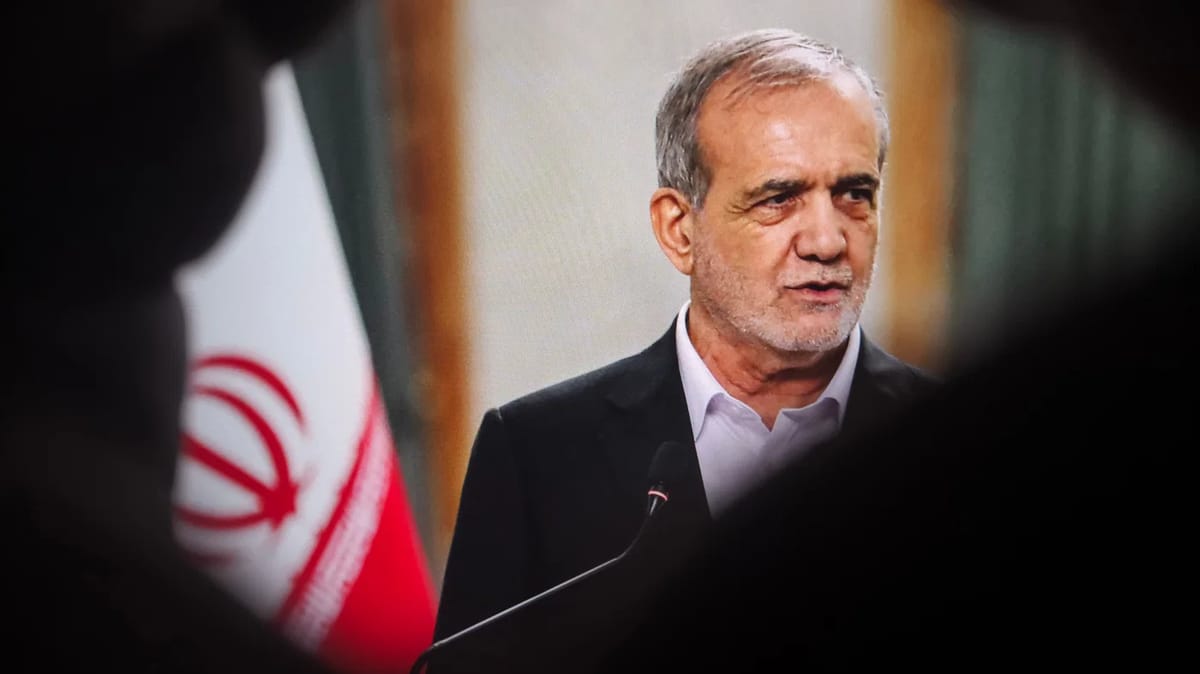
Iranian President Masoud Pezeshkian said Monday that Tehran would not “surrender” in talks with the United States, after US President Donald Trump said he had paused a planned attack on Iran because diplomatic progress was possible.
“Dialogue does not mean surrender,” Pezeshkian wrote on X. “The Islamic Republic of Iran enters into dialogue with dignity, authority, and the preservation of the nation’s rights, and under no circumstances will it retreat from the legal rights of the people and the country.”
His comments came after Trump said he had instructed the US military not to carry out a scheduled attack on Iran on Tuesday, following what he described as a new peace proposal from Tehran.
Trump said there was now a “very good chance” of reaching a deal that would limit Iran’s nuclear program, but warned that the US military remained prepared to launch a large-scale assault if no acceptable agreement is reached.
“We will NOT be doing the scheduled attack of Iran tomorrow,” Trump wrote, adding that he had ordered forces to be ready to proceed “on a moment’s notice” if talks fail.
No planned attack had previously been publicly announced, and Reuters said it could not independently determine whether preparations had been made for new strikes.
Trump said the leaders of Qatar, Saudi Arabia and the United Arab Emirates had asked him to delay the attack, telling him that a deal could be reached that would be acceptable to the US and to countries in the region.
Speaking to reporters later, Trump said Washington would be satisfied with an agreement that prevents Iran from obtaining a nuclear weapon. He did not provide details of the proposal under discussion.
The exchange comes as the US faces pressure to secure an agreement that would reopen the Strait of Hormuz, which Iran has effectively closed during the war. The closure has disrupted global energy flows and contributed to higher oil and gas prices.
Trump has repeatedly said he believes a deal may be close, while also threatening renewed strikes if Iran refuses to meet US demands. Tehran has insisted that any agreement must preserve what it calls its legal nuclear rights and national sovereignty.