Iran Reveals Its Newest Terms for a Deal (and America is Not Impressed)
Tehran's deputy foreign minister briefed parliament Tuesday on Iran's updated proposal, delivered to Pakistan as mediator, laying out sweeping demands that a senior US official called "insufficient" and likely to lead to war resumption.
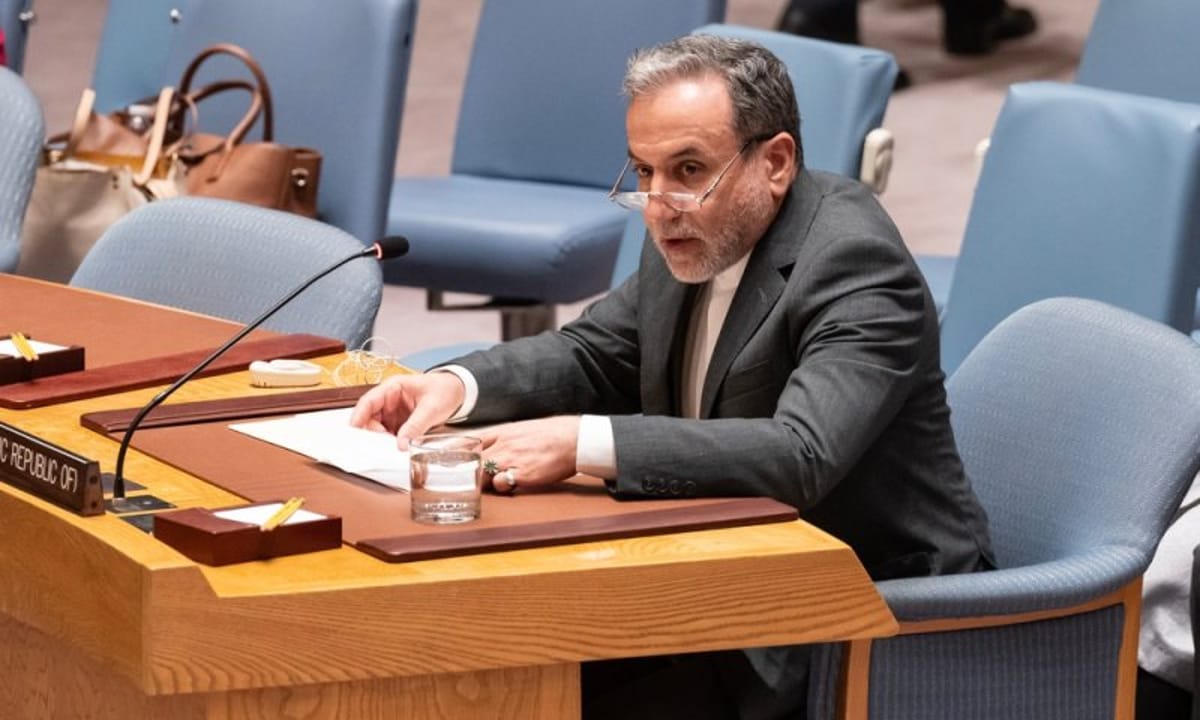
Iran's deputy foreign minister, Kamal Gharibabadi, briefed the national security committee of the Iranian parliament today (Tuesday), one day after Tehran submitted its updated proposals to Pakistan, the current mediating party, for a deal to end the war with the United States. The disclosure reveals a wide gap between Iranian demands and what Washington has signaled it is prepared to accept.
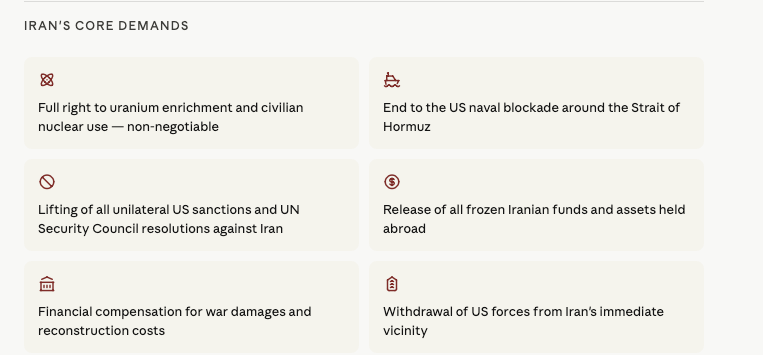
Iran's core demands
Full right to uranium enrichment and civilian nuclear use, non-negotiable
Lifting of all unilateral US sanctions and UN Security Council resolutions against Iran
Release of all frozen Iranian funds and assets held abroad
Financial compensation for war damages and reconstruction costs
Withdrawal of US forces from Iran's immediate vicinity
Iran also conditioned any agreement on a cessation of hostilities across all fronts, explicitly including Lebanon, where Israeli forces continue to operate against Hezbollah.
Iran's demands to end the US-Israel-Iran war, May 2026 (Photo: AI generated)
Washington's reaction: "Insufficient"
A senior US official told Axios Monday that Iran's updated proposal offers "only token improvements" on the previous version and includes "no detailed commitments" on suspending uranium enrichment or handing over its stockpile of highly enriched uranium. "If that's not going to happen, we will have a conversation through bombs," the official warned.
The central sticking point remains uranium enrichment. The US position has consistently demanded zero enrichment on Iranian soil, while Tehran insists enrichment is an absolute red line it will not cross. Al Jazeera's correspondent in Tehran reported that the nuclear enrichment programme is "non-negotiable" from Iran's perspective. Earlier framework discussions reported by Axios had floated a compromise moratorium of 12 to 15 years — between Iran's proposed five years and the US-demanded 20 — but Iran's latest submission appears to reject that framing entirely.
"We are really not making a lot of progress. We are at a very serious place today."
Senior US official, via Axios, May 18, 2026
The broader context
The war between the US-Israeli coalition and Iran began on February 28, 2026. Negotiations have proceeded in fits and starts, with Trump repeatedly setting and postponing military deadlines. On Monday, Trump announced he had cancelled a planned strike on Iran scheduled for Tuesday, citing requests from the leaders of Saudi Arabia, Qatar and the UAE to allow more time for diplomacy. He warned, however, that the window is short, and that the military option remains fully active.
Iran submitted its updated proposal via Pakistan on Sunday night. The US received it and pronounced it inadequate within hours. Trump is expected to convene his national security team in the Situation Room to discuss military options if Tehran does not shift its position, which at this point, looks more and more unlikely.
Indeed, the only hope is that Iran is requesting less behind closed doors, and saving face in public.