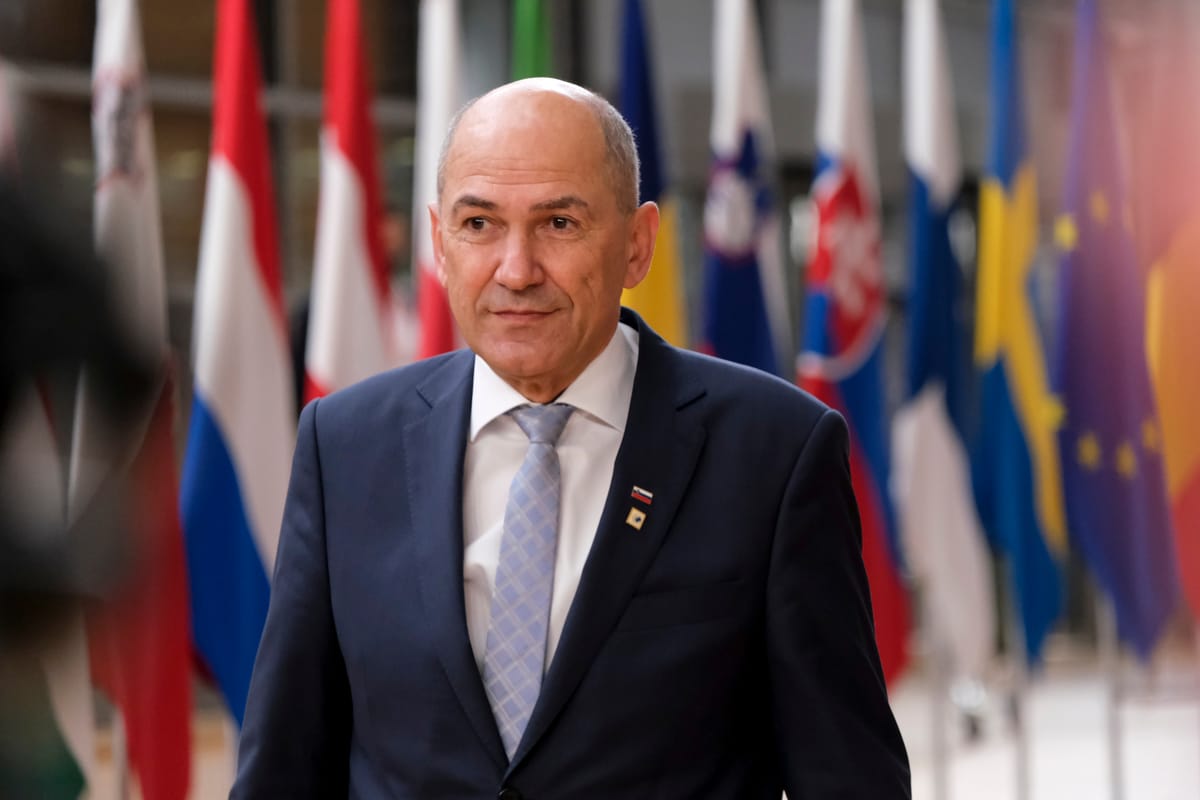
Former Slovenian prime minister Janez Janša said Monday night that he had secured a coalition agreement that could return him to power for a fourth term, a move that could significantly alter Slovenia’s hardline stance toward Israel.
Janša, leader of the right-wing Slovenian Democratic Party, said “the conditions are ripe” for presenting his candidacy for prime minister and that the process could be completed as early as Tuesday. If approved by parliament, he would replace outgoing Prime Minister Robert Golob, whose liberal Freedom Movement won the March 22 election but failed to form a governing majority.
Golob’s party won 29 seats in the 90-member parliament, narrowly ahead of Janša’s SDS, which won 28. Golob initially declared victory but later acknowledged that he had failed to secure enough coalition partners and said his party would move into the opposition.
Under the agreement announced by Janša, he would form a government with the center-right New Slovenia party and the Democrats party led by Anže Logar. Together, the three parties hold 43 seats. Janša is expected to receive outside support from the five lawmakers of the anti-establishment Resnica party, giving him a narrow 48-seat majority.
A Janša government could mark a major shift in Slovenia’s policy toward Israel. Under Golob, Slovenia became one of the European Union’s most outspoken critics of Israel. It recognized a Palestinian state in June 2024, promoted pressure against Israel in international forums and adopted several measures targeting Israel and Israeli officials.
In July 2025, Golob’s government announced a ban on the import, export and transit of weapons and military equipment to and from Israel. It later banned imports of products from Israeli settlements and declared ministers Itamar Ben Gvir and Bezalel Smotrich persona non grata. The government also barred Prime Minister Benjamin Netanyahu from entering Slovenia, citing its commitment to international court decisions.
Slovenia considered joining South Africa’s genocide case against Israel at the International Court of Justice, but ultimately did not do so.
Janša has taken a sharply different approach. He is considered strongly pro-Israel, supports US President Donald Trump, and has been aligned with Europe’s right-wing camp, which has criticized Brussels’ stance toward Israel. He opposed Golob’s recognition of a Palestinian state and has maintained warm ties with Israeli leaders.
His possible return has also raised concern among opponents in Slovenia and the EU. During his previous term from 2020 to 2022, Janša was accused of undermining media freedom and weakening independent institutions, charges he denied.
The emerging coalition may also prove fragile. Resnica has said it will not formally join the government and will remain a “combative opposition” while supporting Janša from outside the coalition. Golob’s party has denounced the agreement as a government “the voters did not vote for.”