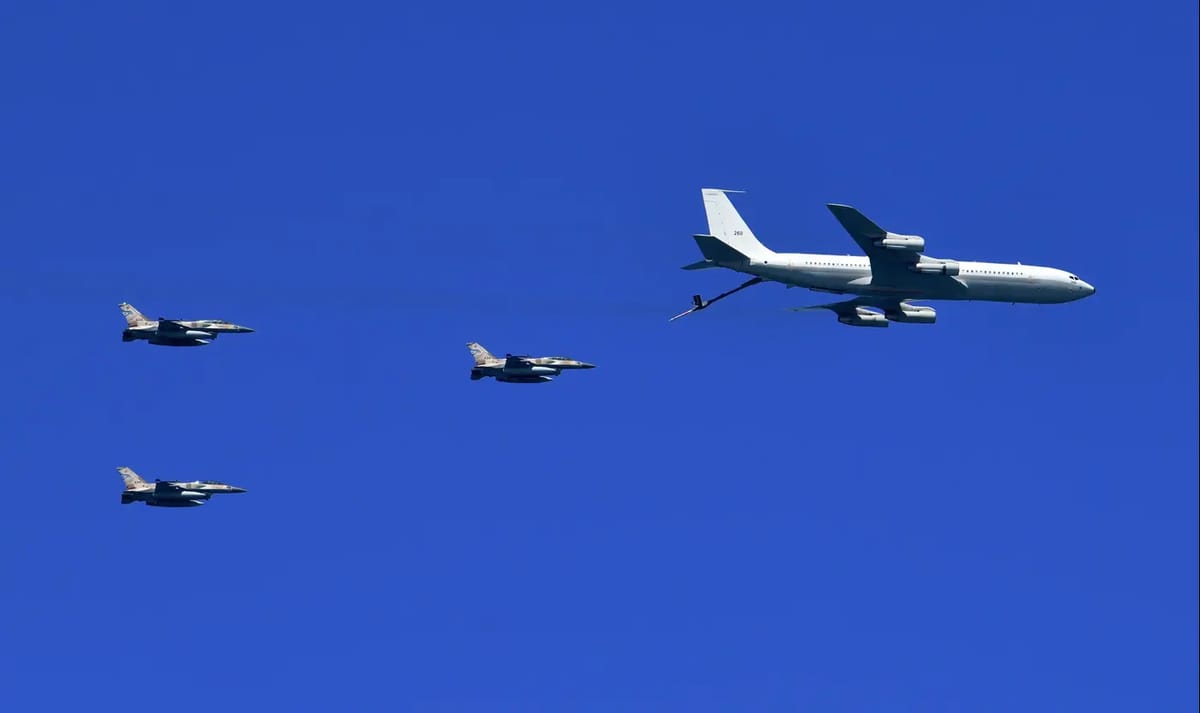
In one of the most visible signs of military coordination to date, a significant fleet of United States Air Force refueling aircraft has landed at Israel’s Ben Gurion International Airport. The arrival of the KC-135 Stratotankers, which are specifically designed to extend the range of fighter jets and nuclear-capable bombers, coincides with the movement of the USS Gerald Ford towards the waters near Crete. As the world’s largest and most expensive warship moves into its final strike position, the presence of these "flying gas stations" on Israeli soil suggests that the logistical framework for a deep-penetration mission into Iranian airspace is now complete. For the Iranian regime, which has watched these developments with growing alarm, the landing of these aircraft serves as a physical manifestation of the American-Israeli "ring of fire" closing around Tehran.
The Logistics of a Long-Range Strike
The KC-135 aircraft, a military variant of the Boeing 707, are the backbone of American global power projection. While the Israeli Air Force operates its own fleet of "Ram" refueling jets, the American tankers stationed in Tel Aviv offer a much larger capacity and more advanced engines, allowing for dozens of sorties to be sustained simultaneously. This buildup is not merely symbolic, it is a necessary prerequisite for any sustained bombing campaign against Iran’s hardened nuclear sites, which are located over 1,000 miles from Israeli borders. By stationing these assets at Ben Gurion, the U.S. and Israel are ensuring that their fighter squadrons can remain over their targets for as long as necessary without the risk of running out of fuel.
A Show of Force at Sea and in the Air
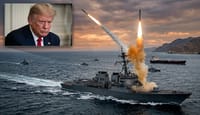
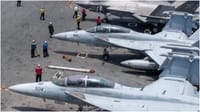
The airborne buildup is being mirrored by a massive naval presence. The USS Gerald Ford, carrying over 75 aircraft including F-18 Super Hornets and Growler electronic warfare jets, is now approaching the eastern Mediterranean. This carrier strike group, combined with the refueling fleet in Israel, provides the Trump administration with multiple "alternatives" to diplomacy. While Iranian officials have dismissed the buildup as a "frustrated" attempt to exert pressure, the tactical reality is that the U.S. now has the ability to launch an attack from several different vectors at once. With the "beautiful armada" nearing its full strength, the landing of the tankers at Ben Gurion may be the final logistical piece of the puzzle before the order to strike is given.