Fascinating Jewish History

Rumors of Biblical Prophet’s Tomb Discovery in Israel Spark Renewed Interest

Three separate traditions over 2,000 years have tried to locate the grave of Ahijah the Shilonite. Now a new site in the Shiloh Valley has captured public attention | Research

"Ahijah the Shilonite's Tomb" in the Shiloh Valley
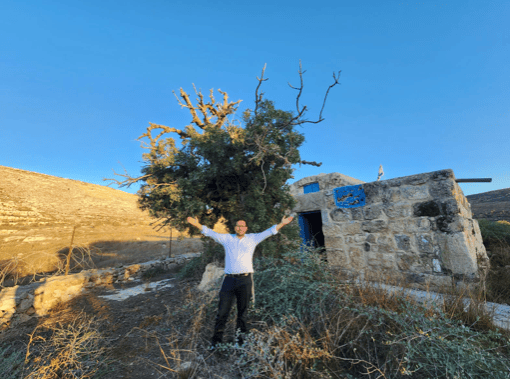
"Ahijah the Shilonite's Tomb" in the Shiloh Valley ((September 2025; courtesy of researcher Israel Shapira))

In recent months, renewed interest has arisen in the location identified as "Ahijah the Shilonite's Tomb" in the Shiloh Valley. The site, located at ‘Khirbet Astonah’ on the eastern edge of the valley, next to an ancient oak, even received a festive hillula celebration during the last Sukkot holiday. But what lies behind this identification, and how historically reliable is it?

The Lost Prophet and the Bible’s Silence

The tomb of the prophet Ahijah the Shilonite, a biblical figure whose prophecy to Jeroboam son of Nebat is documented in the Book of Kings, is not mentioned in the Tanakh at all. This very absence opened the door to the formation of three different traditions over the generations, with each one trying to locate the prophet's burial place.

The First Tradition: Shiloh and the Mysterious Oak

Ready for more?

The earliest testimony appears in a Jewish composition from the first century CE called "Lives of the Prophets" (Vitae Prophetarum), which survived mainly in later Christian works. The composition states that Ahijah was buried "near the oak that belonged to him in Shiloh."

Although there is no mention in the Tanakh of an oak tree in Shiloh, researchers Amichai Schwartz and Avraham Ofir Shemesh hypothesize that the writer relied on another biblical story - the covenant made under the oak in Shechem - an event that in the Septuagint version is associated with Shiloh.

Attributing burials to sites near an oak tree recurs for other prophets in the same composition, raising doubts about its reliability as a reflection of an authentic local tradition.

The Second Tradition: Mount Tabor and the Faulty Text

About a thousand years later, between 1153-1187, the traveler Jacob ben Nathanael Cohen described a place attributed to Ahijah on a mountain named "Tur." Researchers like Abraham Yaari, Ze'ev Vilnai, and Zvi Ilan identified "Mount Tur" with Mount Tabor in the Galilee (in Arabic: al-Tur).

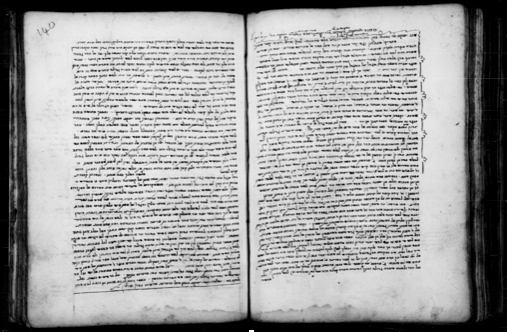
However, the manuscript that remains in our hands is very late - from the 16th century - flawed and apparently copied without fidelity to the original order. The fact that the original text is deficient makes it difficult to accept this interpretation with certainty.
Loading...
Jacob ben Nathanael Cohen's Journey, Italian manuscript from the 16th century (Courtesy: Cambridge University Library, "Ktiv" project, National Library of Israel))

The Third Tradition: Beit El and the Legendary Story

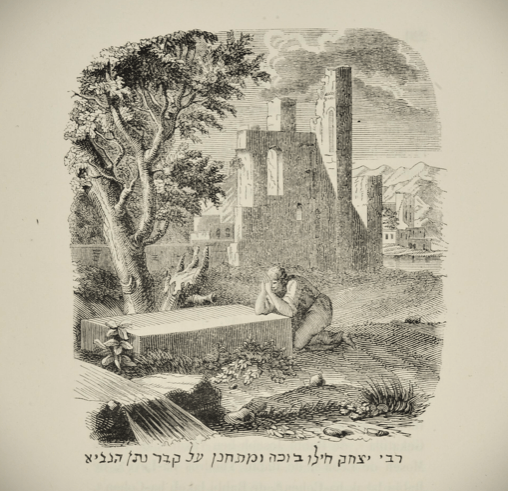
The third tradition locates the tomb in Beit El, south of Shiloh. It appears in the composition "Paths of Jerusalem" attributed to the Jewish-Spanish traveler Isaac Chelo from the 14th century.

The composition, published in the 19th century by the collector Elyakim Carmoly, aroused suspicions of forgery. Kabbalah researcher Gershom Scholem and other researchers rejected its authenticity. However, in a comprehensive study, Michael Ehrlich proved that the composition is not a complete forgery - the geographical descriptions were indeed written in the 14th century, although there are fabricated details that do not pertain to these descriptions.

The composition describes: "From this place they come to Beit-El, ancient Luz, today its name is Beitin. Here there is an ancient monument, which they say is the tomb of the prophet Ahijah the Shilonite."

The text also includes a legendary story about a Roman officer in the days of Emperor Hadrian who heard a voice from the tomb and converted to Judaism as a result - a story that researchers (Horowitz and Eisenstein) compared to the Talmudic legend about Nero Caesar.

Loading...
Imaginary illustration from the 19th century, depicting Rabbi Isaac Chelo at the tomb of Nathan the Prophet ((courtesy Gallica.BnF, library of the French Institute for the Near East, National Library of France).)

The Contemporary Identification: Return to Shiloh

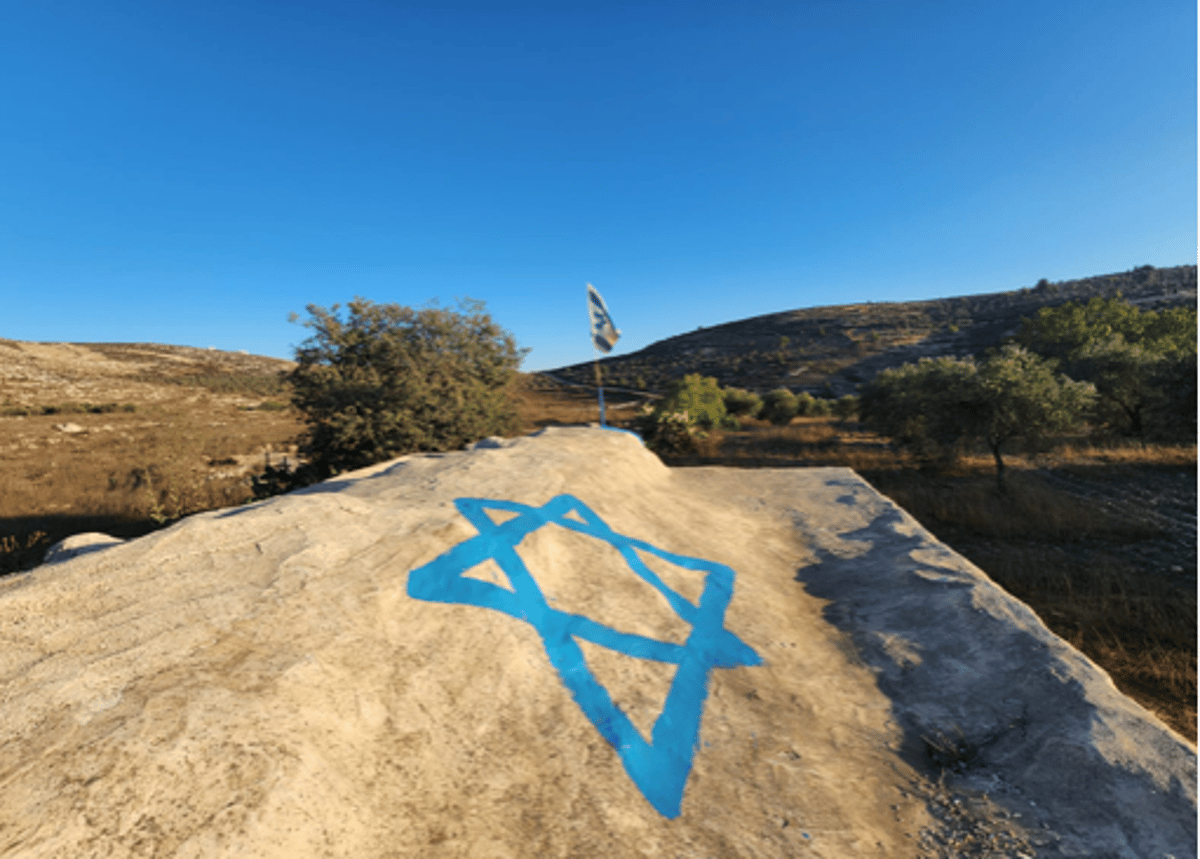
In recent months, a new identification has appeared in the Shiloh Valley, at 'Khirbet Astonah', a place that was previously the tomb of a local sheikh from hundreds of years ago. For the first time, the place was marked as "Ahijah the Shilonite's Tomb", and it is located next to an ancient oak.

The identification was apparently made based on two factors: the geographical area close to Shiloh - the prophet's biblical origin - and the textual similarity. The ancient mention from the first century notes "oak in Shiloh", and in this place, not so far from Shiloh, there is indeed an ancient oak. However, this similarity does not indicate at all an authentic identity between the ancient source and the current place. The ancient source itself is suspected of historical inaccuracy and appears to have been created according to a literary pattern and not based on a contemporary tradition.

The attempt to identify the tomb at this place is part of a broader trend of Judaizing holy places in Judea and Samaria, based mostly on a literal reading of ancient texts that do not necessarily reflect accurate historical reality. Although pilgrims visit the place frequently and a festive hillula text was held there during the last Sukkot, these facts do not establish a reliable historical identification.

Loading...
The ultra-Orthodox researcher Israel Shapira next to "Ahijah the Shilonite's Tomb" and the ancient oak at 'Khirbet Astonah' (September 2025; courtesy of Israel Shapira)

Between the Desire to Remember and Historical Reality

The three traditions reflect three different times and express the ongoing desire to connect the biblical past to living reality. The figure of the prophet, which the Bible mentions mainly for his critical prophecy to Jeroboam, continued to arouse interest and shape collective memory hundreds of years after his time.

However, it is important to distinguish between the legitimate desire to preserve cultural and religious memory and the claim for a verified historical identification. The contemporary identification at 'Khirbet Astonah' does not rely on a continuous tradition or on archaeological findings, but on a coincidental similarity between an ancient and problematic literary mention and a contemporary geographical landscape. The local sheikh's tomb that was in the place suddenly became "Ahijah the Shilonite's Tomb" - not because of a new historical discovery, but because of a creative reading of an ancient source.

In this sense, the new identification is not a discovery of the same place that the ancient source intended - if it indeed intended any real place at all - but the creation of a new identification based on textual and regional geographical similarity. This is a respectable and interesting phenomenon from an anthropological and social perspective, teaching about ways of creating collective memory and the human need to anchor traditions in a physical landscape, but it does not establish a reliable historical claim regarding the traditional location of Ahijah the Shilonite's tomb as believed somewhere in the first century CE.

*With thanks to researcher Israel Shapira for their contribution to the research*

Ready for more?

Join our newsletter to receive updates on new articles and exclusive content.

We respect your privacy and will never share your information.

Enjoyed this article?

Yes (413)
No (17)
Follow Us:

Loading comments...