Get our mobile app
Download on the App StoreGet it on Google Play

Israeli Elections

Arab Parties Unite Without Mansour Abbas

Hadash, Ta'al and Balad will run together in Israel's upcoming elections with Ayman Odeh's successor Youssef Jabareen heading the list, while Abbas's Ra'am party will compete separately

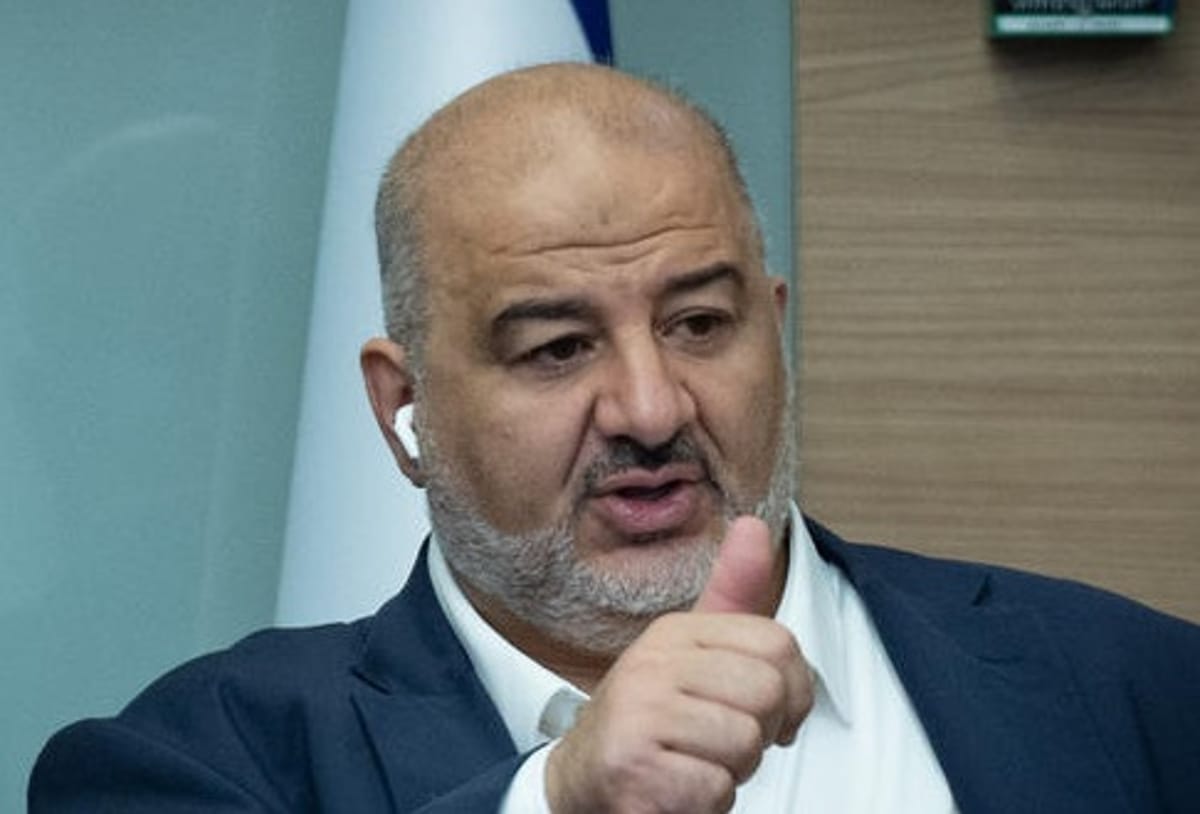
Mansour Abbas

Three of Israel's Arab political parties reached an agreement Wednesday to run on a joint slate in the upcoming Knesset elections, but the alliance excludes Ra'am, the Islamic party led by Mansour Abbas. The agreement between Hadash (a Jewish-Arab communist party), Ta'al and Balad comes after weeks of turbulent negotiations that nearly collapsed.

Under the terms of the deal, Hadash chairman Youssef Jabareen will head the joint list. Ta'al leader Ahmad Tibi will occupy the second spot, with Balad chairman Sami Abu Shehadeh in third place. The arrangement marks a partial reunification of Arab political forces, though not the full four-party alliance that has run together in some past elections.


The distribution of remaining slots on the joint list was also finalized: Hadash will take the fourth position, Balad the fifth, Hadash the sixth and seventh, Balad the eighth, and Ta'al the ninth. A rotation mechanism will allow Ta'al to swap its ninth-place position with Hadash for one of the slots between sixth and ninth during the Knesset term.

According to Israeli media reports, the breakthrough came after a meeting between Jabareen and Osama Saadi, a senior Ta'al figure and former Knesset member. That session, reported by Channel 12's Dafna Liel, helped resolve the impasse that had threatened to derail the entire effort.

To compensate Ta'al for receiving fewer guaranteed safe seats on the list, the party will receive significant parliamentary roles including a deputy Knesset speaker position, faction leadership, and seats on key committees such as the Finance Committee and the Knesset House Committee.

Abbas's Ra'am will not join the unified slate and is expected to run independently. The party is scheduled to hold its internal primary elections this Saturday. Recent reports have suggested that Yoav Segalovitz, a Knesset member who recently left the centrist Yesh Atid party, may join Ra'am's list, though no final decision has been made.

The split means that instead of a single unified Arab list, Israeli Arab voters will face two main options: the joint slate of Hadash, Ta'al and Balad on one side, and Abbas's Ra'am on the other. The division could affect the overall strength of Arab representation in the next Knesset, as parties must cross a minimum electoral threshold to win seats. Arab parties have historically debated whether unity or separate slates better serve their constituents' interests.

Ready for more?

Join our newsletter to receive updates on new articles and exclusive content.

We respect your privacy and will never share your information.

Enjoyed this article?

Yes (14)
No (1)
Follow Us:

Unmissable content


Loading comments...

Also of Interest