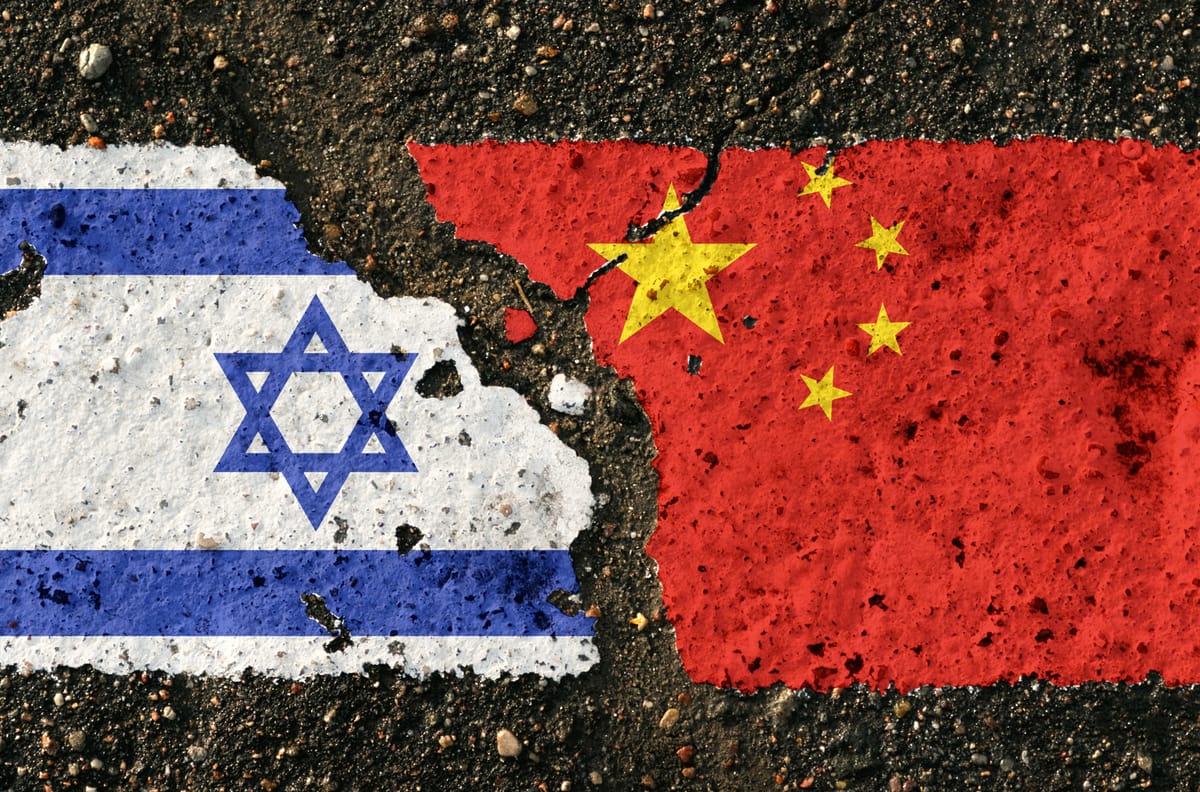
In a sharp rebuke, China has condemned Israel and other nations for joining a U.S.-led joint statement at the United Nations criticizing Beijing's human rights record, accusing them of "slandering" the country under the guise of concern.
Ynet explains that this response comes just a week after Israel made a notable policy shift by signing onto the declaration, marking a departure from its usual reluctance to publicly challenge China on such issues.
"Some countries, ignoring the facts, have slandered and smeared China under the banner of 'human rights concerns,' grossly interfering in China's internal affairs," China's Foreign Ministry stated on Wednesday. "This seriously violates international law and basic norms of international relations. China firmly opposes and strongly condemns this."
Beijing emphasized its commitment to human rights, claiming "historic progress" tailored to its national conditions, while dismissing the criticisms as baseless.The controversy stems from a joint statement issued on November 21, 2025, during the 80th session of the UN General Assembly's Third Committee, which focuses on social, humanitarian, and cultural affairs.
Led by the United States and signed by 15 countries, including the UK, Australia, Japan, and now Israel, the declaration expressed "deep and ongoing concerns" over alleged human rights violations in China. It highlighted issues such as arbitrary detentions, forced labor, mass surveillance, and restrictions on religious and cultural expression, particularly targeting ethnic and religious minorities like Uyghurs, other Muslims, Christians, Tibetans, and Falun Gong practitioners.
The signatories called on China to "release all those arbitrarily detained solely for exercising their human rights and fundamental freedoms" and to fully comply with international law.
The statement also voiced alarm over the erosion of civil liberties and rule of law in Hong Kong, including extraterritorial arrest warrants and fines for activists exercising free speech, as well as state censorship and surveillance that create a "climate of fear" to stifle dissent.
Israel's decision to join, announced on November 25, represents a rare pivot. Jerusalem has historically avoided such condemnations to preserve diplomatic and economic ties with Beijing, with only isolated instances, like in 2021, where it participated.
This move fits in with broader international scrutiny, including ongoing concerns about China's treatment of Uyghurs in Xinjiang, where over a million Muslims have reportedly been detained in reeducation camps as part of a crackdown described by some as crimes against humanity.
Chinese officials have consistently denied these allegations, framing their policies as counterterrorism measures and efforts to promote stability and development. The backlash underscores the delicate balance in Israel-China relations, amid growing U.S. pressure on allies to confront Beijing's human rights practices.
Neither Israel's Foreign Ministry nor the U.S. Mission to the UN has publicly responded to China's criticism.
Ynet contributed to this article.