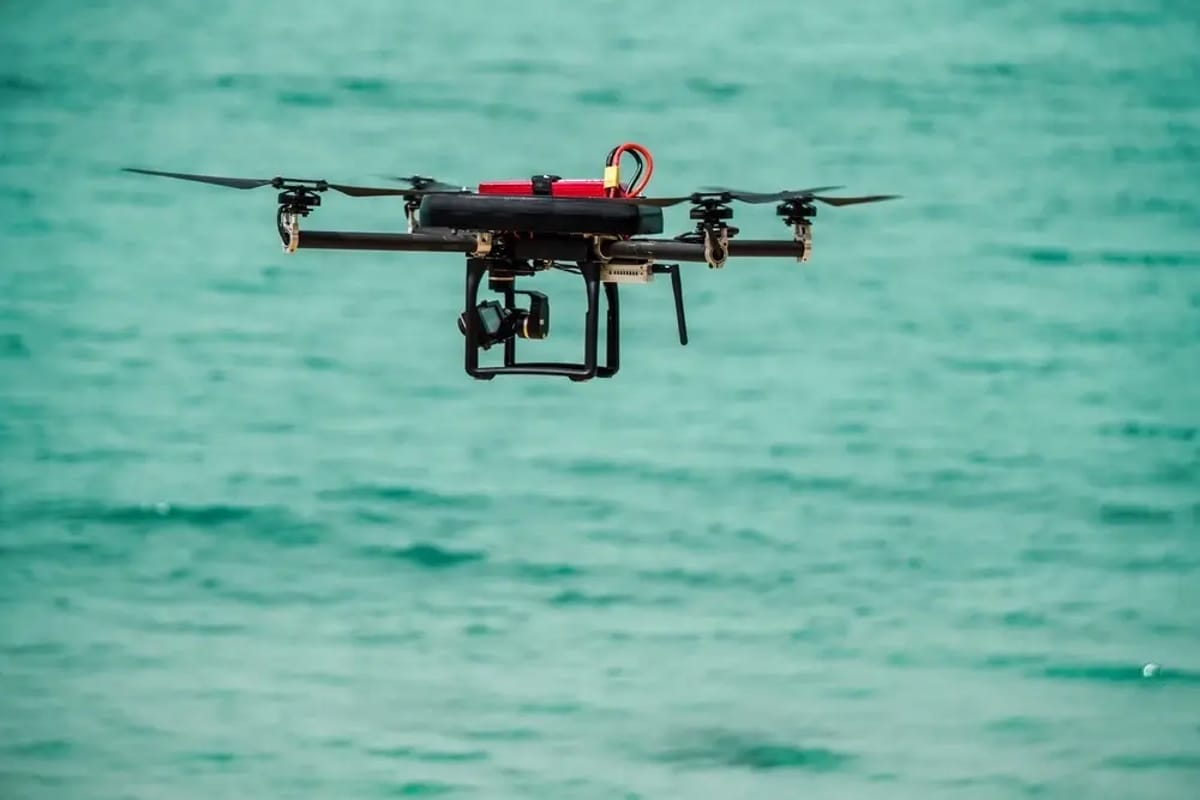
The national defense establishment has raised an intense, system wide alarm following credible intelligence assessments indicating that the Hezbollah terrorist organization has successfully acquired long range, fiber optic guided drone platforms. Security officials confirmed that the integration of this advanced technological capability places the vital maritime metropolis of Haifa and the entirety of the northern frontier under a severe, continuous kinetic threat. The rapid deployment of these specialized aerial assets is forcing military planners to re evaluate their existing protective screens around sensitive national infrastructure and strategic state assets.
Technological analysts emphasize that fiber optic drones represent one of the most lethal and complex tactical challenges currently operating along the southern Lebanese border. Unlike conventional remote controlled aircraft that rely entirely on wireless radio frequencies, these specialized platforms maintain a continuous physical connection to their operator via an ultra thin, high tensile fiber optic cable. This hardwired configuration renders the system completely immune to standard global positioning system jamming, localized electronic warfare countermeasures, or frequency disruption protocols, allowing precise steering until the moment of terminal impact.
According to elite military engineering experts currently managing defensive counter operations, the deployment of these systems across distances of up to sixty kilometers involves immense structural and aerodynamic challenges. The primary engineering obstacle resides within a complex equation balancing structural weight against total battery energy. To achieve such extended operational ranges, the aircraft must carry a significantly larger power cell, a requirement that drastically increases the total takeoff mass and directly reduces the remaining weight allowance available for the explosive payload.
Furthermore, technical monitors note that the physical drag of the unspooling cable, combined with unpredictable high altitude wind resistance across the flight path, imposes severe physical constraints on the pilot's maneuvering capabilities. Defense specialists pointedly remarked that the hostile organization has not yet achieved the extreme, hyper efficient operational proficiency displayed in large scale European conflicts. However, the group is actively attempting to bypass these physical limitations through creative battlefield modifications, including the dismantling of standard anti tank rocket warheads to harvest lightweight, highly concentrated explosive materials.
While the tethered platforms present an immediate threat to specific high value targets, intelligence directors warn that an even greater operational challenge is rapidly maturing on the horizon. Advanced radar tracking units are preparing for the deployment of fully automated, interconnected aerial swarms capable of executing autonomous, multi directional assaults. These next generation networks are designed to communicate internally in real time, overwhelming local air defense matrices by attacking a single target from multiple vectors simultaneously, representing a profound shift in the nature of modern asymmetric warfare.