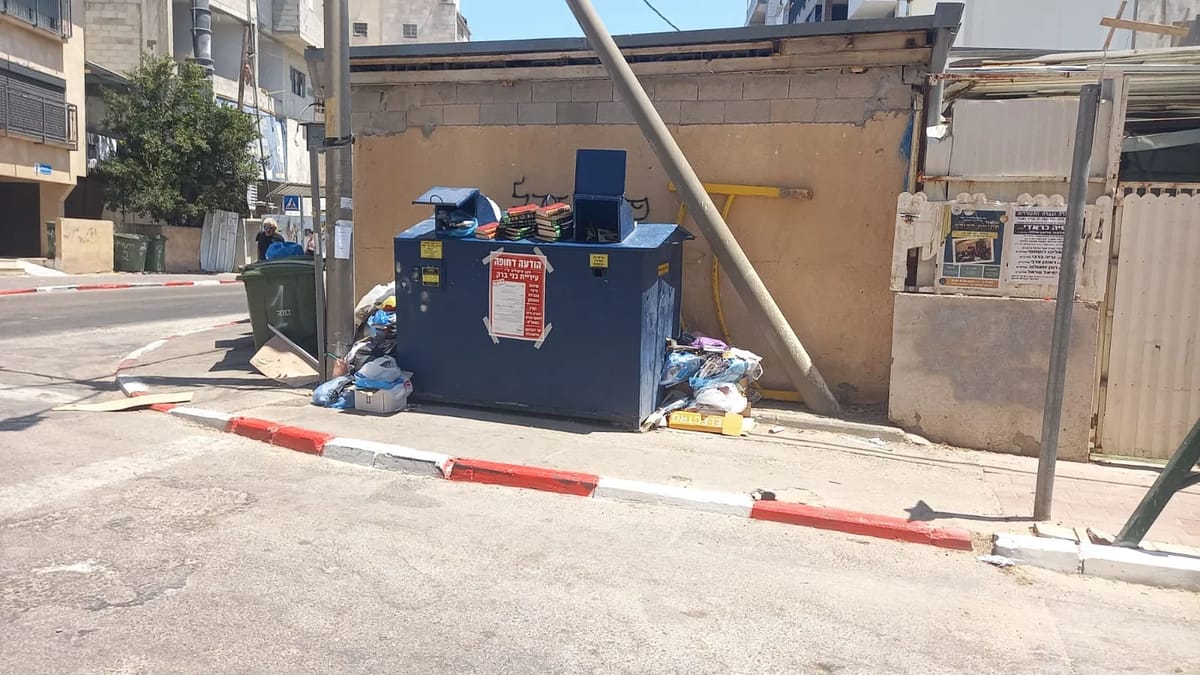
A dispute between Bnei Brak's municipality and the operators of the city's geniza collection network has pushed one of the most sacred services in the haredi capital to the brink of a full shutdown, with warning notices appearing on geniza stations across the city this week alerting residents that pickup of bags containing worn-out holy texts will be suspended entirely.
The geniza system, which collects deteriorating seforim, siddurim, and other sacred writings for proper burial in accordance with halacha, is a cornerstone of religious life in Bnei Brak. The prospect of overflowing geniza stations and sacred texts accumulating in the street has alarmed community members and religious leaders alike.
The crisis stems from a bureaucratic standoff over parking fines. For years, city inspectors issued traffic tickets to geniza collection trucks for blocking lanes while loading the heavy bags from collection points around the city. The operators would routinely appeal to the mayor's office, where the fines were quietly cancelled in recognition of the service's religious and communal importance. That informal arrangement appears to have quietly collapsed.
According to sources familiar with the dispute, the municipality has recently reversed course entirely, refusing to cancel outstanding fines and demanding payment of the full accumulated backlog. Worse, city officials have now initiated active seizure proceedings against the operating organization. In response, the geniza operators announced a complete work stoppage. "Let the municipality deal with mountains of geniza in the streets," one operator was quoted as saying, framing the strike as a way to force the city's hand.
If no resolution is reached within days, geniza stations across Bnei Brak risk overflowing, creating what one source described as both a sanitary and a spiritual crisis for residents.
The municipality's public response was terse. A spokesperson said the city is "looking into the matter." A city official went further, dismissing the operators' public notices as a pressure tactic: "The cost of printing colorful posters to try to intimidate people is apparently higher than the debt itself. It would be better to invest that energy, and far less money, in paying off a 500-shekel debt to city coffers and getting back to work for the public's benefit."
Both sides are expected to hold urgent talks in the coming days to prevent the situation from deteriorating further.