A soldier from the Givati Brigade who performed heroically in a deadly battle in Rafah, saving lives and helping evacuate the bodies of fallen comrades, is now sitting in an IDF detention facility without having received psychiatric or mental health treatment, despite clear diagnoses from civilian medical professionals that he suffers from severe post-traumatic stress disorder. The account was reported Sunday on Kan Bet's Bahatzi Hayom program by Carmela Menashe.
According to the report, the soldier was arrested more than nine days ago after voluntarily presenting himself to the army to regularize his status, following an absence of nearly two years during which he was unable to function, work or wear his uniform. The military prosecution has continued to seek his detention until the conclusion of legal proceedings against him.
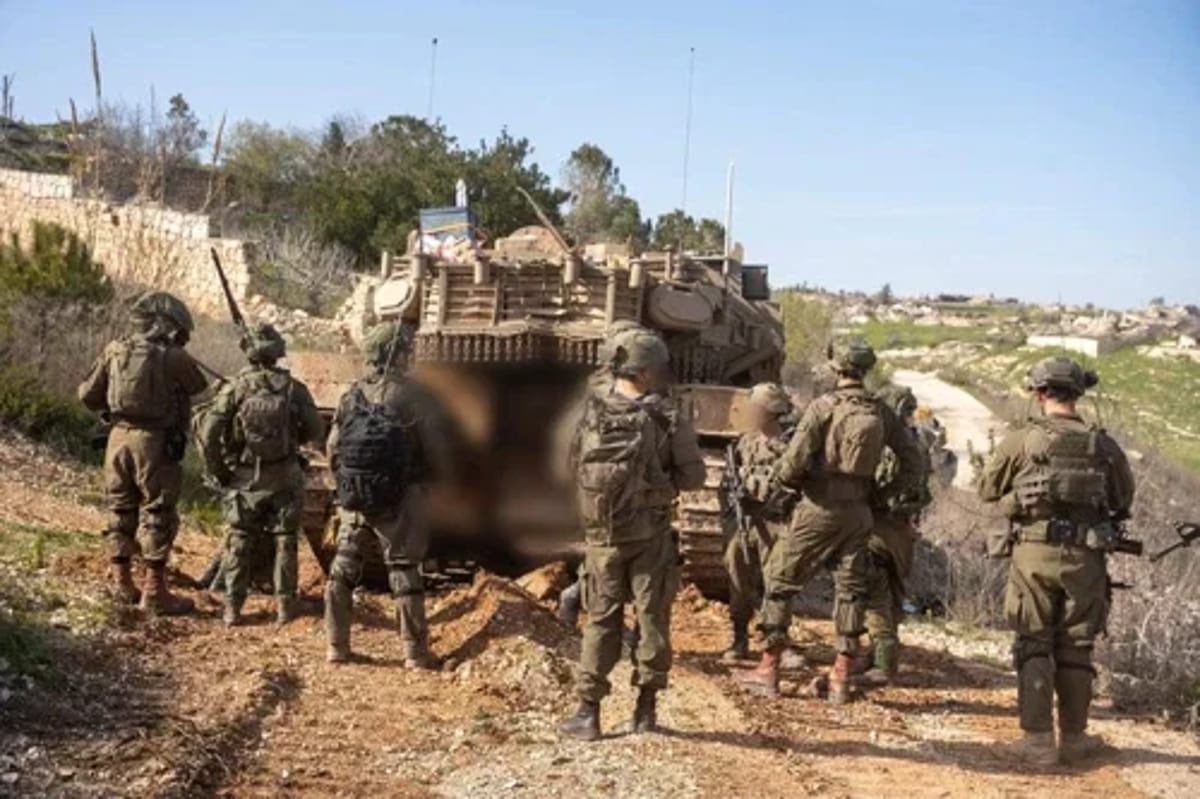
The chain of events leading to his current situation began in June 2024, during the height of military operations in the Gaza Strip. According to the report, a Givati Brigade force entered a booby-trapped structure in Rafah that detonated, killing four soldiers and wounding eleven others, five of them critically. Field commanders described the soldier as having performed admirably during the incident, acting under fire to save lives and physically helping to evacuate the burned bodies of his fallen comrades.
The report said the scenes left deep scars, and his mental state deteriorated rapidly and severely once the operation ended. He reportedly sought out a mental health officer on several occasions for initial assistance, but according to his family, his requests were repeatedly denied on the grounds that his unit was in the midst of active combat. About two months after the Rafah incident, psychologically wounded and without support, he returned home and was unable, physically or mentally, to put his uniform back on or return to his base.
For nearly two years, until March 2026, the soldier reportedly remained secluded at home, unable to work or maintain any functional routine. According to the report, his psychological symptoms worsened over time, including outbursts, severe nightmares in which he relived moments of the trauma, and instances of violence toward relatives stemming from his paralyzing distress. Amid this deterioration, he eventually turned to the Bikur Rofeh clinic network, where staff immediately recognized the severity of his condition. Physicians there gave a preliminary diagnosis of anxiety and depression and referred him urgently for evaluation at a psychiatric emergency room.
At the emergency room, medical staff reportedly determined unambiguously that he showed clear symptoms of post-traumatic stress accompanied by deep anxiety and depression. The medical summary stated that he was barred from returning to the army until undergoing a comprehensive evaluation by a military psychiatrist, that he was prohibited from handling weapons, and that urgent psychiatric follow-up was recommended. He was subsequently examined by psychiatrist Dr. Israel Gluzman, who formally diagnosed him with post-traumatic stress stemming from his difficult military experiences.
Despite these medical findings, the soldier made what the report described as a courageous decision to present himself to the army in order to formally regularize his status after the prolonged absence. Because he could not return to his original unit due to the length of his absence, he was required to report directly to the Neve Tzedek military prison at the end of June 2026. Upon his arrival, the military prosecution filed an indictment against him and requested his detention until the conclusion of proceedings.
During hearings before the military court, judges reportedly expressed surprise and noted several times that the case was highly unusual. The judges explicitly instructed medical personnel at the detention facility to expedite the soldier's psychiatric evaluation and provide him with the necessary care. Despite this, more than nine days after his imprisonment, the soldier had still not met with any military mental health professional and remained in full detention without treatment to prevent further deterioration.
The soldier's partner described the situation in anguish, saying he lost four friends, performed excellently in battle, but has not been the same since. She said he stays awake all night, says he can smell bodies, and that he came to regularize his status and was arrested instead. She said he has been in detention for ten days and his condition is worsening, that he needs mental health support there and that he has tremors and cannot sleep.
The IDF Spokesperson's Unit said in response that an indictment was filed against the soldier for unauthorized absence from service lasting 632 days. The statement said medical documents concerning the soldier were presented during the hearings, and that in light of their contents, a medical review by senior officials is ongoing. The IDF said the review has not yet been completed, and that once it is, the soldier and his legal representatives will be able to present its findings to the relevant authorities. The military said it places great importance on providing appropriate medical care to its personnel and that the soldier is receiving medical attention from the relevant bodies, but said it could not elaborate further due to privacy considerations and medical confidentiality restrictions under law.