
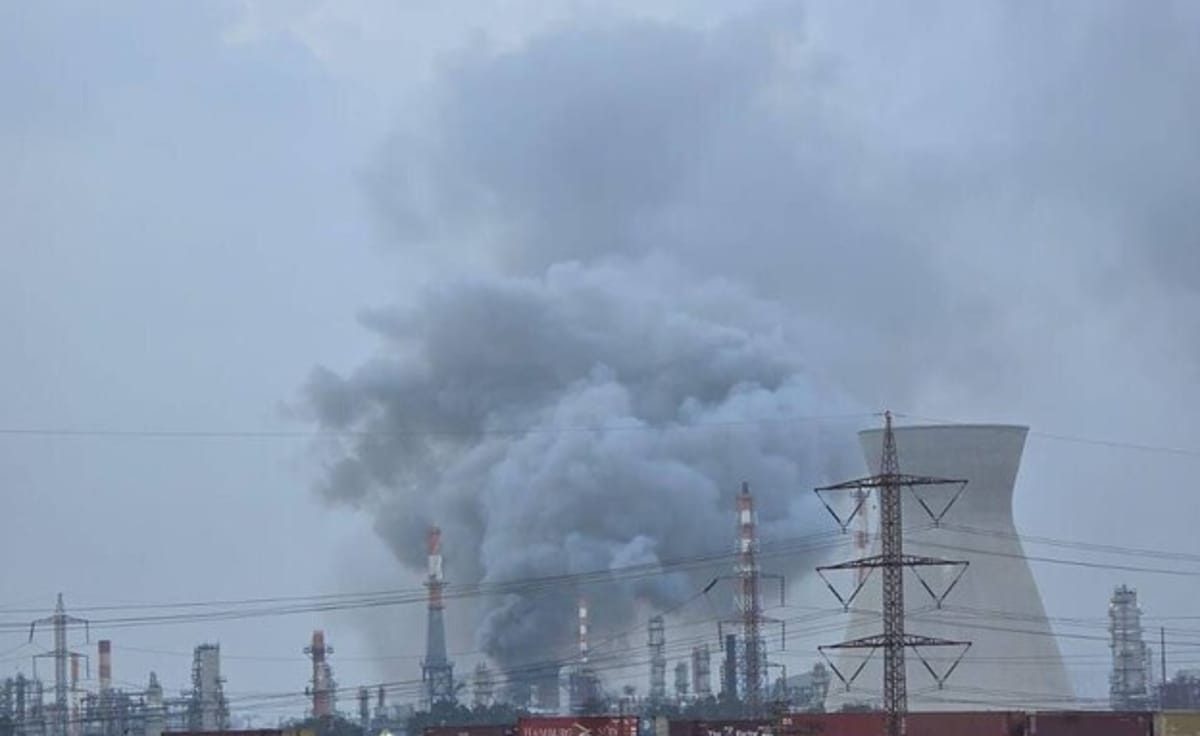
An Iranian missile strike near the Bazan oil refinery in Haifa Bay caused only limited damage and no hazardous material leak, but experts say the incident underscores the significant risks posed by the facility’s location and strategic importance.
Marcelo Sternberg, a climate change ecology professor at Tel Aviv University, said the outcome should not be viewed as reassuring, describing the refinery as a “time bomb” due to both its industrial nature and its proximity to densely populated areas.
According to Sternberg, the lack of major damage reflects a near miss rather than a reduced threat. He noted that the refinery, which plays a central role in Israel’s fuel supply, sits close to residential neighborhoods and has long been the subject of environmental and safety concerns.
He warned that a direct hit on critical infrastructure at the site could result in large-scale explosions, fires, and the release of toxic substances. Such an event could lead to significant casualties and require the evacuation of nearby populations.
Beyond wartime risks, Sternberg pointed to ongoing environmental concerns linked to the facility, particularly air pollution. He said emissions from the refinery already pose health risks under normal conditions, which could be exacerbated in the event of a major strike.
The uncertainty surrounding missile trajectories and interception efforts further complicates the situation, he added, noting that even successful defenses cannot guarantee protection from debris or partial impacts.
The refinery’s strategic importance also raises concerns about national resilience. Bazan accounts for a large share of Israel’s fuel production capacity, and any sustained disruption could affect energy supplies across the country.
Sternberg said the concentration of such critical infrastructure in a single location creates a structural vulnerability, particularly during ongoing hostilities involving long-range missile threats.
Calls to relocate the refinery away from Haifa Bay have been raised in recent years by local officials and residents, including proposals to move heavy industry to less populated areas in southern Israel. However, no significant changes have been implemented.
Sternberg criticized what he described as a lack of long-term planning and urgency in addressing the issue, arguing that both environmental and security risks have not been sufficiently prioritized.
For now, the facility continues to operate, but the recent strike has highlighted the potential consequences of a direct hit on one of Israel’s most sensitive industrial sites.