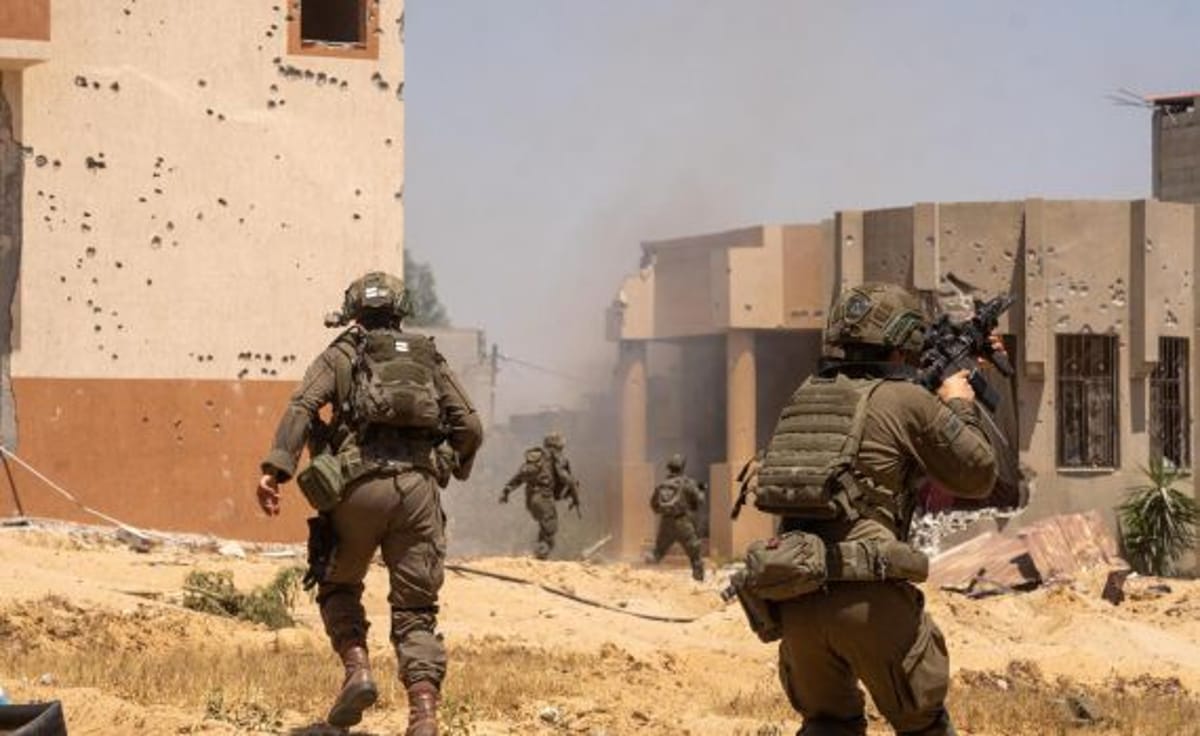
A harrowing report cleared for release by Israel's military censor has exposed how Hamas terrorists cunningly turned IDF-designated "protected compounds" in southern Gaza into deadly launchpads for ambushes, costing the lives of approximately 12 soldiers in assaults originating from an area believed to hold only a single Israeli hostage. Journalist Avishai Grinzaig detailed the grim reality in southern Gaza, where over the past months, IDF commanders marked off sensitive zones based on intelligence suggesting captive Israelis were concealed within, opting to forgo airstrikes or ground assaults to avert any risk to those innocents. This restraint, born of an unyielding commitment to safeguard every life amid the war sparked by the October 7, 2023, massacre, inadvertently created what the terrorists dubbed "immunity zones", sanctuaries where Hamas not only shackled their prisoners in underground hellholes but brazenly orchestrated hit-and-run operations against Israeli forces, retreating unscathed to repeat the carnage.
In these fortified pockets, scattered amid the rubble-strewn hellscape of Khan Younis and Rafah, southern bastions where Hamas once headquartered its Rafah Brigade before its near-total decimation in May 2024, the terrorists exploited the IDF's hesitation with lethal precision. Emerging from tunnel shafts rigged as both guard posts and ambush points, they would unleash barrages of anti-tank missiles, RPGs, and sniper fire on patrolling troops before vanishing into the very structures shielding their sole hostage in that sector. "In practice, the Hamas terror organization realized these were 'immunity zones' and used them as bases for attacks against IDF troops," Grinzaig explained, underscoring how the group multitasked their captors' duties: tormenting hostages while mounting some of the war's deadliest raids. Estimates pinpoint around 12 fatalities from strikes traced back to one such compound, a staggering toll for a single protected life, highlighting the terrorists' callous calculus in a conflict where over 700 Israeli soldiers have perished since the onslaught that claimed 1,200 civilian lives and saw 251 abducted.
This revelation lands amid fragile ceasefire efforts, where all 20 surviving hostages were freed last week under the U.S.-brokered Trump plan, but only 12 of 28 bodies have been returned, with 16 still withheld by Hamas, prompting Israel to shutter the Rafah crossing until full compliance. Just days ago, on October 19, a similar terrorist incursion in Rafah killed two soldiers, Major Yaniv Kula and Staff Sergeant Itay Yevetz, triggering over 100 airstrikes, including on a six-kilometer tunnel once used for hostages. Southern Gaza's "protected" enclaves echo earlier tragedies, like the February 2024 Rafah raid rescuing Fernando Simon Marman and Louis Har, which neutralized 37 terrorists but left one IDF injury, or the August recovery of six executed captives from a Rafah tunnel. Hamas's dual-use of sites, human shields layered atop terror infrastructure, forces agonizing choices: strike and risk innocents, or hold back and invite slaughter, as seen in the November 2023 friendly fire deaths of three escaped hostages waving a white flag in a misidentified threat.
The human cost extends beyond the fallen soldiers, whose families join a chorus of bereaved Israelis demanding accountability from a terrorist regime that diverts aid for weapons and executes captives at point-blank range. Operations like Gideon's Chariots in June 2025, which dismantled 1,200 terror sites in Khan Younis alone while recovering three hostage bodies, underscore the IDF's balancing act: asserting control over re-cleared zones riddled with booby traps and smuggling tunnels funded by Iranian cash flows. As Netanyahu weighs "fierce" reprisals against ceasefire preservation, this report lays bare Hamas's barbarity, not mere fighters, but butchers who weaponize vulnerability, turning sanctuaries into slaughterhouses. For the one unnamed hostage whose "protection" doomed a dozen defenders, the irony stings: in Gaza's shadows, mercy for one invites mourning for many, a testament to the war's unrelenting moral minefield where every pause costs blood.