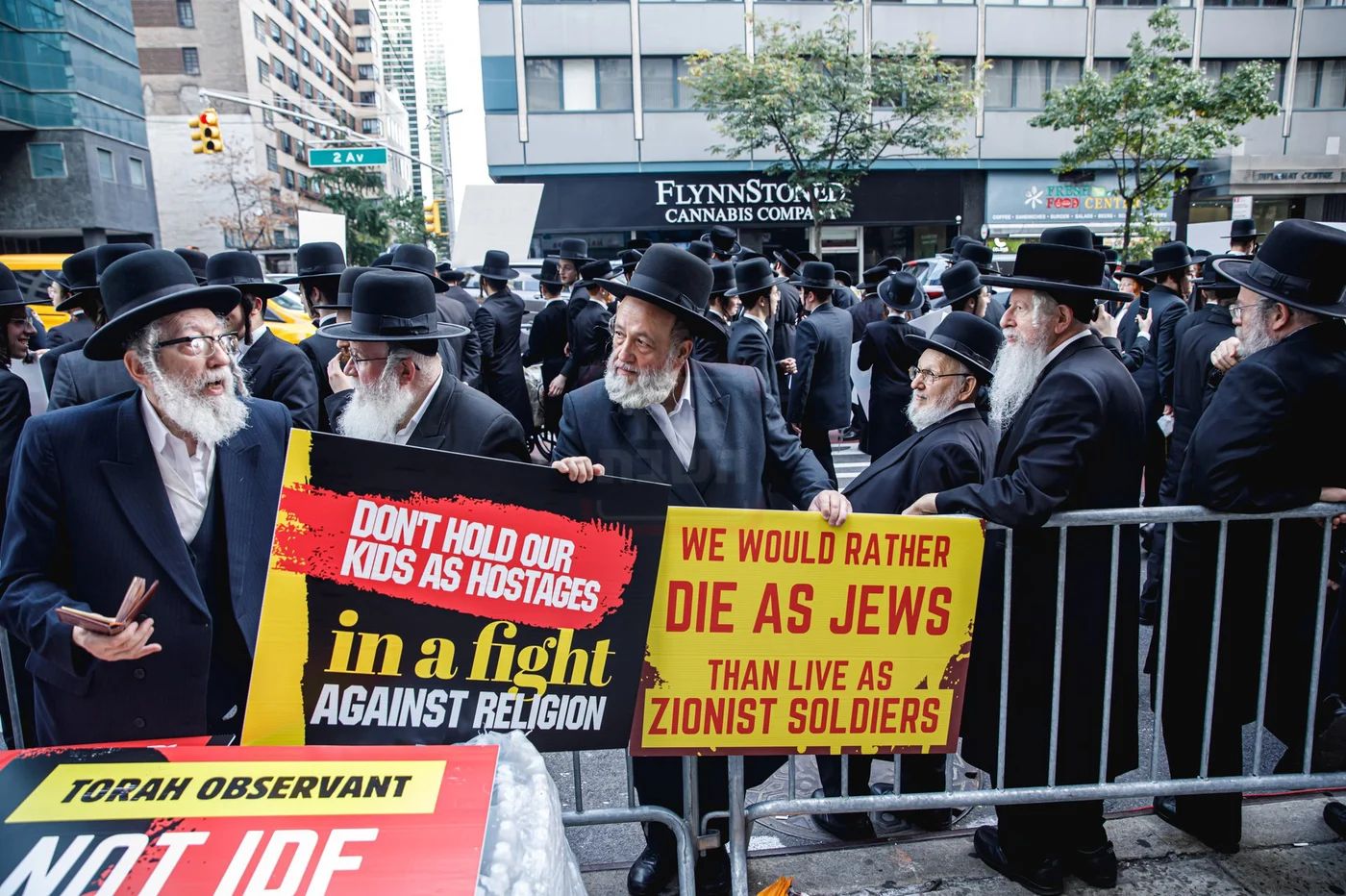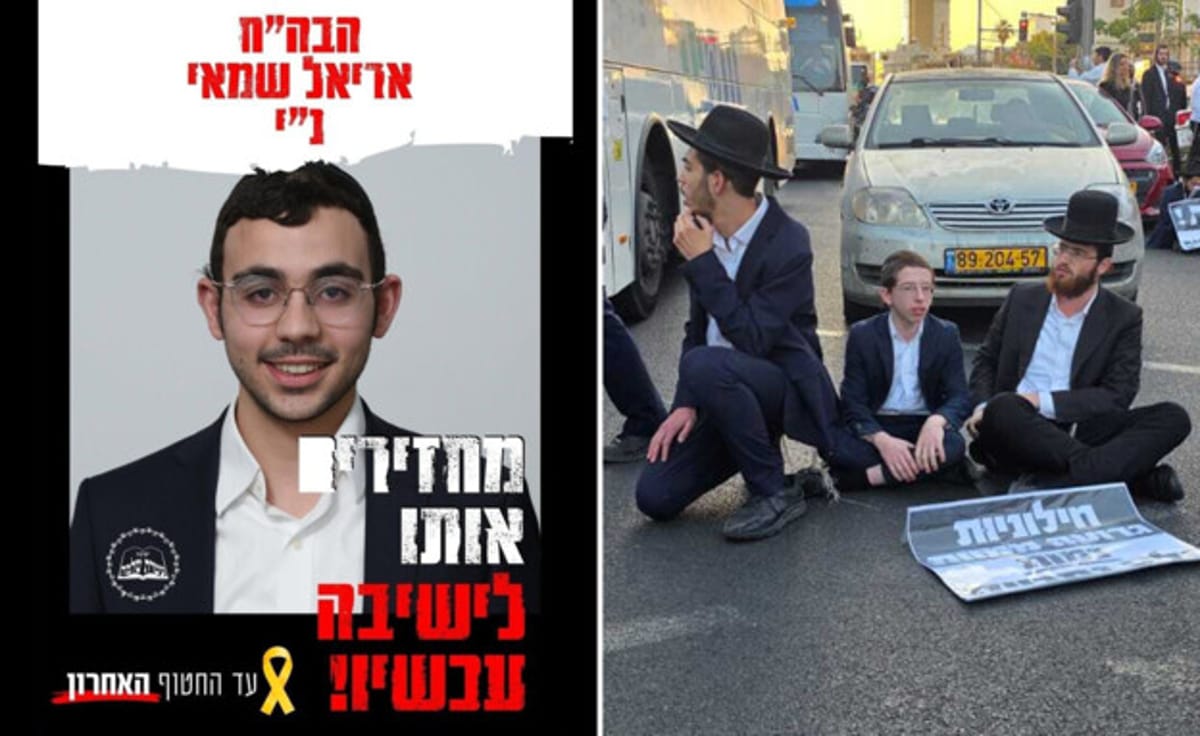
Furious demonstrations swept through Jerusalem, near Bnei Brak on Highway 4, and outside Military Prison 10 on Wednesday, as ultra-Orthodox protesters blocked major roads in outrage over the arrest of three Haredi draft dodgers from prestigious yeshivas. The unrest, fuelled by Israel's ongoing enforcement of military conscription amid the war against Hamas terrorists, saw demonstrators hoist signs mimicking those of the hostages held captive for nearly two years, enduring unimaginable torture, starvation, and psychological hell at the hands of their brutal captors. This grotesque comparison to the plight of IDF soldiers and civilians who sacrifice everything to defend the nation has ignited backlash, exposing the profound hypocrisy of a community that demands exemptions from service, leaving others to bear the full brunt of repeated deployments into Gaza's deadly inferno. Families of the actual hostages, who watched their loved ones dragged away on October 7, 2023, in a massacre that claimed 1,200 lives and sparked the war, condemned the tactic as a vile betrayal, one that trivializes the sacred memory of the fallen while the Haredi protesters evade the very duty that protects their way of life.
The arrests stemmed from a midnight raid by the Military Police on three young Haredi men studying in elite yeshivas, apprehended in their homes in Ramat Gan and Givatayim, areas outside traditional ultra-Orthodox enclaves. Among them was a student from Yeshivat Ateret HaTorah, a cornerstone of the Lithuanian Haredi mainstream where no prior detainees had emerged, and another who had just lost his father and was sitting shiva, the seven-day mourning period. The shiva-observing youth was released by midday, and a second was freed on condition, but the third, from Ateret HaTorah, landed a 20-day stint in military prison as Israel remains extremely lax on enforcing actual law against certain groups who decide they are above military service.
In a unprecedented move, the yeshiva bused dozens of students to Prison 10 to rally for their peer, marking the first time this institution had mobilized against conscription enforcement, needless to say no such efforts were made on their part when the Israeli hostages were going through hell in Gaza. This escalation reflects broader Haredi resistance to the Supreme Court's June 2024 ruling mandating equal draft obligations, a decision that dismantled long-standing exemptions for ultra-Orthodox men, who number over 13% of Israel's population but contribute minimally to the IDF's 169,500 active-duty force. Critics, including bereaved families and reservists who have logged hundreds of days in Gaza's urban warfare, facing ambushes, booby traps, and terrorist rockets, lambast the exemptions as unfair, noting that secular and religious Zionist Jews shoulder disproportionate casualties, with over 700 soldiers killed since October 7, while Haredi leaders prioritize Torah study over national defense. This comes even when multiple paths and opportunities have been opened by the IDF for religious observers to both study and serve.
During Haredi protests in Jerusalem banners equated the dodgers to hostages with slogans like "Until the Last Captive."
The hostage families' headquarters unleashed a blistering rebuke, decrying the protesters' ploy as "cynical and repulsive." In a statement, they declared: "The headquarters views with utmost severity the cynical and disgusting use of imitations of the hostage signs in the context of the anti-Haredi draft protest. This design, born from the unimaginable pain of families awaiting their loved ones in captivity, is not a propaganda toy or a media gimmick." They added: "Anyone who appropriates this symbol for political purposes desecrates the memory of the murdered, harms the hostages still held in Gaza, and betrays the pain of their families." Their fury resonates deeply in a nation scarred by the terrorists' atrocities, where multiple murdered hostage bodies remain, and the war has displaced 1.9 million Gazans while Israeli reservists, many Haredi peers' age, endure endless rotations without reprieve. This spectacle not only mocks the hostages' hellish ordeal but highlights a societal rift: why should young men in yeshivas sit idle while others return from Gaza maimed or in coffins, defending a country that shelters ultra-Orthodox communities thriving in safety yet one that refuses to offer a hand? As protests swell, the divide threatens coalition stability, forcing Israel to confront whether universal conscription can heal a nation forged in shared sacrifice, or fracture further under selective burdens.