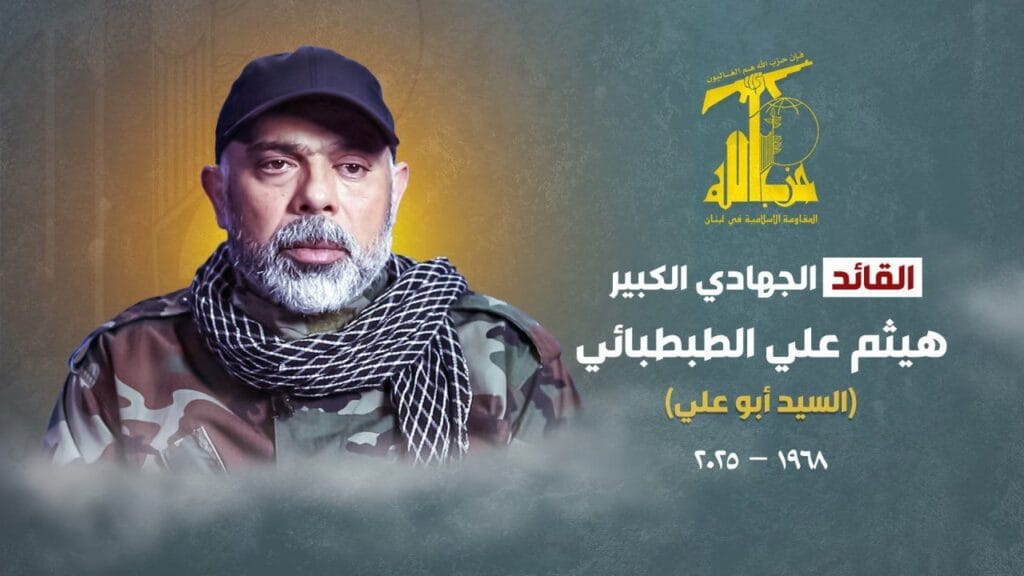
The Israeli Air Force’s (IAF) specialized targeted-killings team has offered a glimpse into the lightning-fast, high-stakes operation that eliminated Hezbollah’s military chief, Haytham Ali Tabatabai, in the heart of Beirut. The mission, described by air crews as a "zero-mistake" strike, was executed with pinpoint precision, destroying the terror commander in a two-floor hit within a crowded residential block in the Dahiya district.
The operation began with a rare and crucial intelligence break that placed Tabatabai inside a specific apartment in the densely populated area, which has long served as Hezbollah’s command base. In an extremely short window, the sensitive information moved from intelligence units to the IAF’s targeted-killings cell, and quickly up through senior military commanders and Israel’s political echelon, clearing the path for an immediate strike against one of Iran’s most vital lieutenants in Lebanon.
Architect of Terror
Tabatabai was not merely a figurehead; he was a U.S.-designated terrorist who served as Hezbollah’s chief of staff and one of its most seasoned battlefield commanders. Since the 1980s, he was instrumental in establishing and commanding the Radwan Force, Hezbollah’s elite assault unit, and later oversaw the group’s external operations, directing terror activities and training in Syria, Yemen, Iraq, and elsewhere.
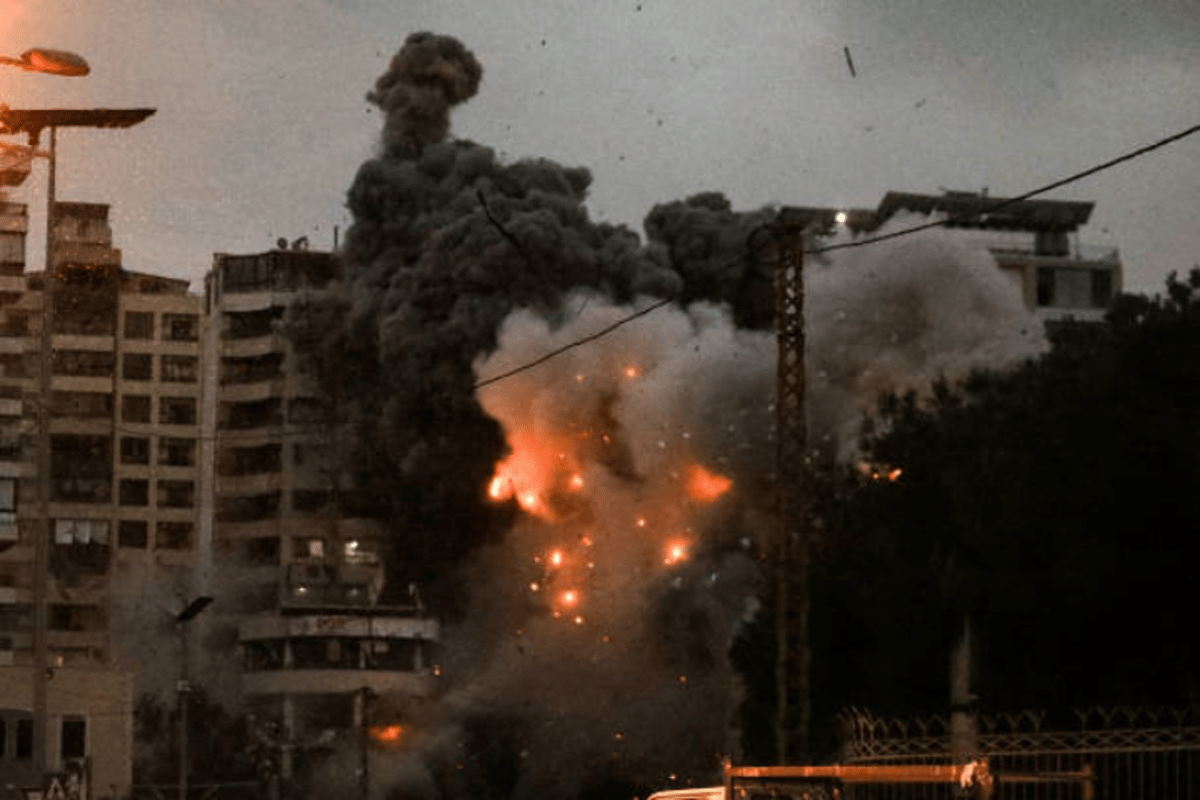
The IAF strike slammed into the residential building in Beirut’s southern suburbs, killing Tabatabai and four other Hezbollah operatives, and injuring over two dozen people, according to Lebanese authorities. It marked one of the deepest Israeli strikes into the Lebanese capital since the current war began, shattering Hezbollah’s dangerous assumption that its high-ranking leadership could operate safely from dense civilian neighborhoods.
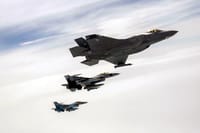
An IAF combat pilot involved in the mission revealed that the planning was strictly surgical: the munitions were guided to destroy only the exact two levels where Tabatabai and his entourage were believed to be, while minimizing damage to the rest of the structure. The air crews faced a stark instruction: no mistakes on target identification, timing, or execution, despite the extreme political sensitivity and urban clutter.
Strategic Loss and Escalation
Israeli officials stress that Tabatabai had been key to rebuilding Hezbollah’s war machine following the previous Lebanon war and the earlier elimination of senior figure Hashem Safieddine. He was the main coordinator of force buildup, border assaults, and the terrorist organization’s attempts to re-entrench along the northern frontier. His removal, they argue, tears a crucial layer out of Hezbollah’s command structure precisely as the group was trying to restore its offensive capability.
This was not the first attempt on his life; Tabatabai is believed to have survived at least two previous assassination efforts during the year of heavy fighting, underscoring his value to Tehran’s regional project and justifying the risk of a deep strike into Beirut to finally neutralize the threat.
The hit landed against the backdrop of a fragile ceasefire along the border. While Hezbollah and its backers immediately cried foul, framing the assassination as a violation, Israel countered that a U.S.-sanctioned terror commander actively rebuilding an Iranian proxy army remains a legitimate military target, regardless of any ceasefire terms. The IDF responded by wrapping up its “Magen Oz” General Staff drill and raising alert levels on the Lebanese front, signaling that the air force can reach any Hezbollah commander, and that the north is being hardened for potential escalation.