The IDF issued an unusual public statement Monday insisting there is no shortage of anti-drone equipment and that the army is not soliciting civilian donations, hours after it emerged that soldiers in southern Lebanon had been personally calling Sea of Galilee fishermen to ask for their nets.
IDF Spokesman Brigadier General Efi Defrin said the Chief of Staff is personally overseeing the drone threat and that procurement is ongoing with rigorous quality control. He warned that non-standard nets could endanger soldiers' lives, and acknowledged that "most of the actions we are taking on this matter are classified."
The statement landed awkwardly against a backdrop of damning on-the-ground reality. IDF personnel stationed in southern Lebanon contacted fishermen on the Sea of Galilee over the past week, asking to purchase or receive donations of fishing nets to bolster defenses against Hezbollah drone attacks, a personal initiative from soldiers in the field, not part of any organized IDF or Defense Ministry procurement.
Reservists have also contacted kibbutzim across the country, calling banana growers who donated plantation nets, with soldiers sending trucks to collect them and bring them to the front. Soccer goal nets sourced from local authorities have also been pressed into service.
One soldier described the improvised fishing nets' purpose bluntly: "The goal is basically to push the drone's impact farther away, so that if it comes at me, I won't be killed, but 'only' wounded. Instead of the army knowing how to supply us with them, company sergeants are raising money to buy them, posting links on their Instagram stories asking civilians for money to buy life-saving equipment."
The human cost driving the desperation is stark. Sgt. Nehorai Leizer, 19, from Eilat, was killed Sunday when a Hezbollah explosive drone struck the armored personnel carrier he was driving near the village of Debel in the Bint Jbeil District. Another soldier was seriously wounded in the same attack. As of Monday, 23 IDF soldiers have been killed in Israel's war with Hezbollah, which began in March. Recent weeks have seen a brigade commander seriously wounded, a platoon commander killed just a month before his wedding, and a reservist father of an eight-month-old killed by a drone strike inside Israeli territory near Manara.
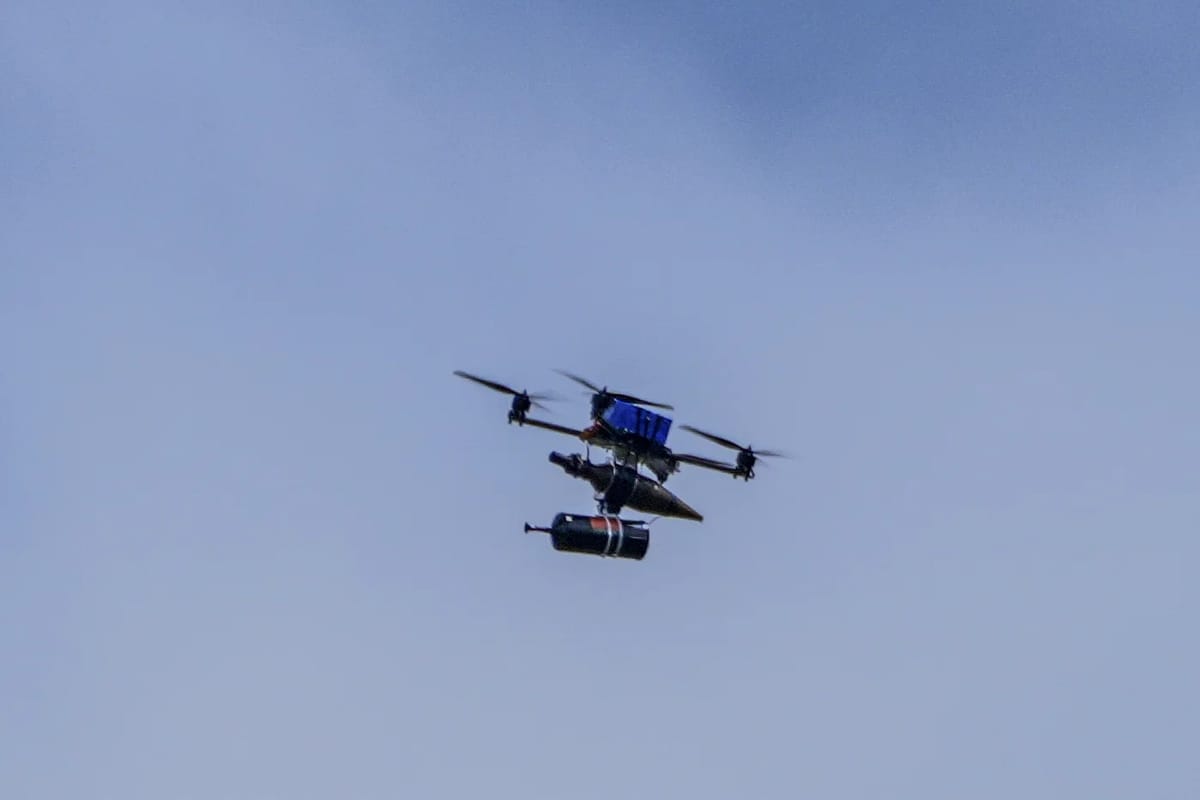
A senior IDF officer acknowledged the army "woke up too late" to the threat, despite fiber-optic drones having been used extensively in the Russia-Ukraine war for years. Hezbollah's fiber-optic drones are guided by a thin, almost invisible cable stretching kilometers from the operator, making them immune to jamming and nearly impossible to detect, since they transmit no signal.
Hezbollah Secretary-General Naim Qassem has publicly praised the drones, claiming they have made IDF forces "dizzy."
Finance Minister Bezalel Smotrich this week announced a roughly two-billion-shekel emergency budget for technological drone countermeasures, while noting that "drones will not be defeated through defense, but through offense." Schools in communities along the northern fence have been suspended, and a Hezbollah drone struck a home directly in Metulla in recent days.