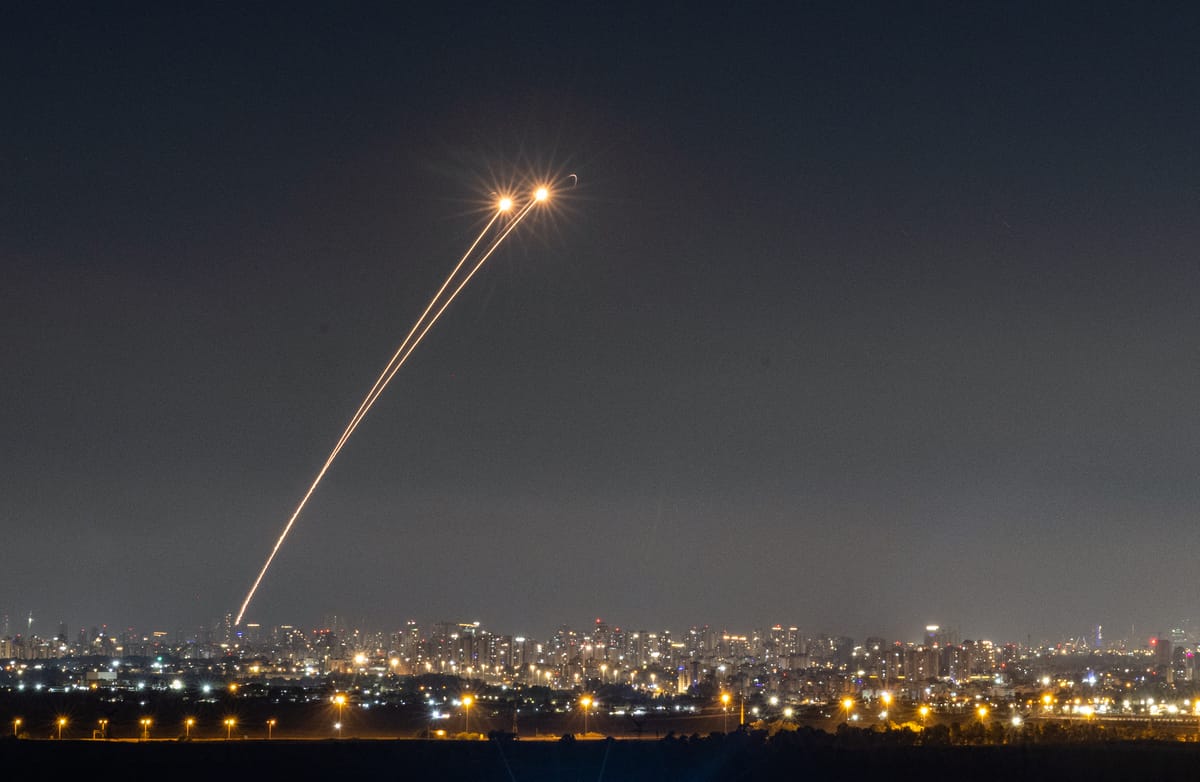
In a characteristically bold address at the World Economic Forum in Davos today, U.S. President Donald Trump took aim at Israeli Prime Minister Benjamin Netanyahu, affectionately known as "Bibi," over Israel's famed Iron Dome missile defense system. Trump claimed he had personally instructed Netanyahu to "stop taking credit for the dome," insisting that "it's our technology."
This remark, delivered amid discussions of U.S. achievements in Middle East peace and plans for a new American "Golden Dome" defense system, drew laughs from the audience but sparked immediate debate over its accuracy.
While Trump's comments underscore the deep U.S.-Israel security partnership, they also misrepresent the origins of Iron Dome, painting a picture of American invention where Israeli innovation was the driving force.
The Context of Trump's Speech
Trump's Davos appearance came on the heels of ongoing U.S. efforts to broker regional stability, including threats to Hamas and boasts about neutralizing Iranian threats.
He highlighted American contributions to Israel's defense, stating, "What we did for Israel was amazing. We did it for Israel. And by the way, I told Bibi, 'Bibi, stop taking credit for the dome. That's our technology, that's our stuff.'"
The president used this anecdote to pivot to his vision for a U.S.-based missile shield, dubbed the "Golden Dome," which he envisions extending even to territories like Greenland.
The speech blended humor, policy announcements, and a familiar Trumpian flair for claiming credit, but the Iron Dome quip stood out for its factual stretch.
This isn't the first time Trump has emphasized U.S. dominance in defense collaborations. His administration has pushed for expansive missile defense systems, including executive orders to develop an "Iron Dome for America," rebranded as Golden Dome.
However, by attributing Iron Dome's technology squarely to the U.S., Trump overlooks the system's well-documented Israeli roots, potentially conflating it with other joint projects like the Arrow interceptor system, which does involve more direct U.S. technological input.
The Real History of Iron Dome
Iron Dome was conceived in the early 2000s as a response to rocket threats from groups like Hezbollah and Hamas, following deadly attacks on Israeli civilians. Development began in earnest around 2004, led entirely by Israeli defense firms: Rafael Advanced Defense Systems and Israel Aerospace Industries.
At the time, U.S. defense officials were skeptical, warning that a homegrown short-range antimissile system was "doomed to fail."
Undeterred, Israel pushed forward, funding the initial research and prototyping domestically.The system became operational in 2011, proving its worth by intercepting rockets from Gaza with increasing effectiveness, reaching success rates of up to 90% in subsequent conflicts.
U.S. involvement came later, primarily in the form of financial support rather than core technological creation. Starting in FY 2011, the U.S. contributed funding for production and deployment, totaling $1.6 billion by 2021, with additional billions approved in subsequent years.
This aid was part of broader U.S.-Israel security cooperation, including a 10-year memorandum of understanding that allocates $500 million annually for missile defense programs like Iron Dome.
While there has been some technology sharing and co-production agreements, such as U.S. stipulations for access to Iron Dome tech in exchange for funding, the foundational design, radar systems, and interceptors are Israeli inventions.
Rafael, for instance, continues to manufacture and upgrade the system, with recent enhancements like the laser-based Iron Beam on the horizon.
The U.S. role has been crucial for scaling and sustaining Iron Dome, but claiming it as "our technology" ignores Israel's independent breakthroughs.
Why Trump's Claim Is Nonsense
Trump's assertion that Iron Dome is fundamentally U.S. technology is, at best, a hyperbolic exaggeration and, at worst, a distortion of history. The system was not "done for Israel" by America; it was built by Israelis to address uniquely Israeli threats, with U.S. dollars arriving after the heavy lifting of development was complete.
This narrative flips the script on a partnership where Israel has often led in innovation, exporting defense tech worldwide and even inspiring U.S. projects like the Golden Dome.
The confusion may stem from other collaborative systems. For example, the Arrow program, designed for longer-range threats, was indeed co-developed with U.S. firms like Boeing and involves more American intellectual property.
Trump's reference to "the dome" could be a casual blend of these, but sources confirm he specifically meant Iron Dome in the context of his speech.
Regardless, attributing Iron Dome's success solely to the U.S. diminishes Israel's engineering prowess and the risks its scientists took when American experts doubted the concept.Politically, such claims risk straining U.S.-Israel ties by implying dependency rather than mutual benefit. Israel has repaid U.S. support through shared intelligence, battlefield testing of tech, and contributions to global security.
Trump's bombast might play well to domestic audiences touting American exceptionalism, but it doesn't hold up under scrutiny. As the U.S. pursues its own dome-inspired defenses, acknowledging true partnerships, rather than rewriting them, would serve both nations better.In the end, Iron Dome stands as a testament to Israeli resilience and U.S. generosity, not American invention. Trump's light-hearted jab may have entertained Davos elites, but the facts paint a totally different picture.