
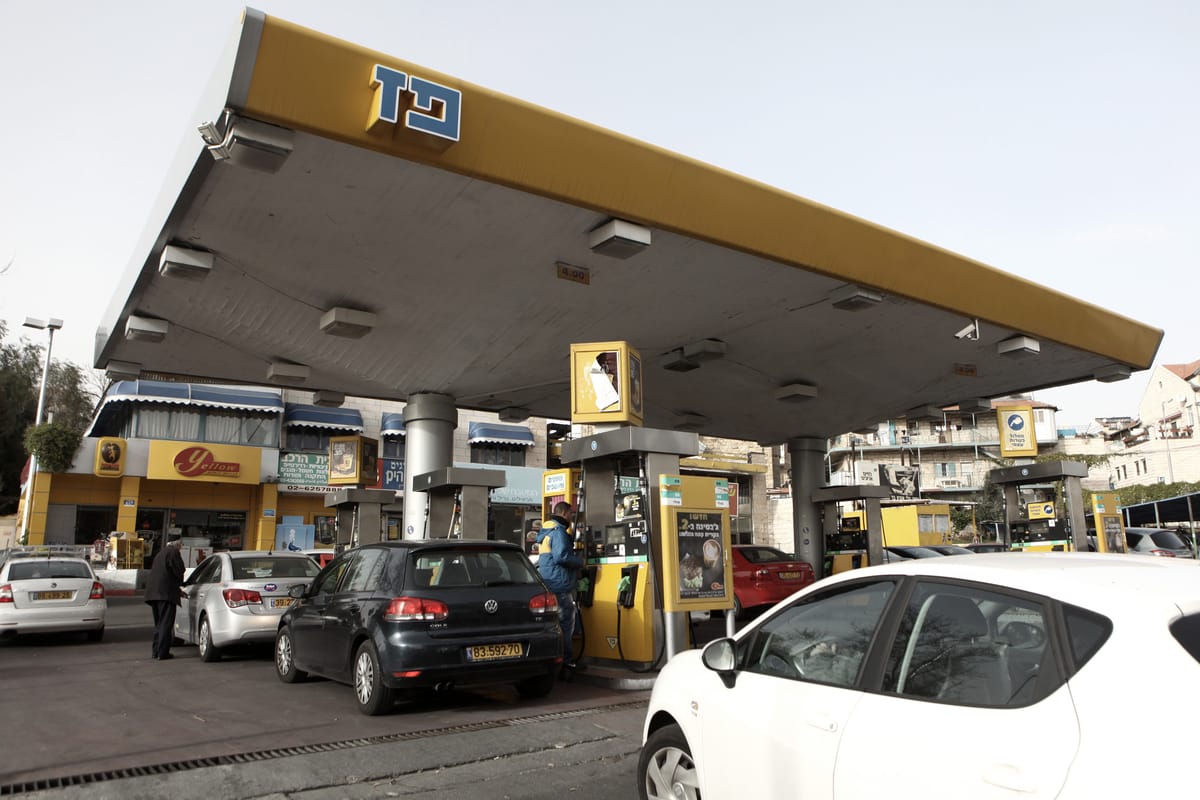
Drivers in Israel are set to see a significant drop in fuel prices at midnight between Wednesday and Thursday, as the Energy and Infrastructure Ministry announced a sharp reduction in the regulated price of gasoline for January 2026.
The maximum price for a liter of 95-octane unleaded gasoline sold in self-service stations will fall by 26 agorot, bringing the price down to 6.85 shekels per liter, including VAT. This marks the first time in more than two years that the price of gasoline has dropped below seven shekels per liter, and represents the lowest level since July 2023.
In Eilat, where fuel prices are lower due to the VAT exemption, the maximum price will drop by 23 agorot to 5.80 shekels per liter. The surcharge for full service will remain unchanged nationwide.
According to the Energy Ministry, the reduction is driven by a combination of global and local economic factors, led by a sharp weakening of the US dollar against the shekel. The dollar has fallen to a four-year low in recent days, trading below 3.18 shekels, significantly lowering the cost of imported fuel when converted into local currency.
At the same time, international gasoline prices in the Mediterranean basin have declined by approximately 11 percent. Officials point to an oversupply of refined fuel products, weaker global demand for gasoline, and a decline in geopolitical risk premiums as key contributors to the trend.
Bat-Sheva Abuchatzira, head of the Fuel and Gas Administration at the Energy Ministry, said the drop reflects a meaningful shift in market conditions. She noted that both the international price environment and the exchange rate have aligned in favor of consumers, resulting in one of the steepest monthly price cuts seen in recent years.
Fuel prices in Israel are updated at the end of each month under a regulated formula that takes into account international fuel prices in the Mediterranean market, excise taxes, marketing margins, VAT, and the representative exchange rate published by the Bank of Israel. While the maximum price is capped, actual prices may vary slightly between stations.
Industry analysts say the January price cut follows months of volatility driven by regional tensions, currency fluctuations, and changing global demand. If the dollar remains weak and international fuel prices continue to ease, further reductions may be possible in the coming months.
For now, the overnight price drop offers some relief to motorists heading into the new year, after an extended period of elevated fuel costs and economic pressure.