
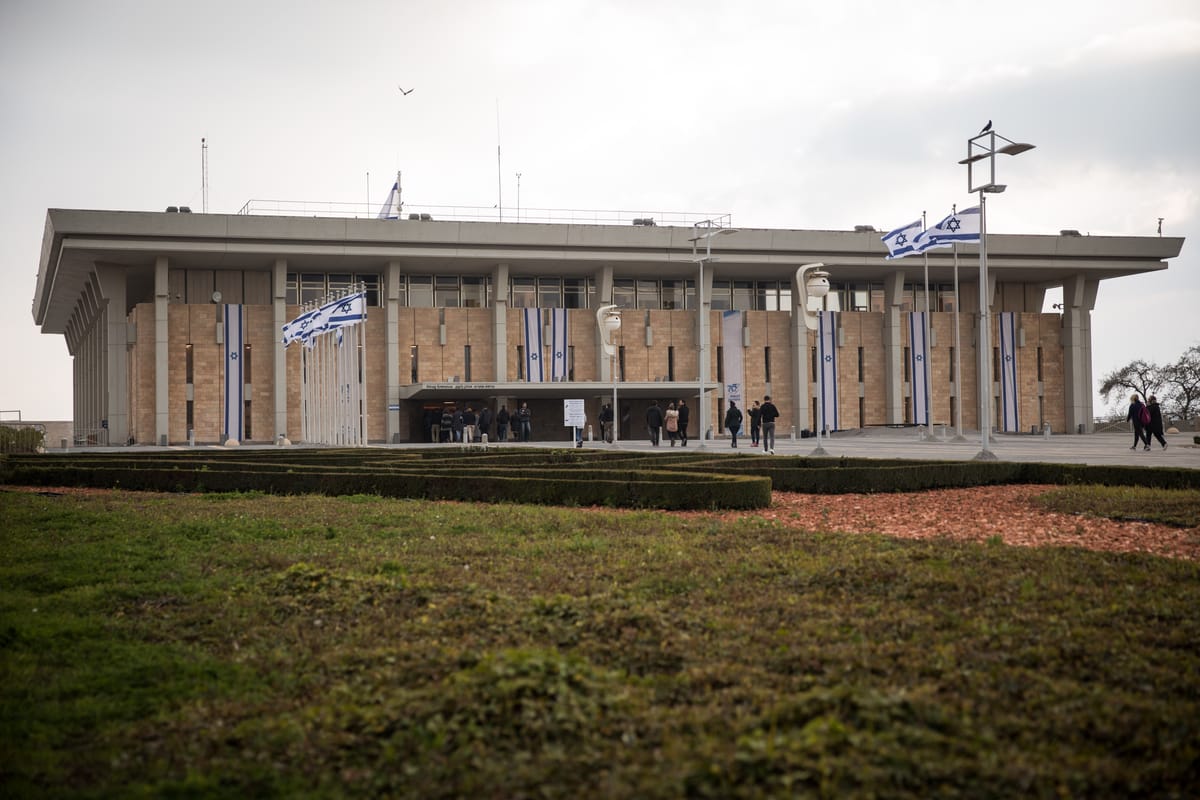
The Knesset approved a bill to dissolve itself in a preliminary reading Wednesday, passing the measure with 110 lawmakers in favor and none opposed, as the coalition crisis over the Haredi draft exemption bill continued to deepen.
The vote does not immediately dissolve the Knesset. The bill must still be prepared in committee and pass three additional readings before becoming law. If completed, it would trigger early elections, which must in any case be held no later than October 27.
The vote came after associates of Prime Minister Benjamin Netanyahu told representatives of the Haredi parties Tuesday night that a majority had been secured for the military conscription bill. Haredi officials remained skeptical and said they currently intend to support dissolving the Knesset.
Immediately after the preliminary vote passed, Blue and White chairman Benny Gantz asked Knesset Speaker Amir Ohana to halt all controversial coalition legislation.
In a letter to Ohana, Gantz said the Knesset should avoid advancing disputed legislation with broad public, constitutional, economic and social implications as the country heads toward elections. He named the draft law, media bills, legislation splitting the attorney general’s role, and other disputed bills.
A senior Haredi source told Maariv that the parties do not trust Netanyahu until they see the draft law brought to the plenum.
“Netanyahu is under pressure because he knows well that without a draft law, he won’t have us after the elections,” the source said. “If we go to elections without a draft law, he has no bloc.”
Coalition chairman Ofir Katz defended the government before the vote, saying the opposition had helped expand the coalition from 64 to 68 seats and that the government had completed a full right-wing term, passed nine budgets and advanced 520 laws.
The dissolution bill is now expected to be sent to the Knesset Committee, where it could be frozen while Netanyahu tries to resolve the draft crisis. Discussions on the conscription bill are set to resume in the Foreign Affairs and Defense Committee, with three committee meetings required before the final version can be brought to the plenum.
Two additional discussions are expected next week, with a final vote possible the following week, depending on the security situation.
The Haredi parties are watching Netanyahu’s moves closely. As long as the bill advances, they are expected to give him time to complete the legislative process. But if they conclude that he is again delaying or trying to avoid passing the law, they could move to bring down the government through a no-confidence vote.
At the same time, Netanyahu convened senior Likud officials Wednesday morning to discuss rules for the party’s expected primaries. The meeting was expected to include Likud Central Committee chairman Haim Katz, party secretariat chairman Israel Katz, MK David Bitan and Likud director-general David Sharan.
The talks focused on the party convention, the method for selecting the next Knesset slate, the future of regional slots and the number of reserved spots Netanyahu may seek for himself. Likud officials said Netanyahu may initially demand around 10 reserved spots, while ultimately settling for about five.