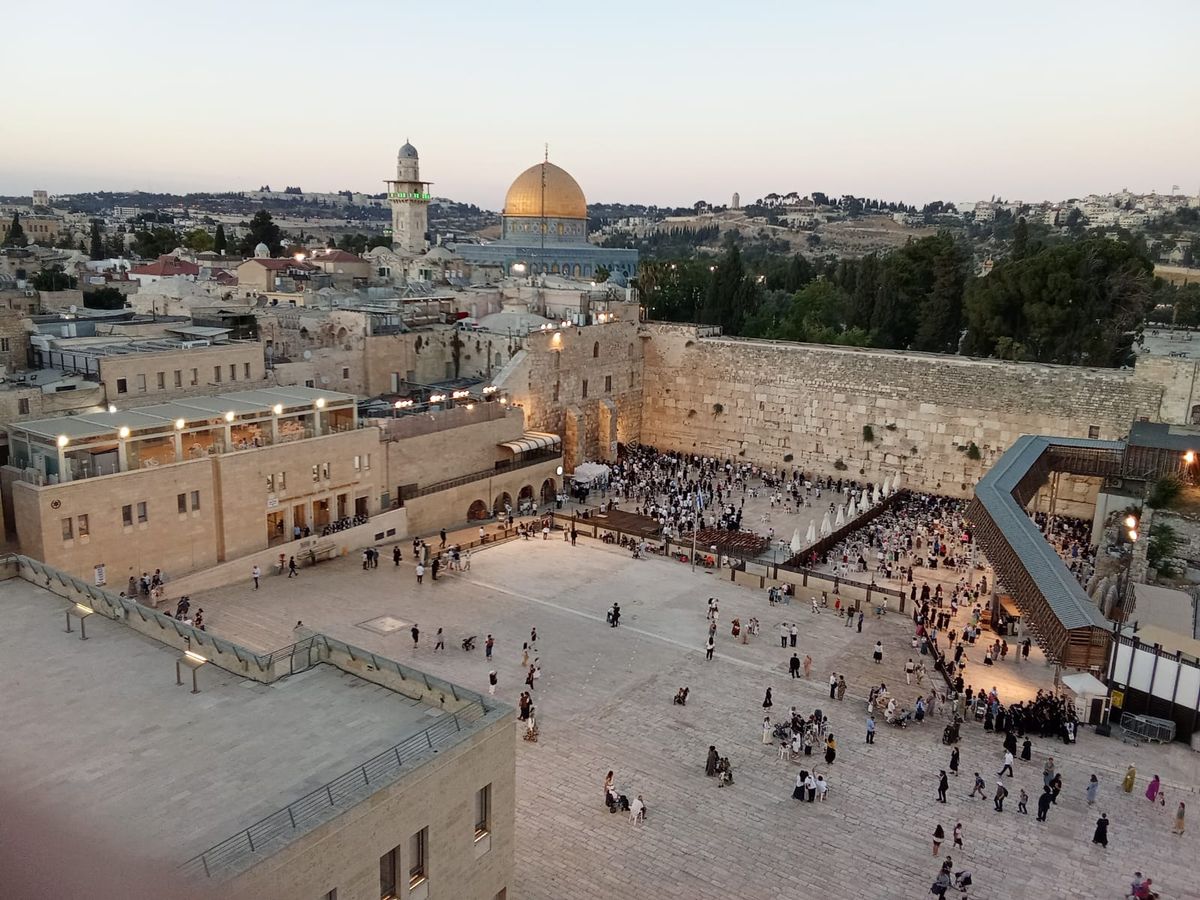
Israel’s High Court of Justice ruled Sunday to increase the number of worshipers permitted at the Western Wall, while signaling deeper concerns about the government’s overall policy on access to holy sites during wartime.
The court approved an immediate increase in the cap from 50 to 100 worshipers at a time, giving legal force to an updated arrangement proposed by the state. However, the justices made clear that the decision was only a partial step, leaving open a broader legal challenge over how authorities are balancing security restrictions with freedom of worship.
As part of that challenge, the court issued a conditional order requiring the state to explain why it has not formulated a comprehensive policy that properly weighs security needs against religious rights. A further hearing on the issue is scheduled for later this week.
Central to the court’s deliberations was the lack of adequate protected spaces at the Western Wall plaza itself. According to the state’s submission, only two nearby protected areas exist, each capable of holding just a few dozen people, and both located בתוך adjacent administrative offices rather than in the main prayer area.
Authorities also examined underground sections of the site, including the Western Wall tunnels, but determined that they do not provide sufficient protection during missile attacks and could pose additional risks if used as shelters.
These limitations have shaped the government’s restrictive approach to gatherings at the site since the start of the war, even as other types of assemblies have at times been permitted under different conditions.
During the hearing, Supreme Court President Isaac Amit emphasized that even under wartime conditions, administrative decisions must balance security with fundamental rights. He described images of an empty Western Wall during major prayer events as deeply problematic, underscoring the importance of maintaining access where possible.
Other justices questioned whether enforcement of Home Front Command guidelines had been applied consistently, particularly in comparison to protests and other gatherings.
While the court accepted the immediate security constraints, it indicated that the state’s broader framework may require revision. The current ruling allows a modest increase in access, but the larger question, how to ensure meaningful religious access without compromising safety in a site lacking proper shelters, remains unresolved and now sits at the center of an ongoing legal challenge.