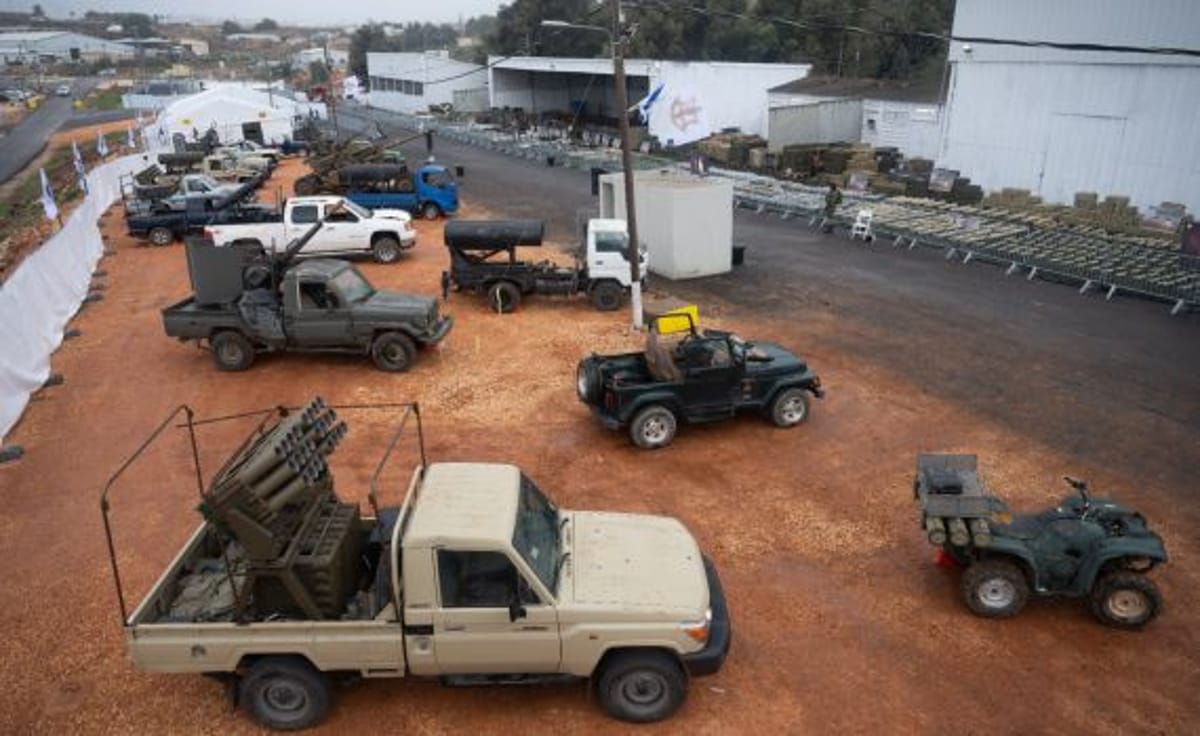
Hezbollah is aggressively capitalizing on the political paralysis of the Lebanese government to rebuild its military infrastructure and strategic capabilities, raising significant alarm bells in Israel. Despite daily Israeli airstrikes, averaging 45 to 50 attacks per month between June and October 2025, the terrorist organization is believed to be preparing its next "surprise" for a future war.
The current escalation of Israeli air attacks comes amid reports that Israel is preparing for a wider military offensive against Hezbollah targets in both Southern Lebanon and the Bekaa Valley. This is a direct response to intelligence indicating that the group's renewed power-building efforts will not be deterred by the current level of strikes, especially as Iran increases its support by funneling funding, weapons, and components through the re-activated supply corridor from Iran to Lebanon via Syria.
The Emerging Strategic Threat
While the immediate threat of a full-scale Radwan Force invasion across the border has diminished due to significant Israeli damage to the unit's infrastructure, the primary long-term threat remains Hezbollah's ability to launch rockets and missiles from more distant areas, particularly the Bekaa Valley, where the bulk of its military strength is concentrated.
Experts believe Hezbollah's current interest is not escalation but continued force building until it is capable of achieving a major surprise against Israel. This restraint stems from three main factors:
- The understanding that Israel's counter-response would be devastating.
- The assumption that it can continue its re-armament trend despite current Israeli activity.
- Concerns over internal legitimacy. Sources close to the internal workings of Lebanon estimate that "If Hezbollah responds against Israel and renews the war, it is finished! The public will not allow it, and the chance of a civil war will greatly increase."
A Historic Opportunity and a Weakened Government
The devastating war dealt a severe blow to Hezbollah's standing, ending Lebanon's two-year political vacuum with the election of President Joseph Aoun and the formation of the Nawaf Salam government. The Lebanese public, weary of war and destruction, increasingly views Hezbollah not as the "protector of Lebanon" but as a "militia" that forced the nation into a destructive war serving Iranian interests.
This historic shift led the Lebanese government to adopt a resolution last August to disarm the organization, stripping the "resistance weapon" of its official status and consigning it to the category of a militia that must be dismantled under the Taif Agreement. This creates a cautious hope for change, where, for the first time in decades, Lebanon could establish a state monopoly on weapons.
However, the current reality demonstrates the helplessness of the Beirut government and the ineffectiveness of the Lebanese Army. While the army has dismantled some Hezbollah infrastructure in the south (often in coordination with the organization), it is far from disarming the area south of the Litani River, let alone areas further north. Compounding this issue, 30% to 40% of the Lebanese Army's soldiers are from the Shia community, and some sympathize with, or even actively cooperate with, Hezbollah.
The Path Forward: Military and Political Coordination
Israel must recognize that while its military strikes are a security necessity and potentially leverage against the Beirut government, they also provide Hezbollah with a pretext to justify retaining its arms. To avoid this paradox, Israel must integrate military pressure with a comprehensive diplomatic strategy coordinated with the US.
Key strategic steps required of Israel:
- Coordinate with the US to accelerate efforts to weaken Hezbollah while simultaneously strengthening the Lebanese state and its army, improving the chances of disarmament in the medium-to-long term.
- Condition Reconstruction: Urge the US and Gulf States (like Saudi Arabia and the UAE) to tie investment and aid for Lebanon’s reconstruction exclusively to Hezbollah's disarmament, initially south of the Litani, and eventually throughout the country. This contrasts with Iran's continued direct funding to Hezbollah and Qatar's financing of the Lebanese Army's salaries.
- Address Shebaa Farms: Push the Lebanese and Syrian governments to resolve the issue of the Shebaa Farms and transfer them to Syrian sovereignty, thus eliminating a key pretext Hezbollah uses to justify its armed existence.
- Domestic Reconstruction: The Israeli government must immediately accelerate the reconstruction of the northern settlements and support their residents. The full victory in the north requires a thriving and socially and economically stable Galilee.
In conclusion, Israel’s post-October 7 policy demands a response to any developing strategic threat on its borders. The most effective route to achieving Israel's interests in Lebanon requires a careful blend of military action and political maneuvering, ensuring that all actions reinforce the message that Hezbollah is a "militia" whose weapons are dragging Lebanon toward destruction and must be dismantled at all costs.