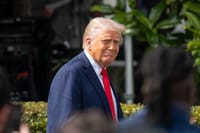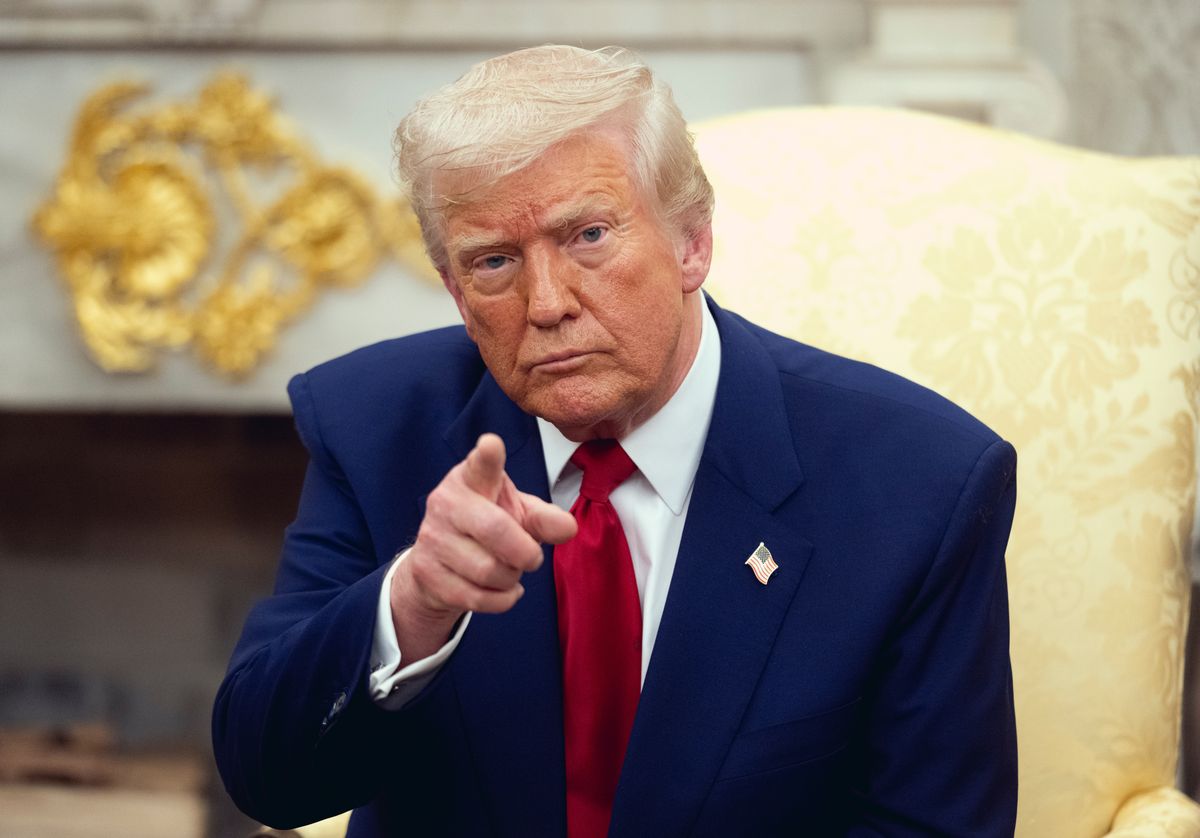
Yesterday, President Donald Trump signed an executive order directing the State and Treasury Departments to review and potentially designate certain chapters of the Muslim Brotherhood as foreign terrorist organizations (FTOs) and specially designated global terrorists (SDGTs).
The order specifically targets Brotherhood chapters in Lebanon, Egypt, and Jordan.
The White House claims these chapters are involved in or support violent and destabilizing campaigns, including ties to Hamas and recent attacks linked to the October 7, 2023, conflict.
Within 30 days, the U.S. State Department and Treasury, consulting with the Intelligence Community, must deliver a report on whether to designate these specific chapters.
Within 45 days after that report, the Secretaries of State and Treasury are required to take action, including possible formal designation.
If declared as FTOs or SDGTs, those Brotherhood chapters would face asset freezes, sanctions, and legal restrictions, including bans on providing them with material support.
Israel’s Prime Minister Benjamin Netanyahu praised Trump’s decision, calling the Brotherhood a “threat to regional stability.” Right-wing conservatives, particularly within the Republican base, have pushed for this move for years.days.
This move echoes efforts from Trump's first term in 2019, when he considered a broader designation of the Muslim Brotherhood following discussions with Egyptian President Abdel Fattah el-Sisi, though it wasn't implemented at the time.
This move has real legal teeth. But the process is just beginning, and a lot depends on what the State and Treasury departments conclude in the coming weeks.
This follows a shocking report released on November 17, 2025 by the The Institute for the Study of Global Antisemitism and Policy (ISGAP), titled "The Muslim Brotherhood’s Strategic Entryism into Western Society: A Systematic Analysis."
This in-depth study examines the Muslim Brotherhood's long-term, non-violent strategies for infiltrating and influencing Western institutions, with a heavy focus on North America and the United States.
It portrays the Brotherhood as pursuing a "civilizational jihad" aimed at gradually establishing Islamic governance by exploiting democratic systems, while distinguishing this political ideology (Islamism) from the religion of Islam itself.Key findings highlight its doctrines of "tamkeen" (institutional entrenchment) and "marhaliyyah" (phased adaptation), which involve building parallel societies and subtly subverting Western structures over generations.
Strategies span four main areas:
- Policy influence: Gaining advisory roles in government, mobilizing voters (e.g., through groups like Emgage), and altering counterterrorism language to remove terms like "jihad" or "Islamic terrorism."
- Legal manipulation: Using "lawfare" (e.g., lawsuits to silence critics), expanding definitions of "Islamophobia" to curb criticism, and pushing for sharia accommodations under anti-discrimination laws.
- Institutional infiltration: Establishing networks in education (e.g., Muslim Students' Association on over 600 U.S. campuses, Students for Justice in Palestine for BDS campaigns), civil society (e.g., Council on American-Islamic Relations or Islamic Society of North America chapters), and mosques/financial systems.
- Narrative control: Shaping media (e.g., via Al Jazeera), curricula, and public discourse to frame Palestine as a core religious issue, normalize anti-Zionist rhetoric, and portray the MB as moderate.
Evidence includes internal Muslim Brotherhood documents like the 1982 "Project" (a 100-year global infiltration plan) and the 1991 "Explanatory Memorandum" (outlining seven stages for North American dominance, including a list of 29 affiliated U.S. organizations).
The report cites court records from the 2008 Holy Land Foundation trial, which exposed MB-Hamas links, as well as post-9/11 repositioning and surges in activism after October 7, 2023 (e.g., campus encampments and protests with Hamas symbols).
The report strongly connects the MB to antisemitism, tracing it to founders like Hassan al-Banna (who had Nazi sympathies) and ideologues like Sayyid Qutb, who framed Jews and Zionism as existential threats.
It accuses the MB of "Islamizing" antisemitism by elevating the Palestinian conflict to a religious duty and inverting narratives (e.g., portraying Israel as the aggressor). Ties to other groups include: Hamas: Described as an MB offshoot, with direct links via funding networks and shared ideology; post-October 7 mobilizations are cited as evidence of support.
Qatar: A key patron, providing billions in undisclosed funding to U.S. universities and media to promote MB-aligned views, often tied to antisemitism and BDS efforts.
Recommendations emphasize bolstering democratic resilience through transparency (e.g., foreign funding disclosures), legal reforms to prevent exploitation, and supporting moderate Muslim voices.
Critically, it calls for designating the Muslim Brotherhood and its U.S. affiliates (e.g., CAIR, ISNA, MSA) as terrorist organizations, citing their subversion, extremism, and Hamas connections—echoing designations in countries like Egypt and Saudi Arabia.