The Israeli government is set to ratify the first phase of an agreement that will see the release of over 2,000 Palestinian prisoners, including 250 security prisoners. The agreement is being discussed by the Security Cabinet this evening (Thursday) and is expected to be approved by the full Government immediately afterward.
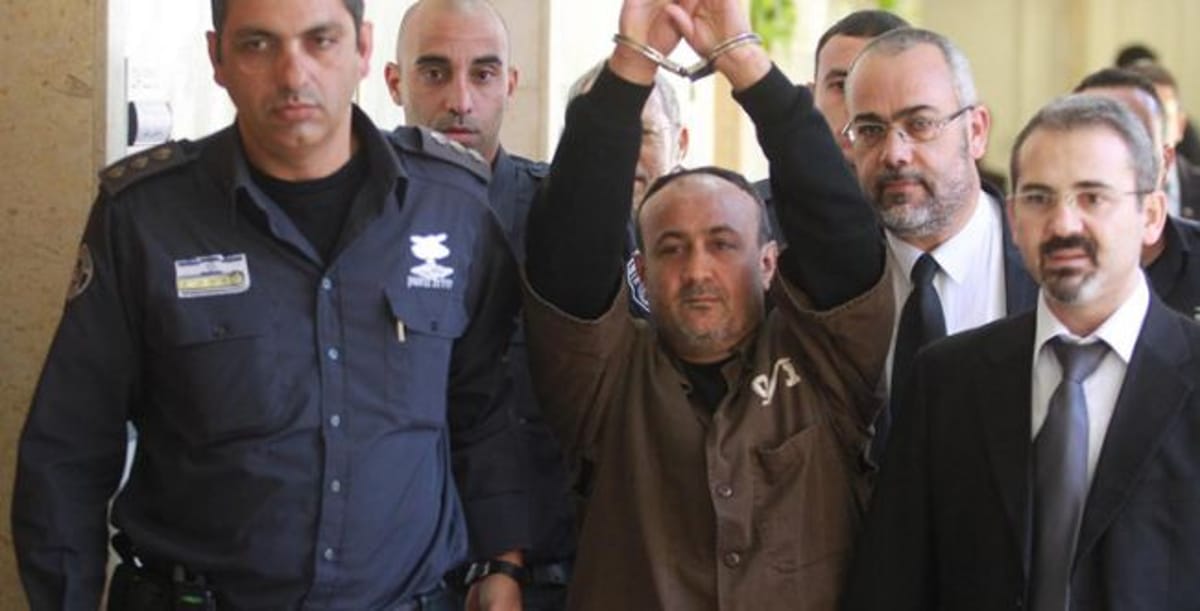
Under the terms of the deal, Israel will receive the 20 living Israeli prisoners (hostages) in a single phase, expected to occur on Sunday or Monday, with the bodies of the deceased Israeli prisoners (hostages) to be returned in several subsequent phases. Furthermore, a senior security source confirmed to N12 that highly contentious figures, including master terrorist Marwan Barghouti, will not be among those released.
Israel’s Commitments and "Red Lines"
The agreement outlines several key commitments from Israel:
- Security Prisoners: Israel will release 250 security prisoners.
- Detained Civilians: Israel will release 1,700 Gaza residents who were arrested after the October 7 massacre but were "not involved" in the atrocities. This includes 22 minors under the age of 18.
- Terrorist Bodies: Israel will hand over the bodies of 360 terrorists.
Crucially, Israel has imposed stringent red lines regarding the fate of the most dangerous prisoners:
- Deportation: Any security prisoner convicted of murder, manufacturing weapons used for murder, or direct involvement in a fatal attack, will only be released to the Gaza Strip or to a foreign country. These individuals are immediately banned from entering Israel and the region of Judea and Samaria.
- High-Profile Vetoes: Highly notorious "heavy" prisoners, including Marwan Barghouti, Abdullah Barghouti, Abbas al-Sayed, and Ahmad Sa'adat, will not be released.
- Sinwar Bodies: The bodies of Yahya and Mohammed Sinwar will not be returned, a measure intended to prevent their graves from becoming symbolic sites for terror commemoration.
- October 7 Murderers: Nukhba terrorists with "blood on their hands" from the October 7 massacre will not be released under any circumstances.
The agreement specifies that no "release ceremonies" will be permitted by Hamas, a practice the terror group used to exploit politically in the past.
Ceasefire and Humanitarian Aid
The deal stipulates a complete ceasefire and an Israeli commitment to begin withdrawing from the Gaza Strip once the Israeli prisoners (hostages) are released. Israel will retain control of 53% of the Gaza Strip until the very last Israeli prisoner (hostage) is returned.
Additionally, Arab media reported key humanitarian elements:
- The Rafah Crossing will be opened in both directions.
- 600 trucks of humanitarian aid will be permitted entry into Gaza daily.
The security establishment emphasized that the agreement to release convicted murderers only to Gaza or abroad, a demand insisted upon by Minister Ben Gvir, ensures they are prevented from returning to the Judea and Samaria region, a key Israeli security concern.