
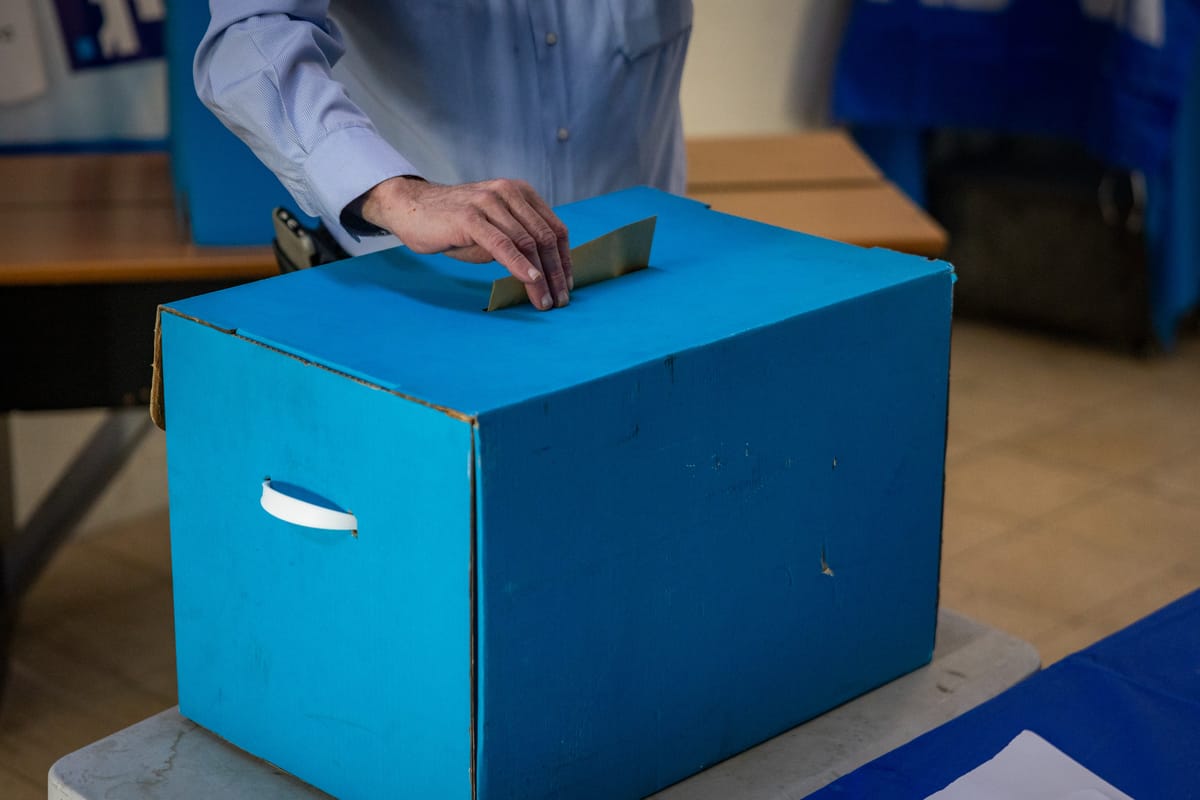
Israel's Privacy Protection Authority warned political parties and their polling-station activists on Monday not to pass along information about who has shown up to vote, saying violators could face heavy fines and, in some cases, up to five years in prison.
The warning follows two High Court rulings. In September, the court ruled that reporting whether a voter has arrived at a polling station is illegal, because it violates privacy and there is no legal authority for it. Last week, the court went further, ruling that polling committee members and party observers may not even count how many people have voted at a given station and report that number to their party in real time, whether the count is done digitally, by hand or any other way, and even if no names or personal details are shared.
Under the rules, party representatives at polling stations may not tell their parties anything about a person's arrival, whether they voted or the circumstances of their vote. The ban covers every way of passing on that information, including the election apps the parties use.
Party activists and app users outside polling stations must get a person's consent before sending the party any personal information about them, and must tell them how it will be used.
"The authority has made clear that it will act to enforce the prohibitions, in appropriate cases, using its administrative and criminal powers," said the authority's head, attorney Gilad Samama. "This may include audits of app servers and the issuing of orders, as needed. Violating the law may lead to significant financial sanctions and civil liability. Willful invasion of privacy, under the circumstances set out in the law, is also a criminal offense punishable by up to five years in prison."
The authority stressed that responsibility for protecting voters' privacy doesn't rest only with party representatives at polling stations, but also with app operators, suppliers, activists and supporters.
It gave one example of a possible violation: a voter who gets a phone call that makes clear the caller knows he hasn't voted yet.
On election day, the authority will run a dedicated hotline for privacy complaints, and its staff will be stationed at the elections command center in the Knesset to handle reports from the field. It urged the public to report any suspected privacy violations, and reminded operators that any serious security breach involving databases built on the voter registry, or other databases rated at medium or high security levels, must be reported to the authority.