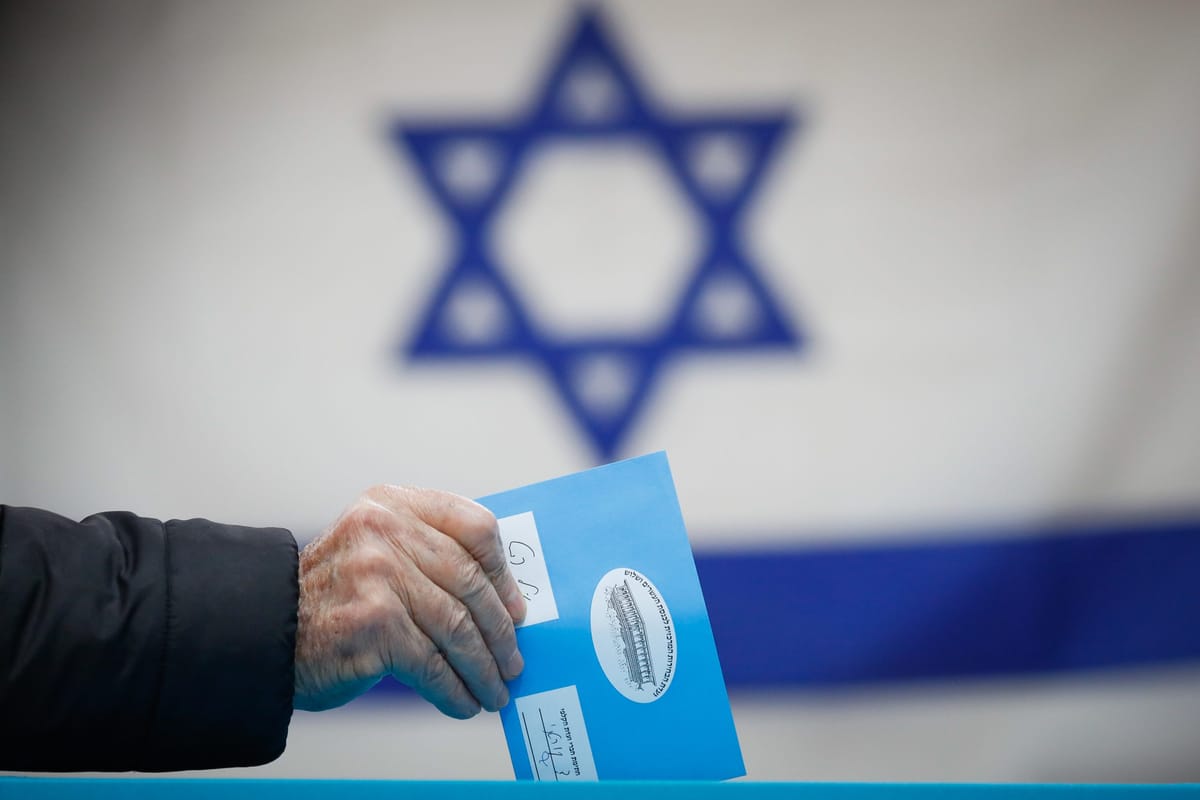
The Central Elections Committee has revised downward its estimate of outstanding double envelopes by a full 20%, a shift that sharply reduces the statistical likelihood of any dramatic change in the balance between the coalition and opposition blocs.
More than 85% of standard ballot boxes have now been counted, and the map of the next Knesset continues to come into focus. At the same time, the committee announced a significant adjustment to the mathematics of the remaining count.
Initially, the Central Elections Committee estimated that approximately 600,000 double envelopes, covering soldiers' votes, accessible polling stations, diplomats and other special categories, would be counted in the coming days. That figure has now been updated to just 480,000, a reduction of 120,000 votes.
The revision matters because double envelopes represent the last pool of votes large enough, in theory, to alter the bloc balance. With the new estimate, that pool has shrunk by a fifth, and with it the window for a surprise.
Historically, double envelopes have not produced large swings in any case. The votes tend to divide roughly in proportion to the general population, splitting between coalition and opposition in a pattern similar to the standard count. The two blocs most likely to lose ground once double envelopes are tallied are the chareidi parties and the Arab parties, both of which traditionally perform less strongly in soldiers' and overseas votes.