
Get our mobile app
Download on the App StoreGet it on Google Play

After the noise

Four sharpest campaign ads — ranked

From Ben Gvir at the shooting range to Shas's Spike News wordplay, the election produced a handful of genuinely creative spots. We ranked them by craft, punch and how well the pieces fit together, and asked which one you'd put first.

Trump in a Likud campaign spot
Photo: Yonatan Sindel/Flash90

Alongside the old-fashioned campaign in newspapers and on billboards, the parties and their strategists poured thought into videos and materials for social media and news sites, trying every visual format to catch the attention of scrollers and viewers.

Before ranking the four best election spots, in my view, at least, a look at the types of videos the parties and campaign teams put out.

1. The basic: the "phone content" video — when authenticity becomes amateurism

The format: an MK or candidate holds the phone vertically, speaks straight to camera from the back seat of a car, from party headquarters or from a Knesset corridor. Netanyahu, Ben Gvir, members of the Democrats and Smotrich all used it heavily.

Creative analysis: This format was born out of a desire to create accessibility, immediacy and a sense of "live" authenticity. But in terms of craft and criticism, it is the cheapest and least effective default. When there is no script, no direction and the lighting is based on whatever fluorescent happens to be overhead, the message tends to sound like nagging, a repetition of worn-out talking points or "digging in" that most scrollers skip within seconds.

Ready for more?

2. The investigator: "Look what he said" — embarrassing cut-and-paste clips

The format: a compilation of archive clips, from television interviews, radio panels or Knesset committee debates, cut carefully to embarrass the political rival. A genre beloved by parties on both sides of the political map; the chareidi parties used it too.

Creative analysis: One step above the basic phone video. Here there is already investigative work and basic editing. The power of the video is based on the principle of "refuting the claim" or proving hypocrisy ("Here's what he said yesterday versus what he's doing today").

Still, the final product leans entirely on others' material, creates no new visual language, and often suffers from text overload, exaggerated subtitles and cheap sound effects trying to manufacture artificial drama.

3. Copy without limits: the AI videos — buds of innovation and visual sophistication

The format: use of generative AI tools to create simulations, futuristic images, controlled deepfakes or surreal situations that could not have been filmed in reality. In the last election it was popular mainly with Netanyahu, Eisenkot and Ben Gvir. United Torah Judaism discovered it only toward the end.

Creative analysis: Here genuine creative thinking begins to show. AI allows a campaign to break through budget constraints and present extreme, dystopian or humorous scenarios at a high level of finish and at record speed.

These videos draw initial attention by virtue of being innovative and eye-catching, but they still sometimes suffer from a certain alienation, a "synthetic" feel and an inability to generate deep and genuine human emotion.

4. The best: the human advertising spot — the peak of creative art

The format: production filmed at the highest level (cinematic), including professional actors, a tight script, precise direction, sharp punchlines and a subliminal message that passes between the lines. The only party that invested in this in a long and consistent series was Shas. In the other parties there were a few scattered examples.

Creative analysis: A sophisticated narrative ad does what no AI or phone video can do: it creates emotional identification, fine humor and mental deposit. Instead of shoving dry talking points in the voter's face, the video uses metaphors, sharp dialogue and excellent acting to convey a pointed political statement through humor or drama.

This is a complete advertising product that stays in the memory, goes viral by virtue of its artistic-entertainment value, and manages to influence the voter's consciousness without his feeling that "propaganda" has been planted in him.
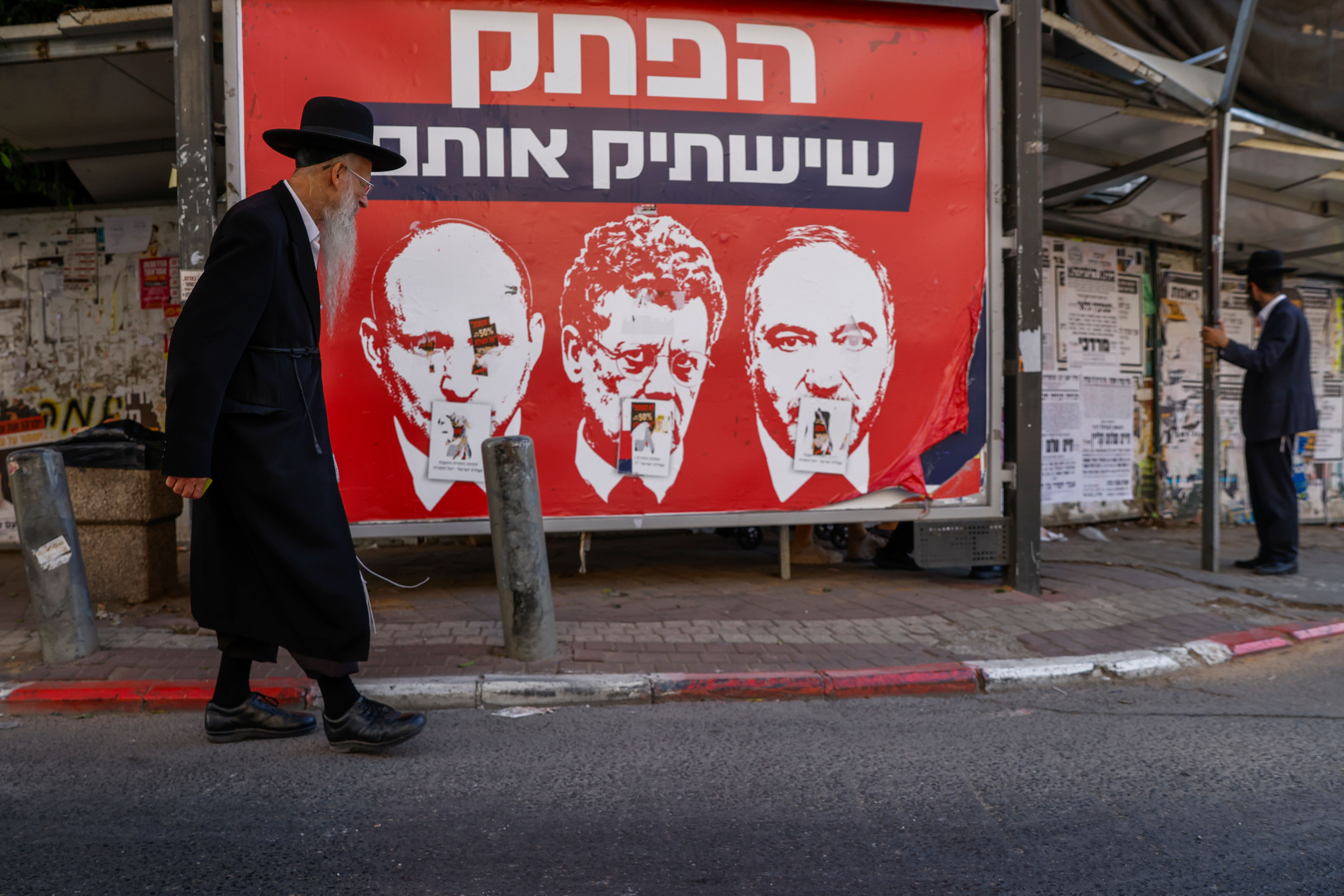
United Torah Judaism campaign in Bnei Brak
Photo: Flash 90
United Torah Judaism campaign in Bnei Brak Photo: Flash 90 (צילום: פלאש 90)

Ranking the four sharpest spots

Out of countless advertising materials put out by the parties in all sorts of configurations and advertising channels, we selected and chose the best. Refined and precise materials that, if you saw them, stayed in front of your eyes for a long time because of their quality writing.

The parameters by which we ranked:

Wordplay: flashes and welding of words and slogans, or alternatively connection between different subject areas with similar words.

Punch: a flash that causes a release of dopamine in the brain when understood. In printed material the punch will usually be concentrated in the headline and/or in the ad concept; in a video there will usually be several punches.

Connection between all components: creative connection between all the elements of the spot; the actors, the visuals, the texts. Or alternatively connection between the beginning of the spot and its end in a kind of closing of the circle that causes a "wow" to burst out.

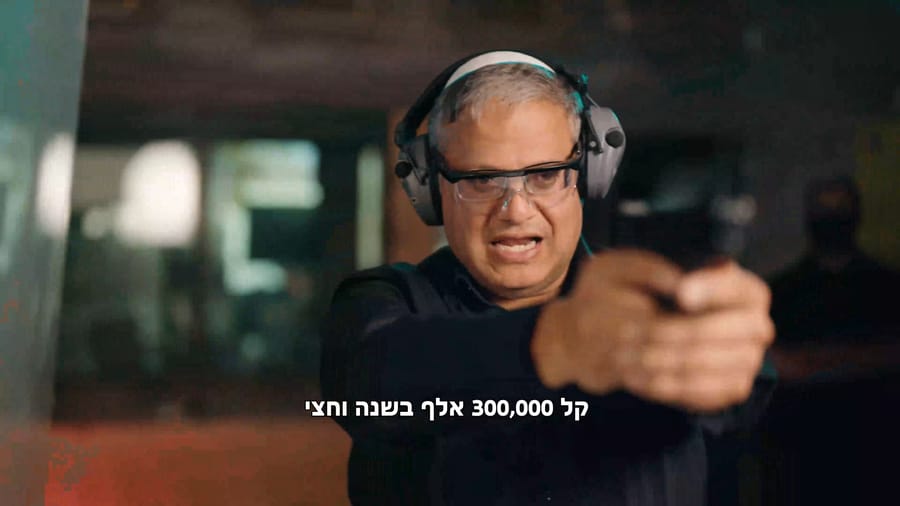
In fourth place: Ben Gvir and his wife at the range

A spot combining humor and guns: Ben Gvir and his wife at an improvised range talk about achievements in issuing gun licenses. Because there is no more appropriate place to talk about guns than at a range (connection, we already said?).

The dialogue between the two looks like a test or interview about various achievements, only the location and the shots in the background give an interesting concept to the things. The shots and the drawn pistols facing the targets also inject pace and action into the conversation. The spot ends with "thanks" to all involved — as if it were a cinema film.

Itamar Ben Gvir and his wife at the range
Photo: Ben Gvir X account
Itamar Ben Gvir and his wife at the range Photo: Ben Gvir X account (צילום: עמוד ה-X של בן גביר)

In third place: "Code Black" alert

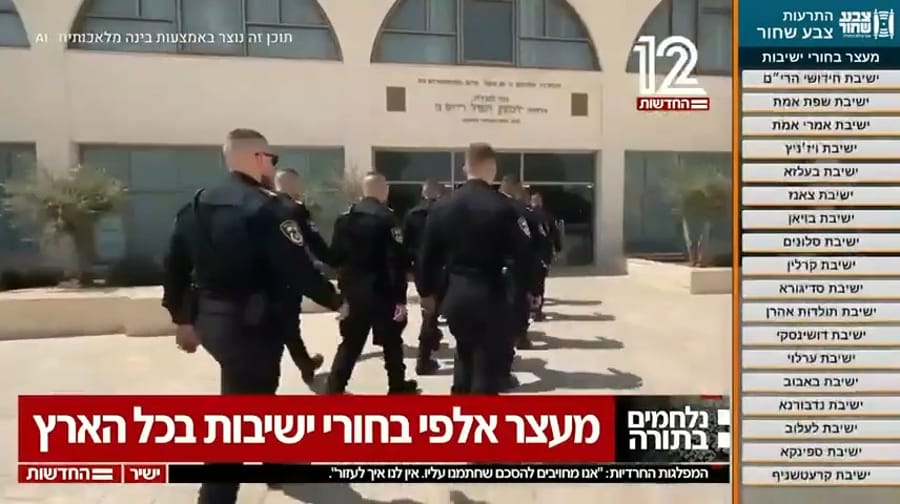
A short, sharp spot that sits on the primal chareidi fear of police raids on yeshiva halls for draft dodging. Creatively, they took the similarity between "code black" (tzeva shachor) and the "red alert" (tzeva adom) siren with a brilliant spot of a sequence of alerts and sirens on the Channel 12 news screen. At the same time, a list of yeshivos where the warning was sounded appears on the screen (brilliant!) and in the background the alert is heard, exactly like the original red-alert warning.

Beyond the brilliant connection between the alerts, in the center of the screen appears documentation (AI) of raids and arrests in yeshiva halls. Perfect connection between all the components of the spot. To their credit, the entire list of yeshivos displayed in the alert list was completely clear and familiar and not AI gibberish, likewise in the stripe.

"Code Black" in action
Photo: Spokesman
"Code Black" in action Photo: Spokesman (צילום: יח"צ)

In second place: Lo yakum v'lo y'kum

Unlike the other parties, Shas chose to put out to the traditional public a series of artistic and professional spots, in all of them the lead actor is Chaim Zanati. Among all the spots, which were nice and interesting, we chose the most creative.

The spot presents a scene in the synagogue, when the actor playing a traditional man discovers that the Democrats' people, "Kaplan" and his friend (brilliant name choice), falsified the Torah and changed the Ten Commandments and more.

The spot as a whole conveys the hidden (or revealed) message about the danger of changing the Jewish spirit in the state and falsifying the Torah. It is built from several frames: the laughter at the changes in the "new" book, changing the verse "In the beginning G-d created," removing the "not" from the Ten Commandments and pushing the microphone on Shabbos.

To complete the picture and the stereotypes, they made sure the "Reform" actor would have a big peyah, and when the microphone is pushed to the traditional man, an echo is heard in the background, so that no one will miss it and the picture will look natural.

Beyond the chain of punches throughout the spot, the film ends with a brilliant wordplay when the "Reform" actor passes the microphone to the traditional man because "Y'kum [a name] asked you to bless," and the traditional man answers, "Lo yakum v'lo yihyeh" [it will not arise and will not be, but yakum sounds like y'kum]. The spot itself ends with the slogan "A Palestinian state will not arise and will not be." Perfect connection to the overall message and visuals in the spot.

"Lo yakum v'lo y'kum"
Photo: Deri X account
"Lo yakum v'lo y'kum" Photo: Deri X account (צילום: עמוד ה-X של דרעי)

In first place: Spike News

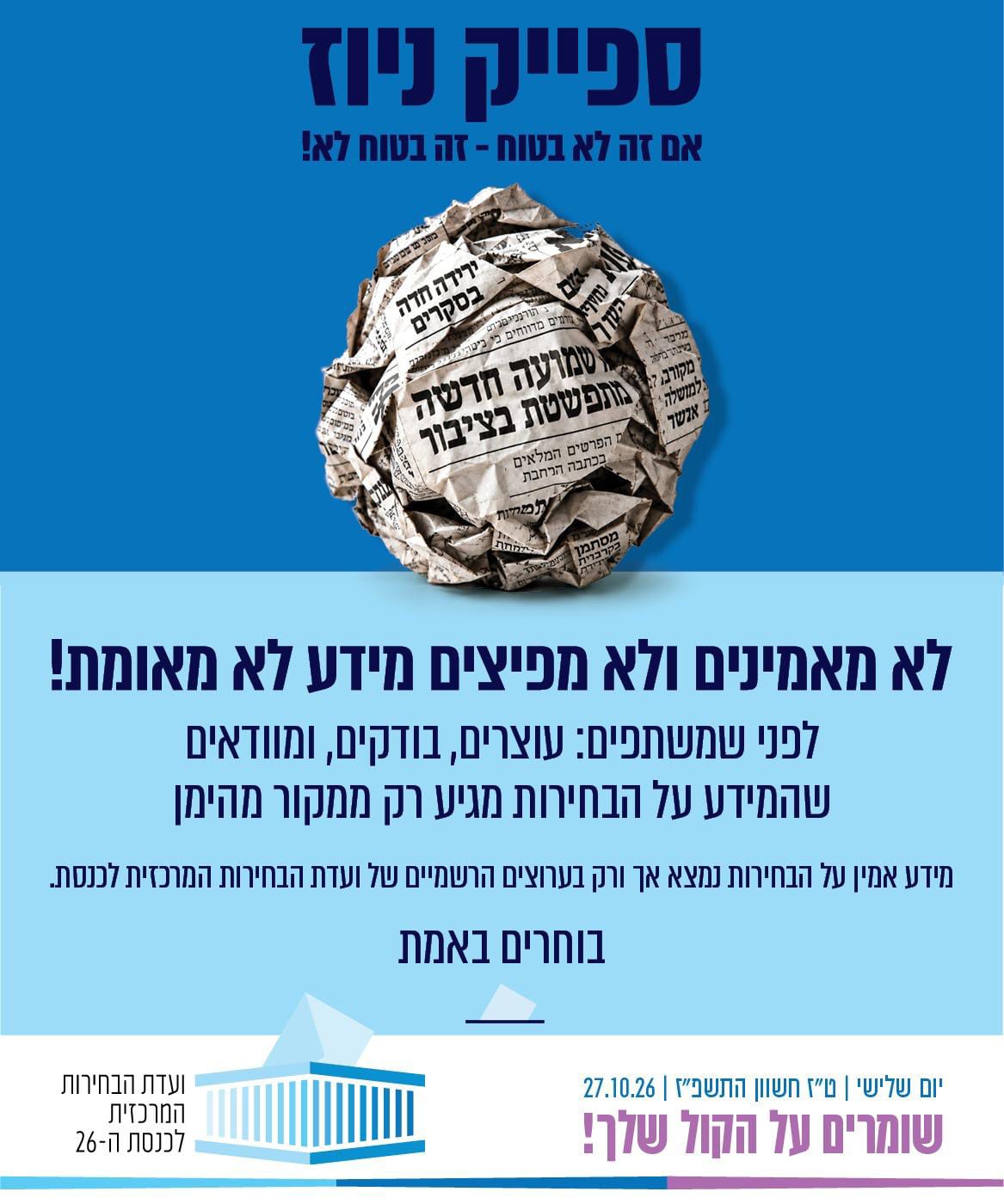
Although this is a print ad and not a video, for me it takes first place. Brilliant wordplay combining the words "safek" [doubt], which sounds in yeshiva pronunciation like "spike", with the phrase "fake news." The flash and the connection between yeshiva slang and Trump-made slang hits you and releases dopamine of pleasure.

Even in the subtitle they did not spare, "If it's not certain, it's certainly not!", a brilliant and sharp slogan. To complete the visual, a newspaper turned into a paper ball was attached, on which some newspaper headline is seen with the graphic language of chareidi newspapers. The message from the paper ball is unequivocal, any newspaper that spreads fake news has one purpose: paper ball.

"Spike News"
Photo: Spokesman
"Spike News" Photo: Spokesman (צילום: יח"צ)

That was our ranking. You are invited to write us in the comments what your ranking is.

Ready for more?

Join our newsletter to receive updates on new articles and exclusive content.

We respect your privacy and will never share your information.

Enjoyed this article?

Yes
No
Follow Us:

Unmissable content


Loading comments...

Also of Interest