In the midst of escalating tensions between the U.S. and Iran, analysts are pointing to the "Weekend Effect" as a potential factor influencing the timing of any military action. This market phenomenon, where dramatic events often occur when stock exchanges are closed to minimize immediate panic, could dictate that a U.S. strike on Iran, if it happens, might be scheduled for the weekend. Drawing parallels from recent operations like the U.S. intervention in Venezuela, combined with economic pressures from allies like Saudi Arabia, the strategy aims to allow markets time to digest news and focus on opportunities rather than uncertainty.
Understanding the Weekend Effect
The Weekend Effect describes a pattern in stock markets where returns tend to be higher on Fridays and lower or negative on Mondays. Observed since the 1920s across various indices, this trend has weakened in recent years but remains relevant.
Studies examining stock returns from 1926 to 2014 show average positive returns exceeding 0.20% on Fridays, while Mondays hover near zero or negative.
A common explanation is that companies release negative news after Friday's market close, giving investors the weekend to process information and temper reactions.
This allows for more measured responses when trading resumes on Monday.While not extensively studied in geopolitical contexts, in an era where U.S. policy under President Donald Trump is influenced by billionaires tied to market fluctuations, major actions—like a potential attack on Iran—might follow similar timing to mitigate economic fallout.
Geopolitical Timing and Market Stability
The principle extends to military and geopolitical moves, where unpredictability is part of the strategy, but timing helps manage market reactions.
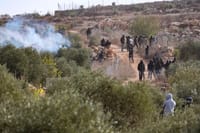
Trump has threatened intervention in Iran amid ongoing protests, stating, "Iran was a great country until these monsters arrived. Keep protesting."
In such scenarios, actions after market close on Friday could prevent immediate sell-offs, allowing time for assessment. This aligns with historical patterns where markets rally post-event if managed well.
The U.S. Delta Force operation in Venezuela, which occurred on a Saturday and led to the capture of President Nicolás Maduro, exemplifies this approach.
Analysts noted the weekend timing allowed markets to absorb the news without panic, resulting in gains for major indices like the Dow Jones and S&P 500 on Monday. BlackRock's analysis highlighted that investors used the weekend to look beyond geopolitical uncertainty and focus on economic opportunities, limiting spillovers to global markets. The firm maintained a pro-risk stance, overweighting U.S. equities and emerging market bonds, underscoring minimal long-term disruption.
A 2011 study from the University of Zurich found that war news impacts markets less when managed effectively, with reactions driven more by uncertainty than the event itself. Timing actions for weekends, paired with reassuring statements, serves as a strategic tool to prevent crashes. The research examined international conflicts since World War II, showing that pre-war escalations decrease prices, but outbreaks can increase them if anticipated.
Adding complexity, Saudi Arabia has urged the U.S. against strikes on Iran, warning that regime change could destabilize oil markets and harm economies.
The Wall Street Journal reported that Saudi Arabia, Oman, and Qatar fear disruptions in the Strait of Hormuz, through which 20% of global oil passes.
These nations, with business ties to the Trump family, emphasize avoiding actions that could lead to oil market turmoil.
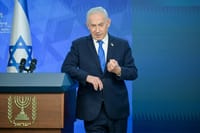
Compounding speculation, the absence of Israeli Prime Minister Benjamin Netanyahu's family from the country has raised questions about preparations for potential upheaval
Walla contributed to this article.