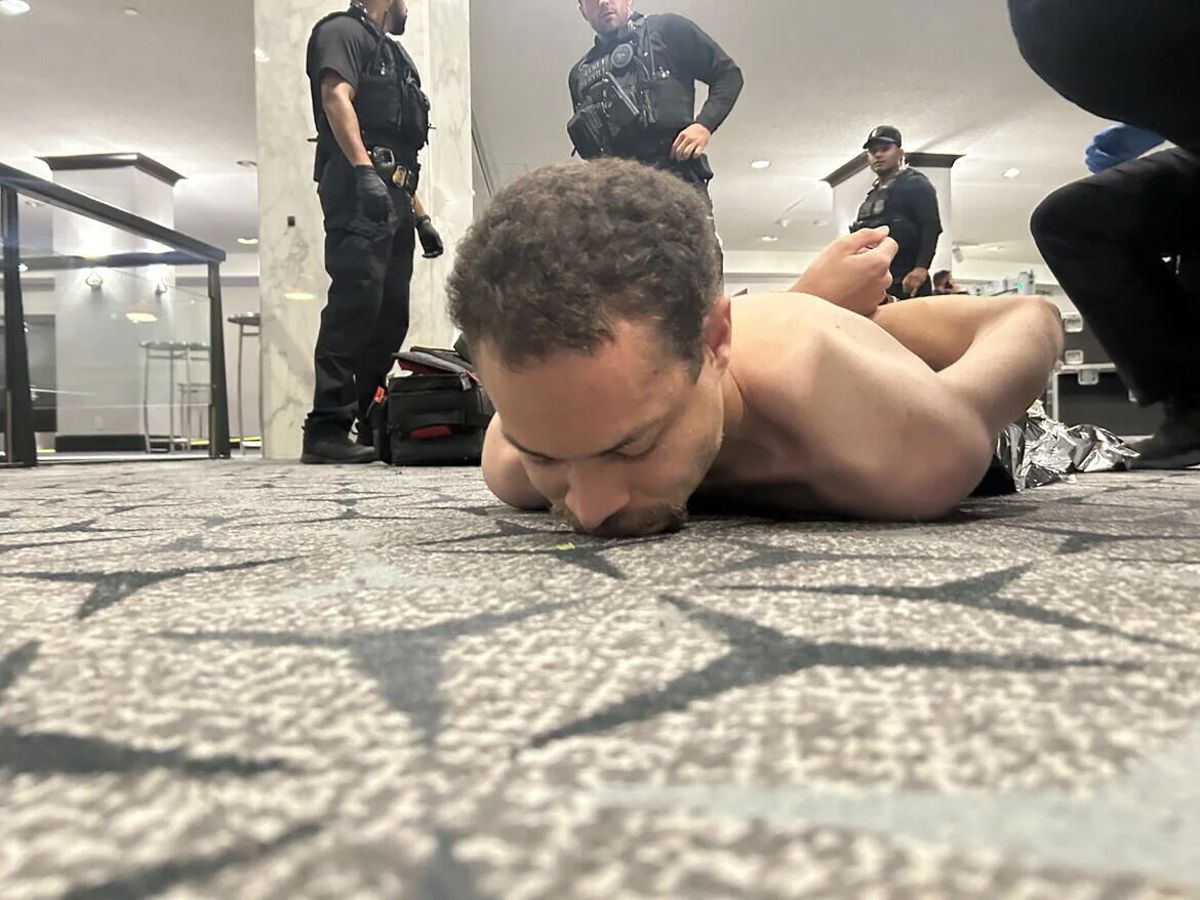
The nation is reeling following a security incident at the White House Correspondents’ Dinner on Saturday night, where a lone gunman identified as Cole Tomas Allen rushed a security checkpoint at the Washington Hilton. Armed with a shotgun, a handgun, and multiple knives, the 31-year-old California native was intercepted by Secret Service agents before he could reach the ballroom where President Donald Trump and other senior officials were gathered. In the aftermath, investigators discovered a detailed manifesto sent by Allen to his family, revealing a premeditated plan rooted in deep-seated political grievances against the administration.
The investigation into the events of Saturday night has yielded disturbing insights into the mind of Cole Allen. In a manifesto provided to law enforcement by a family member, Allen described his actions as a deliberate attempt to target members of the Trump administration. His writing, which oscillates between apologetic tones for the alarm he caused his loved ones and cold, calculated justifications for violence, paints a picture of a man driven by extreme political frustration. Allen specifically wrote that he was no longer willing to permit the perceived crimes of the administration to coat his hands, positioning his actions as a response to his role as an American citizen.
A significant portion of the document focuses on Allen’s scathing assessment of the security protocols in place at the Washington Hilton. Expressing disbelief at what he termed an insane level of incompetence, Allen claimed that the security detail was entirely focused on the external perimeter, leaving the hotel interior vulnerable. He brazenly stated that if he had been an agent acting on behalf of Iran, he could have easily introduced heavy weaponry, specifically referencing a M2 Browning machine gun, which he called a Ma Deuce, and that no one would have noticed. This critique of the Secret Service’s operational awareness has triggered a broader conversation about the safety of high-profile events during the current war.
Despite the lethal weaponry he carried, Allen attempted to frame his actions through a perverse sense of moral duty. He addressed hypothetical objections, such as the Christian teaching to turn the other cheek, arguing that his actions were a necessary response to the oppression of others, including those suffering in the current war. He noted that he prioritized his targets by rank and hoped to avoid harming law enforcement or guests, though he acknowledged that such a outcome might not be possible. As federal authorities continue to piece together his background and recent activities, the incident stands as a grave reminder of the ongoing threats facing national leadership and the intense pressure exerted on the Secret Service in an increasingly volatile political environment.