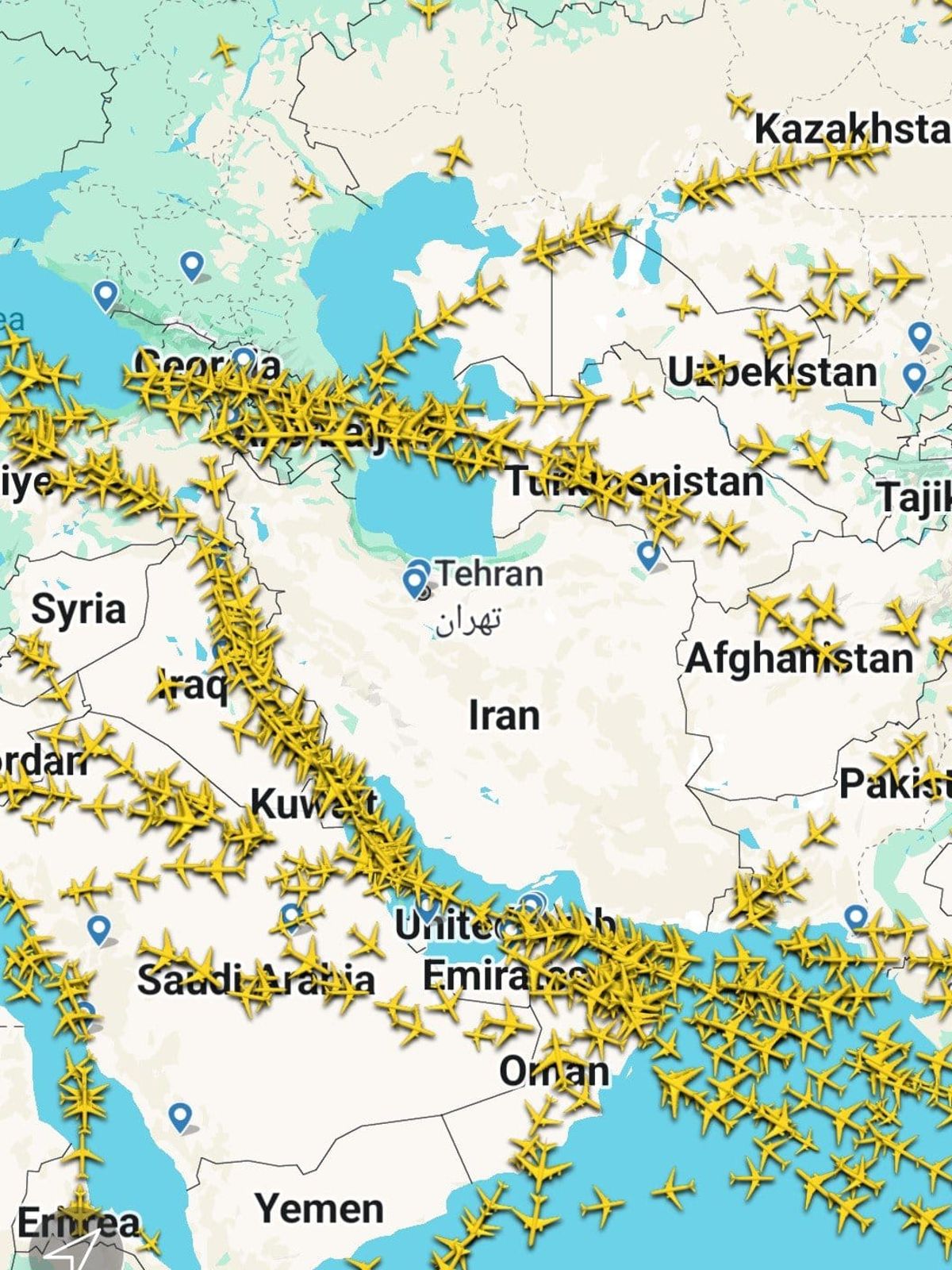
In a move signaling heightened alert amid growing international pressure, Iran temporarily closed its airspace on January 14, 2026, restricting most commercial and civil flights for several hours. The closure, announced via a Notice to Airmen (NOTAM), began around 5:15 p.m. ET (10:15 p.m. UTC) and lasted approximately five hours before reopening early on January 15.
During this period, only international arrivals and departures with prior permission from Iranian authorities were allowed, with an initial extension noted until around 7:30 a.m. local time, though it ended earlier.
The decision comes against the backdrop of intensifying U.S.-Iran tensions, fueled by Tehran's crackdown on widespread anti-government protests that have resulted in over 2,500 reported deaths and thousands of arrests.
U.S. President Trump has issued repeated warnings of potential military action if harm to protesters continues, describing the U.S. as "locked and loaded."
Western officials have interpreted the airspace closure as an indicator of imminent U.S. intervention, with one military source noting the Trump administration's emphasis on unpredictability to unsettle adversaries.
Iran, in response, has threatened retaliation against U.S. bases in the region, coinciding with reports of U.S. troop movements, including the deployment of an aircraft carrier strike group to the Middle East.
Broader regional dynamics may also play a role, including reported agreements between Iran and Israel to refrain from preemptive strikes.
In light of these developments, foreign governments have heightened alerts: The UK has advised against non-essential travel to Israel, while the U.S. has closed its embassy in Tehran and urged American citizens to depart Iran immediately.
The aviation sector faced significant disruptions from the closure. Major carriers, including Lufthansa, Etihad, Qatar Airways, Air India, IndiGo, and SpiceJet, were forced to reroute, delay, or cancel flights, with some suspending services to Iran until at least mid-January.
Speculation has swirled on social media, with unverified reports of Chinese aircraft entering the restricted zone, potentially indicating support for Iran and U.S. calls for an emergency UN Security Council session.
However, President Trump has publicly stated that he has received assurances the protester killings have ceased, which some analysts interpret as a possible de-escalation tactic. As of early January 15, no strikes have been confirmed, and Iranian airspace is now fully operational, though the situation remains volatile.