Trump says it's "largely negotiated." Iran says it isn't. Israel is alarmed. And Lebanon may be the tripwire that brings the whole thing down.
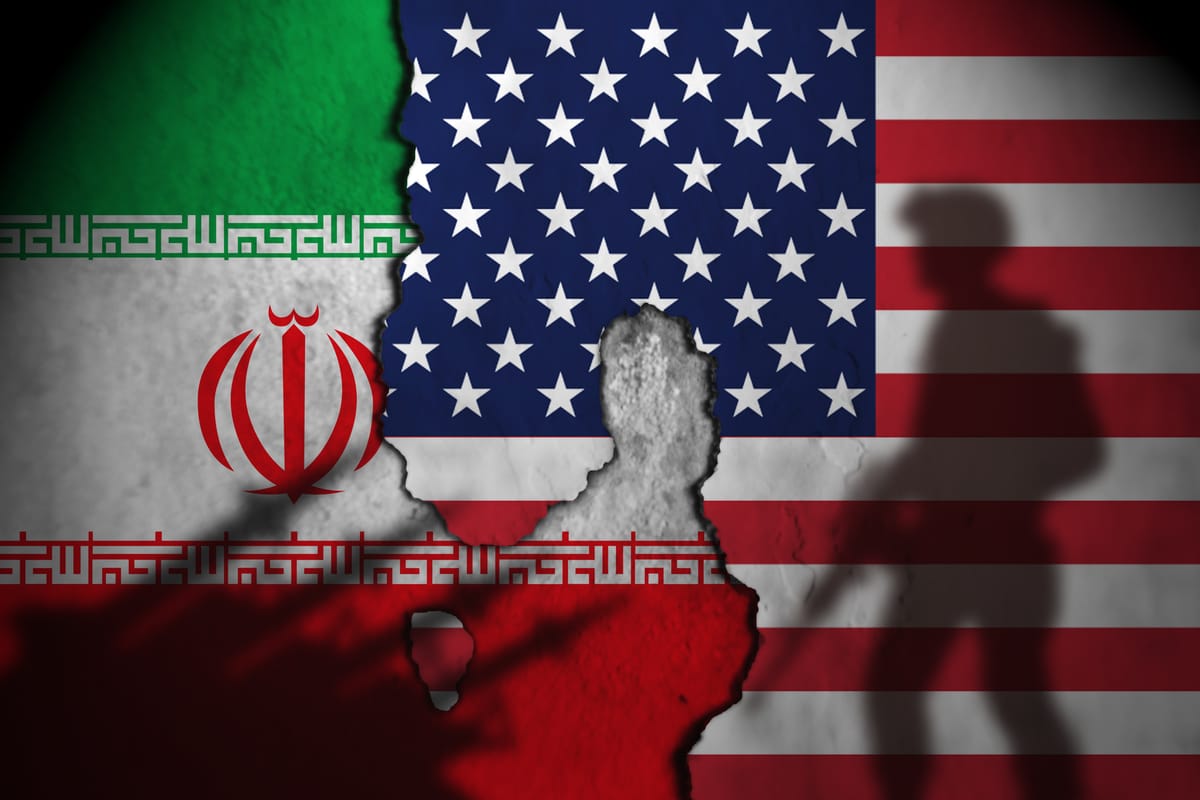
The United States and Iran are closer to a formal agreement to end their war than at any point since joint U.S.-Israeli strikes on February 28 ignited the current conflict. U.S. officials say a deal has been agreed in principle, with Supreme Leader Ayatollah Mojtaba Khamenei having endorsed the broad framework. Trump declared on Saturday that the agreement was "largely negotiated" and that an announcement would come "shortly."
Tehran's response was rather different. Iran did not officially confirm the deal, and state media contradicted parts of it. The gap between what Washington is announcing and what Tehran is confirming is not a minor communications problem. It is the story.
The proposed instrument, a Memorandum of Understanding, not a treaty, is a 14-point framework crafted by Steve Witkoff and Jared Kushner alongside Iranian officials. If signed, it would trigger a 60-day ceasefire extension and open the door to further talks toward a final agreement. Three issues threaten to prevent that signature from ever appearing.
Fault line one: The nuclear question
The central American demand has always been clear: Iran cannot have nuclear weapons, and its enriched uranium must go. Netanyahu told Trump that any final agreement must include "dismantling Iran's nuclear enrichment sites and removing its enriched nuclear material from its territory." Trump has echoed this publicly.
The problem is that the MOU does not actually deliver this. A senior Iranian source told Reuters that Tehran has not agreed to hand over its highly enriched uranium stockpile under the preliminary agreement. Instead, the draft MOU includes Iranian commitments to never pursue nuclear weapons and to negotiate over a suspension of uranium enrichment and the removal of its stockpile, with those steps deferred to a later stage.
Iran currently holds more than 400 kilograms of uranium enriched to a level one short technical step from weapons-grade. The MOU does not remove it. It promises talks about removing it. Tehran appears to be pushing the enrichment issue down the negotiations agenda, recognizing that the gap between the two sides may be too wide for a solution, a pattern that resembles how disarmament was treated in the Hezbollah and Hamas ceasefire negotiations, where the issue was deferred to future steps and in practice addressed indefinitely.
The gap on the enrichment moratorium alone illustrates how far apart the parties remain. Iran proposed a 5-year moratorium; the U.S. demanded 20. Officials suggest 12 to 15 years as a likely landing zone. Nothing has been agreed.
Fault line two: The Hormuz standoff
One key element of the deal is the reopening of the Strait of Hormuz. The current draft specifies that the Strait would be open without tolls, and Iran would clear the mines it had deployed there. In exchange, the U.S. would lift its blockade on Iranian ports and waive some sanctions, allowing Iran to sell oil freely.
But neither side has moved yet. After the ceasefire announcement in April, Trump said the pause on U.S. strikes was subject to the "complete, immediate, and safe opening of the Strait of Hormuz," while Iran described the American counter-blockade as a potential "prelude to a violation of the ceasefire." Neither have removed their blockades.
Iran has also attempted to assert sovereign control over Hormuz traffic by establishing what it calls a new shipping authority, a move Washington has flatly rejected. Iranian officials have pushed back against Trump's claims, with Iran's semi-official Tasnim news agency reporting the potential agreement allocates 30 days for procedures related to the Strait and 60 days for nuclear talks. That timeline itself is contested by Washington.
Fault line three: Lebanon - the tripwire
Of the three problems, Lebanon may be the most dangerous in the short term, because it is where the deal could detonate before it is even signed.
The ceasefire reached last month with Iran did not extend to Lebanon, where Israel has been fighting against the Iran-backed terror group Hezbollah. A separate U.S.-brokered truce was reached there, with both sides seeking to keep the Lebanese front distinct from the Iranian file. That separation has never held in practice. Iran's Foreign Minister Abbas Araghchi declared that "the U.S. must choose, ceasefire or continued war via Israel. It cannot have both."
The MOU now reportedly attempts to address Lebanon directly. It specifies that the war in Lebanon will end, with a U.S. official telling Axios it would not be a "one-sided ceasefire," and that "if Hezbollah behaves, Israel will behave." That formulation immediately runs into a structural problem: Hezbollah was not a signatory to the November 2024 ceasefire in Lebanon, not a signatory to the April 2026 ceasefire framework, and would not be a signatory to the U.S.-Iran MOU. Any Lebanon clause in the agreement would bind the United States and Iran -not Hezbollah.
There is also a factual dispute about what was already agreed. Israel and the United States say Lebanon was not included in the April 2026 ceasefire framework. Pakistan and Iran say it was. The two sides cannot agree on the baseline from which a Lebanon clause would even operate.
Israel, for its part, has made clear it will not accept constraints on its freedom to act against Hezbollah as part of an Iran deal. Senior Israeli security officials have expressed alarm at the proposed deal, warning that it would grant Iran time for economic and military recovery, after which "it will be hard for the Americans and us to go back and fight."
The Netanyahu factor
Netanyahu's public posture has been carefully calibrated. He has endorsed the MOU framework while insisting on conditions that the current draft does not meet. He stated that Trump "reaffirmed Israel's right to defend itself against threats on every front, including Lebanon" — a phrase that functions as a reservation of the right to continue military operations regardless of what Washington signs.
A U.S. official quoted by Axios offered a blunt summary of the tension: "Bibi has his domestic considerations, but Trump has the interests of the U.S. and the global economy to think about." That gap, between Israel's security imperatives and Washington's economic and geopolitical interests, is not new. What is new is that it is now the central variable in whether a deal survives.
The bottom line
Many of the terms laid out in the MOU would be contingent on a final agreement being reached, leaving the possibility of renewed war or an extended limbo in which the hot war has stopped but nothing is truly resolved. Some U.S. officials remain skeptical that even an initial deal will be reached.
What exists right now is not a deal. It is an agreed intention to try to reach a deal, layered over three unresolved disputes, on nuclear material, on Hormuz, and on Lebanon, any one of which could collapse the process. The MOU was supposed to take 48 hours to finalize in early May. It is now late May. The clock is running, the ceasefire is fragile, and the parties are still contradicting each other in public about what they have actually agreed.