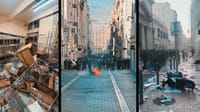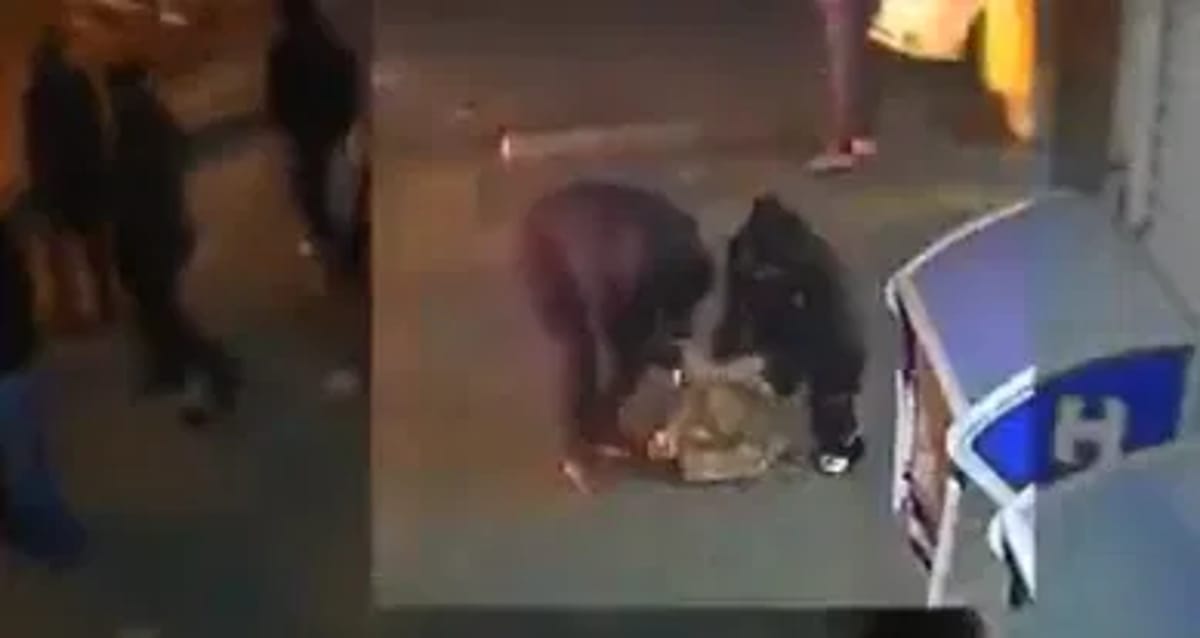
As tensions simmer in the Middle East and the world awaits U.S. President Donald Trump's decision on potential strikes against Iran, the Iranian state-affiliated Fars News Agency released footage purportedly captured by protesters, aiming to portray demonstrators as violent and justify the regime's harsh crackdown. However, observers noted that the videos themselves do not depict significant acts of aggression, suggesting the release is part of a broader propaganda effort to delegitimize the ongoing anti-regime protests.
In one segment of the footage, Iranian outlets claim to show "evidence" of Israeli Mossad agents' involvement in inciting the unrest.
Meanwhile, CNN reported that thousands of fighters from pro-Iranian Shiite militias in Iraq have crossed into Iran since the protests began, providing reinforcements to suppress the uprising. Sources estimate around 5,000 combatants entered via border crossings in Maysan and Wasit provinces in southern Iraq. These fighters are affiliated with groups such as Kata'ib Hezbollah, Harakat Hezbollah al-Nujaba, Kata'ib Sayyid al-Shuhada, and the Badr Organization—all known for their ties to Iran's Islamic Revolutionary Guard Corps (IRGC).
According to European intelligence assessments and security sources cited by CNN, the militiamen have been deployed to key areas, including the city of Hamadan, where they participated in violent dispersals of crowds.
The use of foreign proxies highlights the Iranian regime's precarious position and its determination to quash the protests at any cost, potentially to avoid direct confrontations between local security forces and civilians. This strategy risks further alienating the population and escalating regional instability.
In related developments, The New York Times reported that Israeli Prime Minister Benjamin Netanyahu urged Trump to delay any military action against Iran. The request, based on a U.S. official, was not detailed publicly, and Netanyahu's office declined to comment. Netanyahu has held multiple discussions with U.S. Secretary of State Marco Rubio in recent days and spoke with Trump earlier this week. Trump later stated unexpectedly that "the killing of protesters in Iran has stopped," though Iranian authorities have not confirmed this.
Trump, in an NBC interview, touted the impact of his threats, claiming they "saved a lot of lives" by warning Iran against executing demonstrators. He declined to confirm whether a strike has been ruled out, saying, "I'm not going to tell you."
White House spokesperson Caroline Leavitt echoed that planned executions have been postponed, reiterated that "all options are on the table," and warned of severe consequences if the violence resumes.Israel is closely monitoring the situation, cautious not to appear as instigating conflict.
Assessments suggest the U.S. has postponed but not abandoned potential strikes. IDF Chief of Staff Lt. Gen. Eyal Zamir visited an air defense unit and conducted drills simulating missile attacks, emphasizing the military's role as "the wall of defense."Adding context, The Wall Street Journal reported that Trump received briefings indicating even a significant U.S. strike might not topple the regime and could spark broader escalation.
In preparation, Trump has ordered the deployment of additional military assets to the region.These claims and movements come amid U.S. sanctions on 18 Iranian officials for their roles in protest suppression, further tightening the economic noose on Tehran.