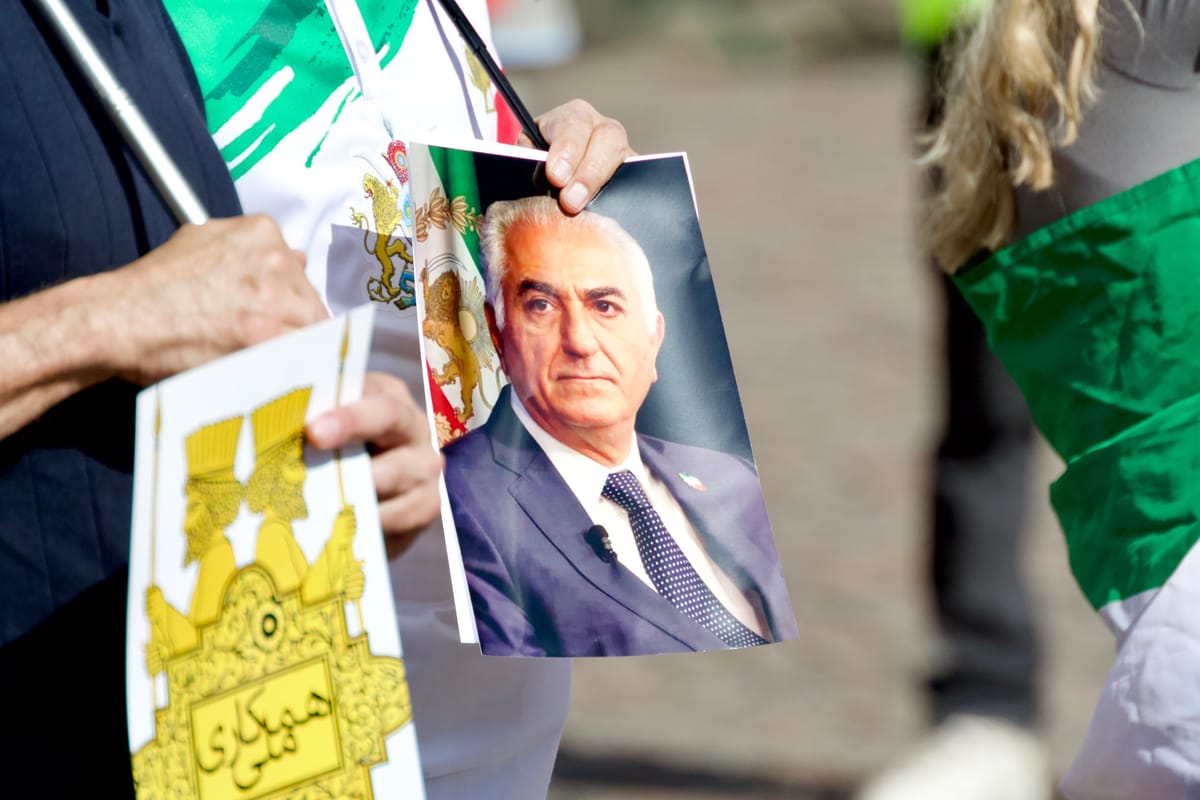
The prominent leadership of the secular Iranian opposition has expressed profound geopolitical alienation from the democratic world, accusing Washington and European capitals of prematurely halting a decisive campaign that could have dismantled the clerical regime. In an exclusive strategy brief delivered to Channel 12 News on Sunday evening, the chief of staff to the exiled royal family detailed an immense sense of betrayal among the civil population regarding the imminent peace treaty being finalized by the White House. The royal inner circle argued that the international community chose to resurrect a faltering dictatorship rather than supporting the domestic population's aspiration for national liberation.
The deep strategic dissatisfaction centers around the missed operational opportunities that developed during the height of the regional war earlier this spring. Cameron Khansarinia, the chief of staff and senior advisor to Crown Prince Reza Shah Pahlavi, revealed that direct communication streams from inside the security apparatus in Tehran indicated unprecedented institutional panic during the initial months of the year. Khansarinia explained that at the absolute height of the civil uprisings initiated by the royal family in January, the internal security commands responsible for brutal domestic suppression were fracturing rapidly from within.
Detailing the critical intelligence that was ultimately ignored by Western strategic planners, the senior advisor noted that the paramilitary networks protecting the supreme leadership council were entirely unprepared for a sustained, multi front confrontation. Khansarinia stated that we had reports that the Revolutionary Guard was on the verge of collapse, and they did not believe their good luck when the United States and others stopped the military move at the beginning of April, and then a turning point was created in their favor. The advisor emphasized that the sudden American operational pause permanently defused the extreme vulnerability of the regime, creating a deep sense of despair among the civilian population who realized that Washington would not go all the way to secure their freedom.
The royal opposition is simultaneously directing severe criticism toward the leading democratic powers of Western Europe, specifically naming Great Britain, France, and Germany as complicit in the preservation of the autocratic structure. Khansarinia disclosed that Pahlavi had personally conducted extensive diplomatic talks with European ministers to demand that any potential diplomatic text be explicitly conditioned on severe human rights benchmarks. The advisor slammed the subsequent diplomatic silence from these states, asserting that Europe, which often speaks eloquently and passionately about values and human rights, disappeared the moment it came to Iran.
According to the opposition's internal assessments, the failure of European negotiators to demand the liberation of political dissidents, the permanent cessation of public executions, and an absolute ban on state internet blackouts has rendered the evolving treaty entirely counterproductive. Khansarinia warned that the underlying economic crisis gripping the nation is currently worse than it was prior to the outbreak of the popular protests, and that any financial relief delivered by Trump's incoming accord will exclusively serve the financial interests of the Revolutionary Guard rather than helping ordinary citizens. The royalist coalition stated that they now feel a distinct shared destiny with Israel against the emerging agreement, as both nations recognize that the framework fails to provide genuine security guarantees.
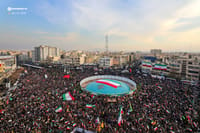
Despite the current strategic setback, the secular opposition is actively projecting a rapid return to mass civil disobedience, focusing their attention on an upcoming domestic milestone that will test the fragile stability of the regime. The royalist networks are closely monitoring July 4, which has been designated as the formal funeral date for the father of Mojtaba Khamenei, the figure widely expected to assume the supreme leadership role. Khansarinia concluded the operational brief by noting that Mojtaba's test will be during the days of the funeral, elaborating that we are building on the fact that he will lead the funeral procession and then we will understand his situation, adding that a return of citizens to the streets is simply a question of time.