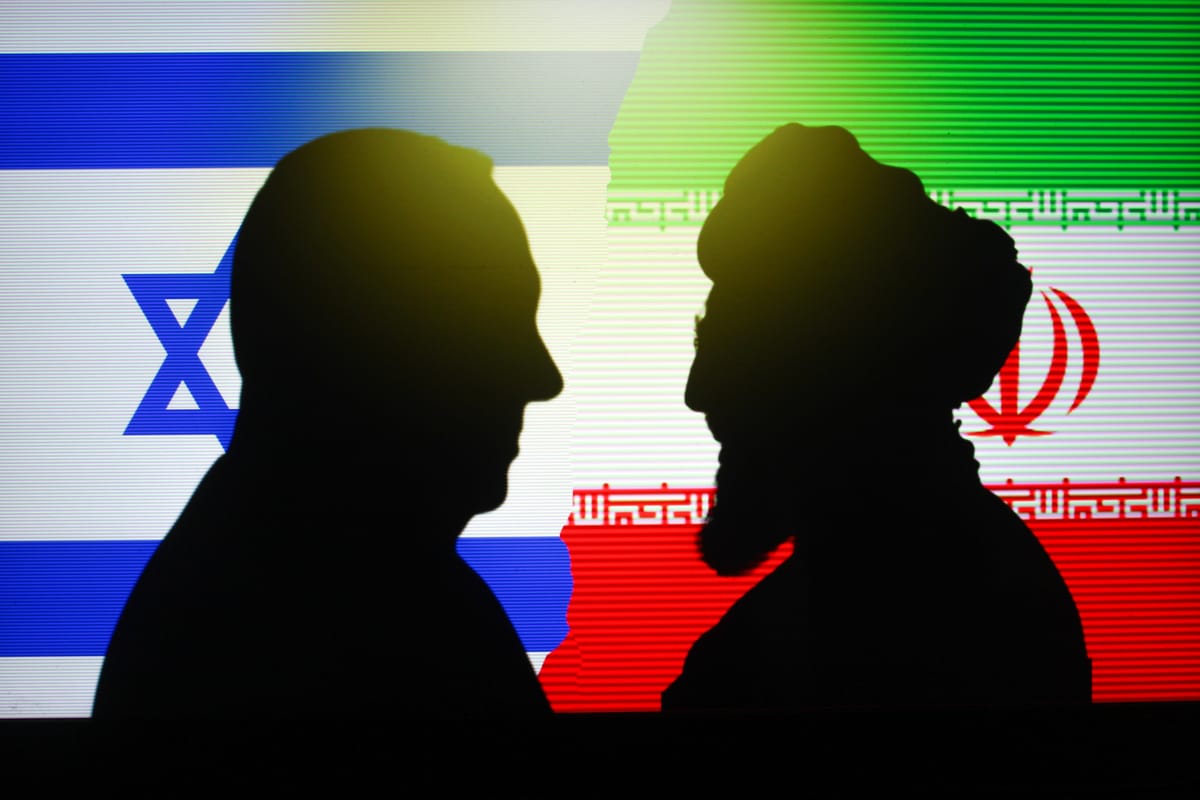
When the United States and Israel launched their opening strikes against Iran on February 28, the world watched missiles fall on Tehran. What the world did not see was the covert infrastructure that made those strikes, and the ones that followed, possible.
A CNN exclusive report published Thursday reveals that Israel secretly deployed elite military and intelligence units to Azerbaijan during the war with Iran, as part of a network of covert sites across the Middle East to facilitate operations against the Islamic Republic. The disclosure adds a significant new dimension to the conflict, and raises pointed questions for Baku, which has long maintained a careful public posture of neutrality toward its southern neighbor.
A Perch on Iran's Northern Doorstep
The Azerbaijan operation consisted of several dozen troops, including members of Israel's special operations forces, its elite heliborne combat and 669 rescue force, and Mossad personnel. The forces operated out of several locations in southern Azerbaijan, adjacent to Iran's northern border and, at its closest point, only about 60 miles from the Iranian city of Tabriz, which Israel struck during the war.
The strategic logic is straightforward. The military presence in Azerbaijan gave Israel another base from which to conduct aerial rescue missions in case of downed pilots, as well as positions from which to spy on Iran. Special commando units were also deployed to the location and carried out intelligence-gathering missions and drone operations, giving Israel a valuable perch along Iran's most vulnerable and ethnically complex flank, a region with a large Azeri minority population that Tehran has long viewed with suspicion.
Israel has long viewed Azerbaijan as a strategic partner in its fight against Iran, and the preparations began weeks before the opening strikes of the war.
One of the central operations launched from Azerbaijan was the targeted killing on March 4 of Rahman Moqadam, head of the Islamic Revolutionary Guard Corps' intelligence directorate. Israel has alleged that Moqadam was responsible for planning the 2024 assassination attempt against President Trump.
Azerbaijan's government wasted no time pushing back. A spokesperson for the Azerbaijani embassy in the United States said in a statement to CNN: "We firmly reject unfounded claims regarding the alleged use of Azerbaijan's territory for operations against third countries." The Israeli Prime Minister's Office and IDF did not respond to CNN's request for comment.
A Regional Web, Months in the Making
Azerbaijan was not an isolated case. The deployment was part of a covert network of military sites across multiple countries including Iraq, the UAE, and Somaliland.
In Somaliland, Israeli planes were given a base where they could land after long flights.
Together, the deployments placed Israeli forces along Iran's southern, western, and northern periphery during the war, extending the military's range by hundreds of miles, deep into Iranian territory, and helping Israel sustain repeated waves of strikes against targets across the country.
The Iraq piece of the network had already been partially exposed. Israeli forces had been preparing makeshift sites in western Iraq since late 2024, according to a New York Times report published last month.
The Somaliland angle is newer and more geopolitically fraught. The breakaway republic on the Horn of Africa provided Israel with an additional military position, allowing Israeli aircraft a potential stopover on long-range flights to Iran. CNN said it was the first outlet to report on the covert Israeli military presence there. The disclosure comes against a backdrop of intensifying regional tensions: Somalia, infuriated by Israel's recognition of Somaliland's independence in December, has since signed military cooperation agreements with both Saudi Arabia and Qatar, as Mogadishu scrambles to prevent what it regards as the encirclement of its territory.
In the UAE, the picture was equally striking. Israel also quietly deployed an Iron Dome aerial defense battery to the UAE, and the troops to operate it, during the war with Iran. CNN has previously reported that Prime Minister Benjamin Netanyahu, the head of the Mossad, and Israel's military chief visited the UAE during the war — a revelation that prompted a strong denial from Abu Dhabi.
The Architecture of a Regional Campaign
Taken together, the emerging picture is of an Israeli military that had spent months quietly seeding the region with forward positions before a single bomb fell on February 28. Operation Epic Fury, the U.S. code name for the joint campaign, began with nearly 900 strikes in 12 hours, targeting Iranian missiles, air defenses, military infrastructure, and leadership, and killing Supreme Leader Ali Khamenei in the opening salvo. Sustaining that kind of operational tempo across a country as large as Iran required exactly the kind of distributed, deniable infrastructure that CNN's reporting now describes.
For Israel's neighbors and partners, the revelations carry significant diplomatic weight. Countries that officially denied any role in the conflict may now face domestic and international pressure to account for what occurred on their soil, or in their airspace, during the weeks of fighting.
The question of who knew, who agreed, and who quietly looked the other way is one that will reverberate across the region long after the guns fall silent.