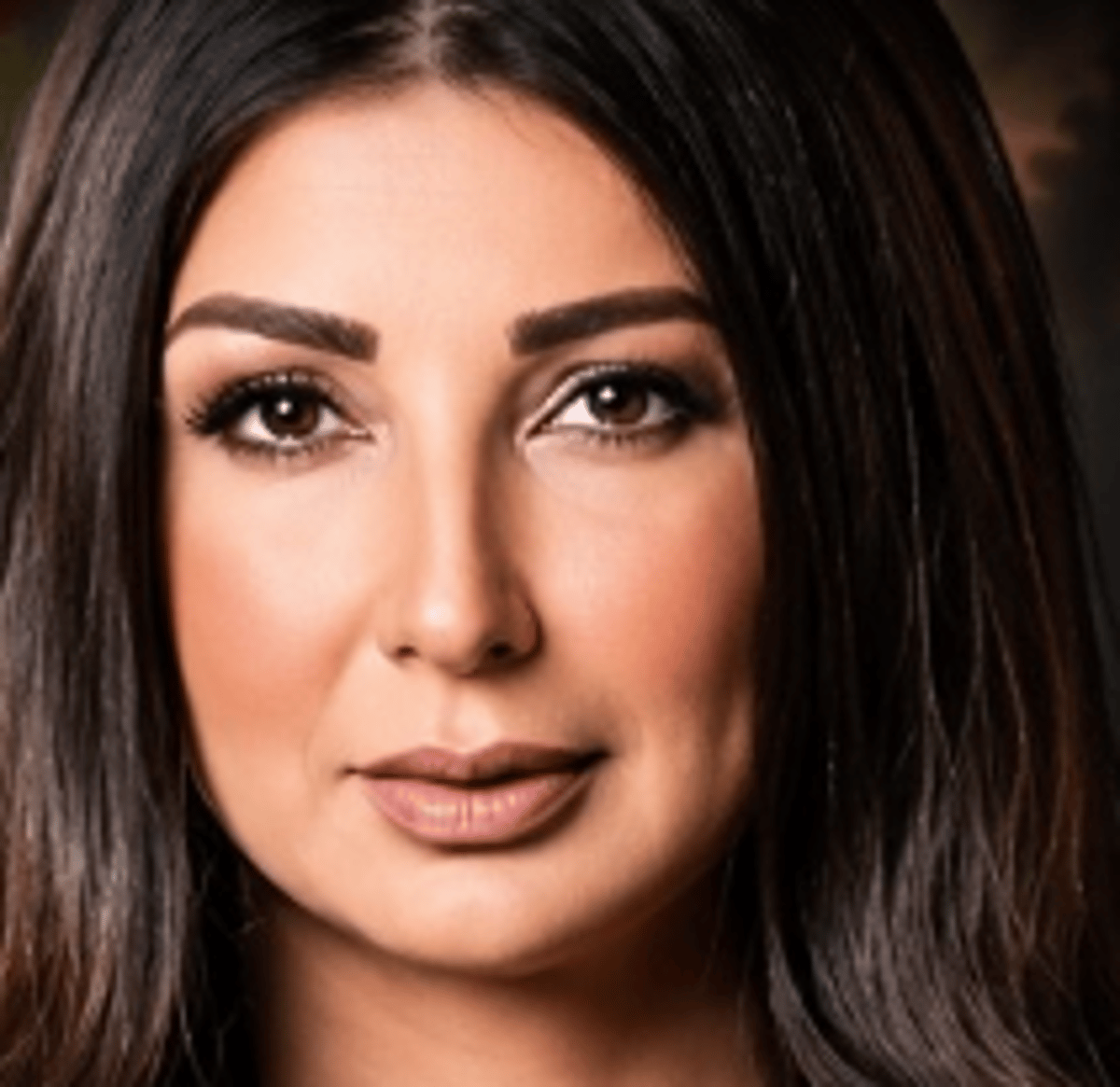
A Lebanese military court has sentenced exiled journalist Maria Maalouf to 15 years in prison in absentia and stripped her of her civil rights over a 2021 interview she gave to Israeli media, part of a widening crackdown on Lebanese citizens accused of having any contact with Israel.
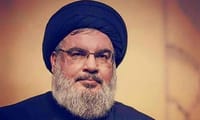
Maalouf was sentenced for speaking with Kan News in 2021, where she told the Israeli broadcaster that Hassan Nasrallah and Iran's party in Lebanon had taken the state hostage and returned it to the Stone Age, and accused Nasrallah directly of having killed children in Yemen, Syria and Iraq, as well as Lebanese citizens in the Beirut port explosion.
In the interview, the first ever granted by a Lebanese journalist to an Israeli outlet, Maalouf insisted the appearance should not be viewed as cooperation with the Israeli government, but rather as openness, and argued that Iran, operating through Hezbollah, represented a far greater threat to Lebanon than Israel ever had.
Maalouf, a Lebanese Christian Maronite journalist, first drew national attention in 2017 after publicly calling on Israel via Twitter to kill Hezbollah leader Hassan Nasrallah, a post that led to sedition charges against her and a warrant for her arrest. Fearing for her safety after receiving death threats, she chose not to return to Lebanon and has lived in political exile in Washington ever since. Nasrallah was killed by Israel in 2024.
Maalouf told The Jerusalem Post that Lebanese authorities made no attempt to contact her before handing down the sentence, and that the in absentia military proceedings used against exiled critics are built to produce a verdict rather than to hear any defense. She said the conviction has followed her into every aspect of her life since, affecting her relationship with family still in Lebanon and any future plans to visit relatives.
She added that being sentenced to fifteen years for sitting in a studio and answering a journalist's questions captures, in itself, the absurdity of her case, and said that while a military court can write whatever number it wants on a piece of paper, that does not make her guilty of anything, nor does it make Hezbollah's record any less documented.
The ruling comes amid a broader pattern of prosecutions targeting Lebanese voices accused of supporting Israel or criticizing Hezbollah. In the same week, the same military court handed identical 15 year sentences in absentia to Paris based professor and activist Ahmad Yassine, accused of encouraging Israeli operations in Baalbek, and to activist Joumana Gebara, accused of praising Israeli army spokesperson Avichay Adraee and calling for normalization with Israel.
Peter Germanos, a former head judge of the military court, said that any civilian who speaks out against Hezbollah, Iran or the broader armed political order in Lebanon risks exposure to charges framed as national security offenses, terrorism related crimes, or violations of Lebanon's boycott laws against Israel. According to Germanos, the central question raised by such cases is whether Lebanon's military courts are functioning to protect the state and the rule of law, or whether they have instead become a tool used by the country's dominant armed political power to intimidate opponents and silence criticism. He noted that defendants in these cases can be held for an entire day of interrogation without access to their phones, and without continuous access to legal counsel.
Attorney and political activist Majd Harb said enforcement under these laws is selective and politically driven, with individuals aligned with Hezbollah or the Amal Movement facing little risk of prosecution for contacts with Israelis, while opponents of Hezbollah are punished for similar conduct. Harb pointed to Lebanon's 1955 Israel Boycott Law as a central driver of these prosecutions, arguing that in a globalized world shaped by social media, no one should be tried simply for having contact with Israeli citizens. Germanos echoed the call for reform, urging Lebanon's parliament to amend its Code of Military Justice so that civilians accused of these offenses are tried in civilian rather than military courts, which he argued would restore public confidence, strengthen civil liberties, and bring Lebanon closer in line with basic rule of law standards.
The sentence underscores a striking contradiction at the heart of Lebanon's current posture toward Israel. Even as Lebanese officials engage in indirect talks aimed at de-escalation and eventual peace with Israel, the country's military courts continue to criminalize, and now imprison in absentia, the very citizens who have publicly advocated for normalization between the two nations.
Maalouf also spoke to i24News recently.