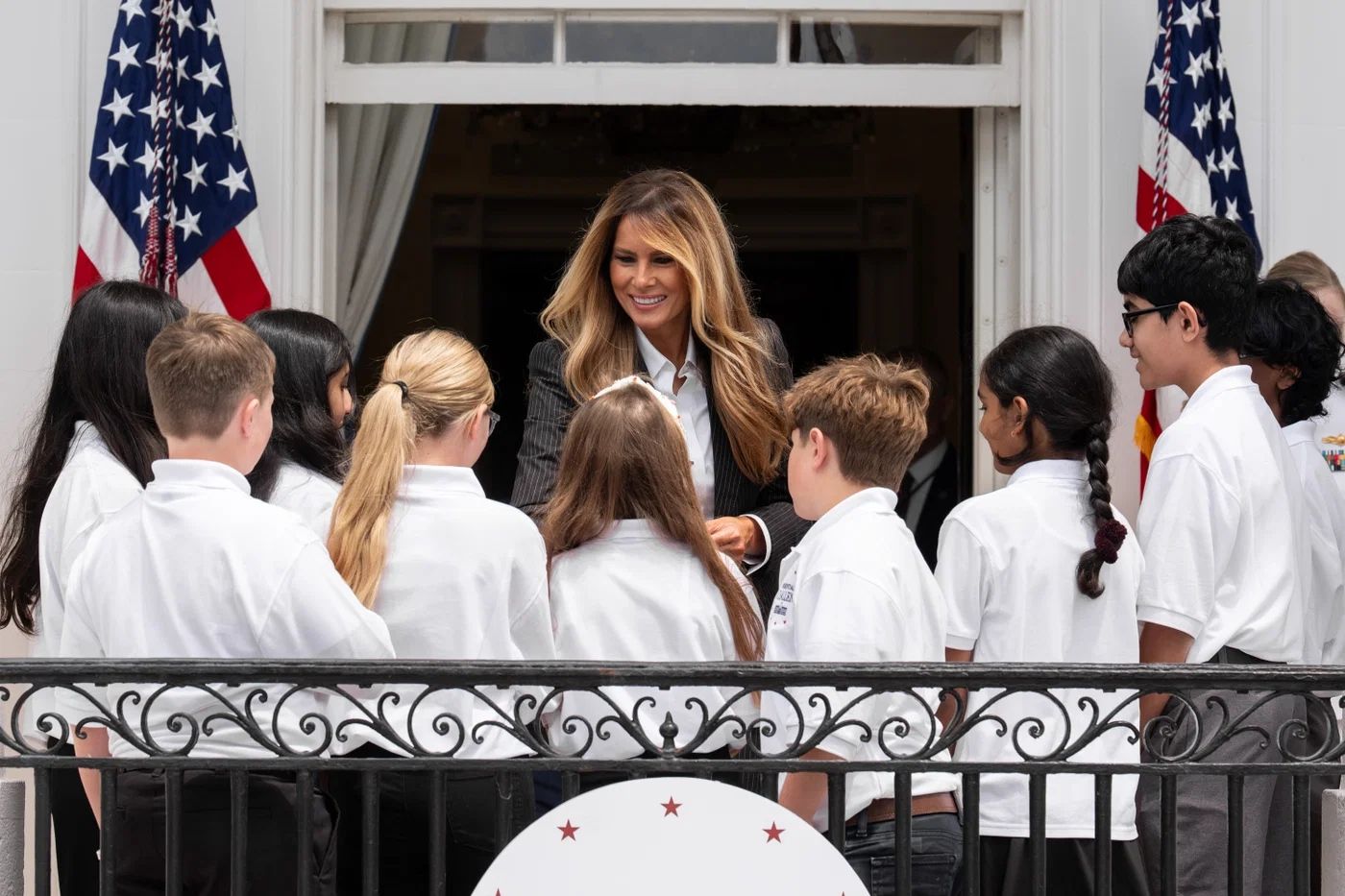

First Lady Melania Trump hosted the graduation ceremony for the Presidential AI Challenge at the White House, showcasing America's proactive approach to securing global technological dominance.
In her address, Trump emphasized that artificial intelligence serves as a foundational key to transforming society, industries, and social safety nets.
She called directly on American students to maintain the nation's leading status in the global tech race, declaring that artificial intelligence grants communities access to the largest volume of documented information in human history.
The nationwide initiative, originally launched in August 2025 following a presidential executive order, drew participation from over 20,000 students spanning all 50 states, Puerto Rico, and U.S. military schools across 10 international countries.
Participants developed specialized A.I-based projects designed to resolve critical community challenges. The student innovations included adaptive learning aids, anti-bullying applications, sophisticated navigation software for the visually impaired, and real-time detection tools for hazardous materials.
The strategic objective of the challenge is to equip young citizens with the exact technical skills and analytical knowledge necessary to pioneer the current technological era, explicitly drawing comparisons to how the United States previously led the world in global aviation.
This accelerated American educational push serves as a direct countermeasure to the intensifying technological competition with Beijing, which has strategically cultivated a vast generation of A.I specialists for years as part of a formal national policy.
In China, artificial intelligence education is deeply embedded as an official component of elementary and high school curricula. Major urban hubs like Beijing have mandated AI courses from an early age, training young students in computer vision, machine learning, and practical, hands-on software development.
The White House initiative signals a growing domestic recognition that falling behind in building this critical human infrastructure could cost the United States its qualitative edge against a highly organized Chinese system, which has already deeply integrated artificial intelligence within both its national education system and industrial sectors.