Iran’s newly appointed supreme leader, Mojtaba Khamenei, was reportedly wounded during the first day of the war and is currently hiding in a heavily secured location while maintaining only limited communication, according to Iranian officials cited in a report published Wednesday.
The report says Khamenei, 56, suffered injuries to his legs during the opening stages of the conflict. While the full extent of his injuries remains unclear, sources said he is conscious and receiving protection in a secure hiding place.
Three days after being declared the successor to his father and assuming the position of Iran’s supreme leader, Khamenei has not appeared publicly, released a video message, or issued any written statement. Iranian officials reportedly told the newspaper that one reason for his silence is concern that any communication could reveal his location and put his life at risk.
Israeli and American officials have previously signaled that Khamenei could be targeted, which has heightened fears inside Iran that he may be subject to an assassination attempt.
Iranian sources said there may also be another reason for his absence: the injuries he sustained during the opening strikes of the war. According to those officials, senior government figures informed them that Khamenei had been wounded during the attacks.
Israeli defense officials have reportedly reached a similar assessment. Two Israeli security sources said intelligence gathered by Israel indicated that Khamenei had been injured on February 28, during the same strike that killed his father.
Ali Khamenei, Iran’s longtime supreme leader, was killed in an Israeli airstrike that targeted the Iranian leadership compound in central Tehran. The attack also reportedly killed Mojtaba Khamenei’s mother, his wife, his son, and several senior Iranian security officials.
The exact circumstances of Mojtaba Khamenei’s injuries remain unclear, and Iranian authorities have not publicly confirmed details of his condition.
Hints about his situation have also appeared in Iranian state media. State television and the official IRNA news agency referred to him as “the wounded war veteran leader.” A congratulatory message from a state-affiliated religious charity described him using the Persian term “janbaz-e jang,” which refers to a fighter wounded in war.
Initially, some Iranian outlets suggested the phrase referred to injuries he suffered while serving with the Revolutionary Guards during the Iran–Iraq War in the 1980s.
When Iran’s Foreign Ministry spokesperson, Esmaeil Baghaei, was asked by local journalists whether Khamenei had formally assumed his role as supreme leader and commander-in-chief of the armed forces, he avoided a direct answer and said only that “those who needed to receive the message have already received it.”
Mojtaba Khamenei has long been considered an unusually secretive figure within Iran’s leadership. For years he rarely gave public speeches and seldom appeared at public events. Following his appointment, Iranian media began circulating a short video montage consisting mainly of still photographs and a brief biographical summary.
Last week, as it became increasingly clear that he was the leading candidate to succeed his father, Israeli fighter jets reportedly dropped bunker-busting bombs on what remained of the supreme leader’s office complex and residential compound. Satellite imagery later showed the site heavily damaged and reduced to rubble.
Iranian officials said they believe the strike was intended to kill Mojtba Khamenei himself, though they claim he was not present at the location at the time.
Israeli Defense Minister Israel Katz has stated publicly that anyone who succeeds the former supreme leader could also become a target. U.S. President Donald Trump has likewise expressed dissatisfaction with Mojtaba Khamenei’s rise to power but has not said whether the United States would attempt to eliminate him.
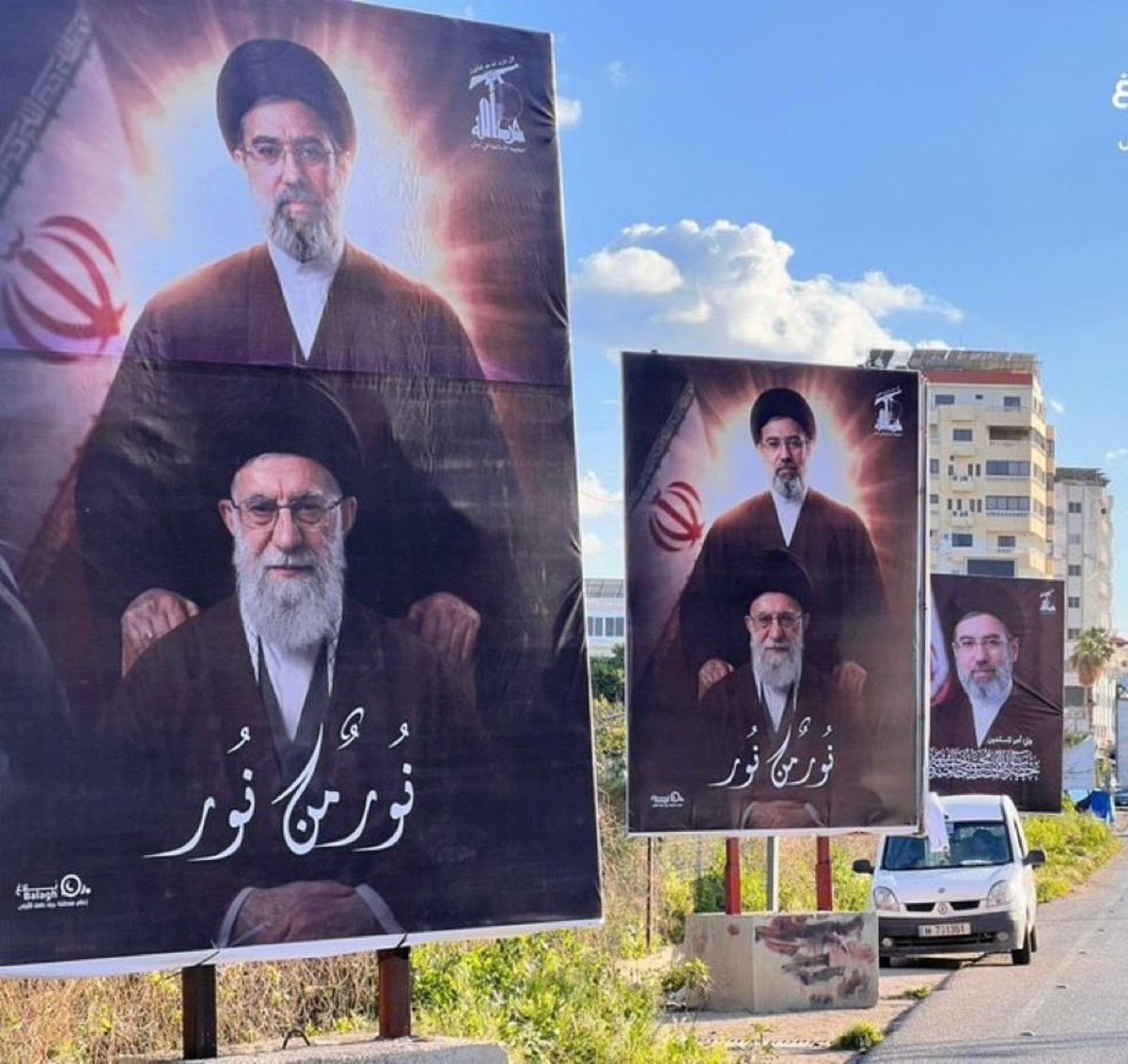
Despite his absence from public view, the new leader’s image has already appeared across Tehran. Large posters featuring his portrait have been hung throughout the capital, and a mural shows his late father handing him the Iranian flag.
For years Mojtaba Khamenei was viewed as a powerful behind-the-scenes figure with close ties to the Islamic Revolutionary Guard Corps. In that role, he reportedly coordinated security and military matters for his father’s office.
However, relatively little is known about his personal leadership style or future plans for Iran beyond his connections to the Revolutionary Guards and the country’s hardline political faction.
Meanwhile, supporters of the Iranian regime have been holding public “pledges of loyalty” ceremonies in city squares across the country, waving Iranian flags and displaying his portrait as the government attempts to project stability following the leadership transition.