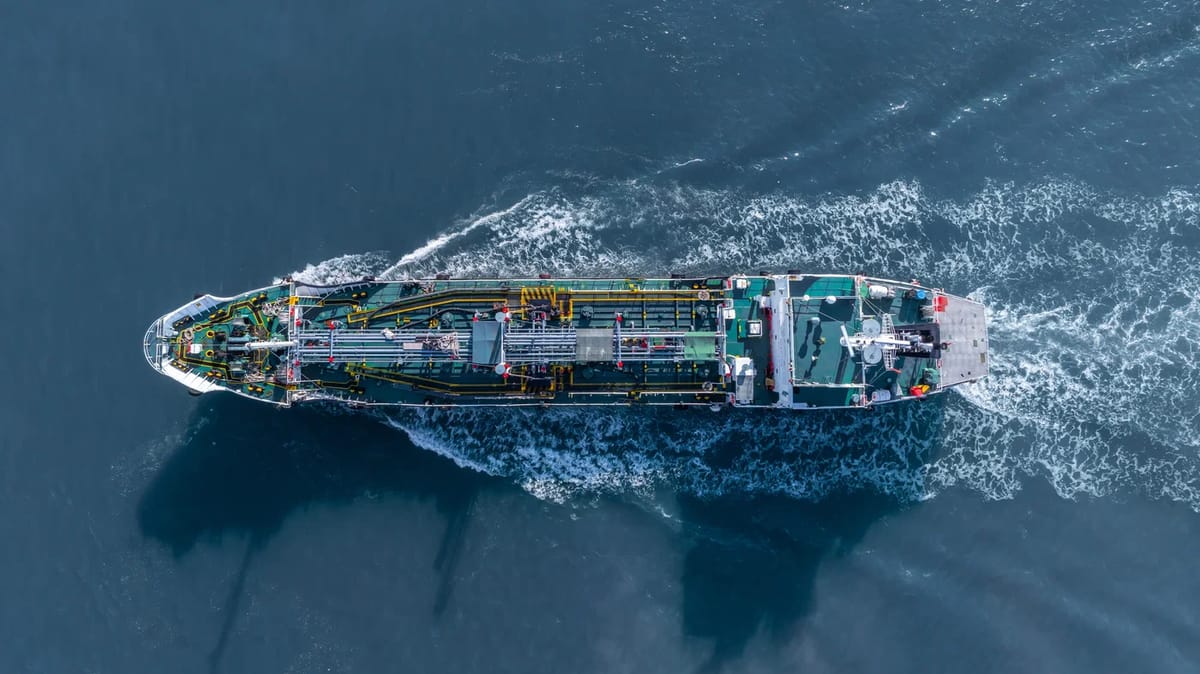
The United States has significantly expanded pressure on Iran, not only in the military arena but primarily on the economic and maritime levels. The U.S. Navy has begun boarding oil tankers linked to Iran and seizing commercial vessels in international waters.
On Sunday night, the U.S. military took control of the Iranian cargo ship TOUSKA, which was attempting to violate the blockade imposed on vessels departing from or heading toward Iran.
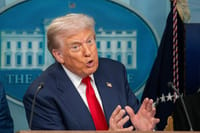
President Trump stated that it was a large cargo ship, "weighing close to that of an aircraft carrier." According to him, "it did not end well for them" and the U.S. Navy vessel caused a "hole in the engine room" of the ship.
Additionally, between Monday night and Tuesday, American forces conducted a boarding and maritime inspection of the oil tanker "M/T Tifani," which is not registered under any country, in the Indo-Pacific Command area of responsibility.
The U.S. Department of War emphasized that this was a tanker identified as aiding illegal trade networks and was already under sanctions due to suspicions of providing material support to Iran. This marks a dramatic move that expands enforcement actions far beyond the Persian Gulf, signaling a global strategy aimed at the core of Tehran's income.
Since the beginning of the conflict, maritime intelligence experts and Western analysts have reported the "disappearance of ships" in the Gulf. These are vessels linked to Iran, mostly tankers, some of which managed to "bypass" the blockade imposed by the U.S. Navy on Iranian ports in the Strait of Hormuz.
Consistently, since the beginning of the year, American forces have seized 10 oil tankers they claim belong to the shadow fleet, while France and India have seized four others. This is part of an intensified effort by Washington to thwart the circumvention of sanctions.
What is the "Shadow Fleet"?
The term “shadow fleet” has become a central component of Iran’s shadow economy in recent years. It refers to a network of tankers operating under changing flags, without proper insurance, and often while turning off identification systems to bypass sanctions and sell oil to Asian markets.
According to estimates, a significant portion of Iranian oil exports, about 1.6 million barrels a day, flows mainly to China, where it is purchased by small, independent refineries known as “teapots.”
These refineries often pay in Yuan instead of Dollars. Simultaneously, China increased its oil import quota for the non-governmental sector from 140 million metric tons in 2018 to 257 million metric tons this year. Payments are transferred through small Chinese banks, such as Bank of Kunlun, which have limited global operations and therefore less to lose from American sanctions. Front companies established by Iran in Hong Kong and elsewhere assist in converting the funds into Dollars or Euros.
How it Works
As the number of tankers carrying oil from Russia and Iran (and until recently, Venezuela) has grown over the last four years, so have the methods of disguise: route and identity changes, concealing the source of cargo, and creating false documents, making the mission to stop the network particularly complex.
- Ship-to-Ship (STS) Transfers: One of the main methods, where one tanker empties its cargo into another in the middle of the sea to obscure the oil's origin.
- Going Dark: Disabling the Automatic Identification System (AIS) so the ship enters and leaves a port without leaving a digital footprint, or changing the unique IMO identification number.
- Signal Spoofing: Creating deliberate false signals so ships "appear" in a location where they are not actually present.
- Flags of Convenience: Using false flags from small, non-Western countries that outsource their registry management, often with loose oversight.
The Scale of the Fleet
A deep investigation by the Wall Street Journal estimates this fleet includes about 1,300 ships, mostly on Iranian and Russian trade routes. In 2025, sanctions were imposed on 860 vessels, more than five times the previous year.
The shadow fleet was estimated to be responsible for 6%–7% of the global crude oil trade in 2025. According to the same estimate, Russia relied on the fleet last year to transport about 80% of its oil and oil products.
Actions by the U.S. and its allies against the maritime smuggling networks have significantly increased costs and risks for fleet operators. The West hopes to increase the risk and decrease the benefit of smuggling to neutralize its effectiveness.