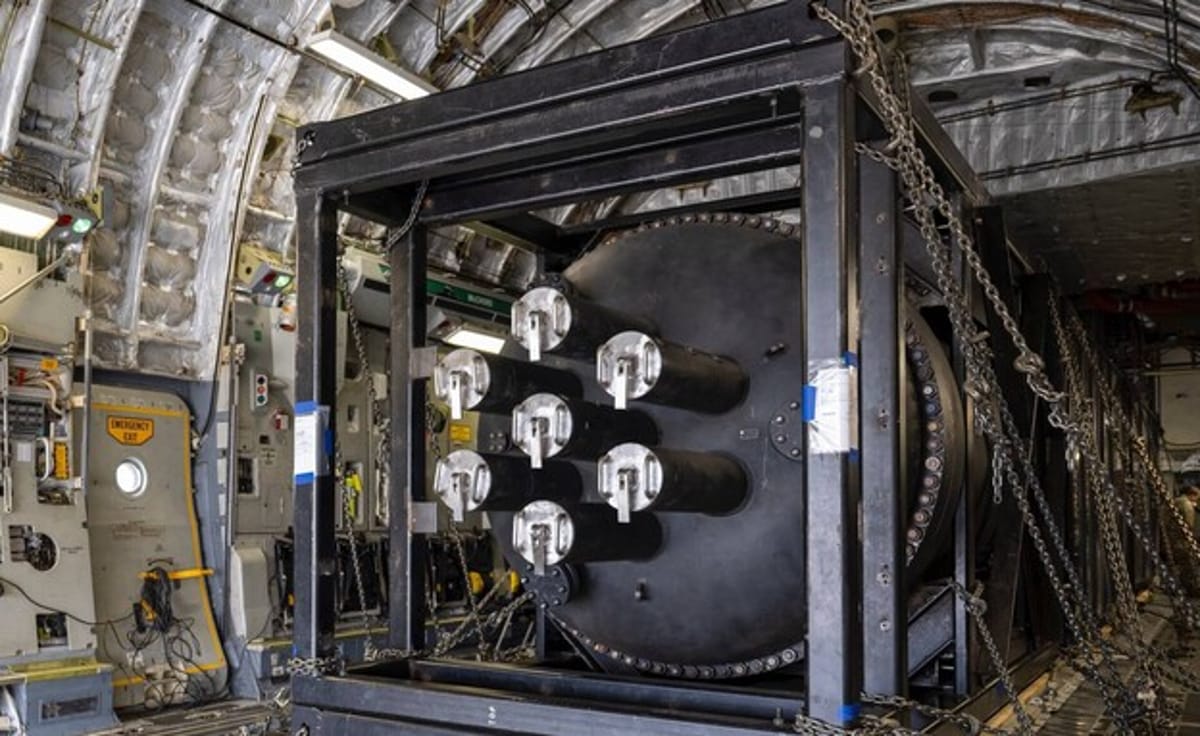
In a milestone for both military logistics and national energy policy, the United States Department of War has successfully transported a next generation nuclear reactor via military transport aircraft for the first time in history. The operation involved three C-17 Globemaster aircraft flying from a base in California to an Air Force facility in Utah. This historic flight is a direct execution of President Donald Trump’s energy dominance agenda, which seeks to integrate advanced nuclear technology into the American infrastructure to meet the surging electricity demands of national security and Artificial Intelligence development. By proving that a nuclear reactor can be deployed rapidly across the country, the administration is signaling a future where American forces can operate with absolute energy independence in any environment.
The Mobile Power Revolution
The reactor, developed by the private firm Valar Atomics, is roughly the size of a large car but possesses the staggering ability to generate enough electricity to power approximately 5,000 homes. During the flight, high ranking officials from the Pentagon and the Department of Energy sat alongside the reactor components, which were transported in an unfueled state to ensure safety. To mark the occasion, representatives from the company distributed black hats featuring the slogan "Make Nuclear Great Again," a nod to the President's broader political movement and his specific focus on reviving the American nuclear sector through four executive orders signed this past May.
Michael Duffy, the Assistant Secretary of Defense, noted that this flight brings the nation closer to deploying nuclear energy at the exact time and place where it is needed most to give American warfighters the tools to win. While supporters of the technology highlight its ability to provide cheap, safe, and reliable energy to remote locations without the vulnerabilities of traditional fuel supply chains, critics have raised concerns about the rapid deployment of unproven systems. Nevertheless, the administration remains committed to the project, with the reactor expected to begin initial operations in July and reach full power capacity before the end of the year, potentially revolutionizing how the military manages power during a war.