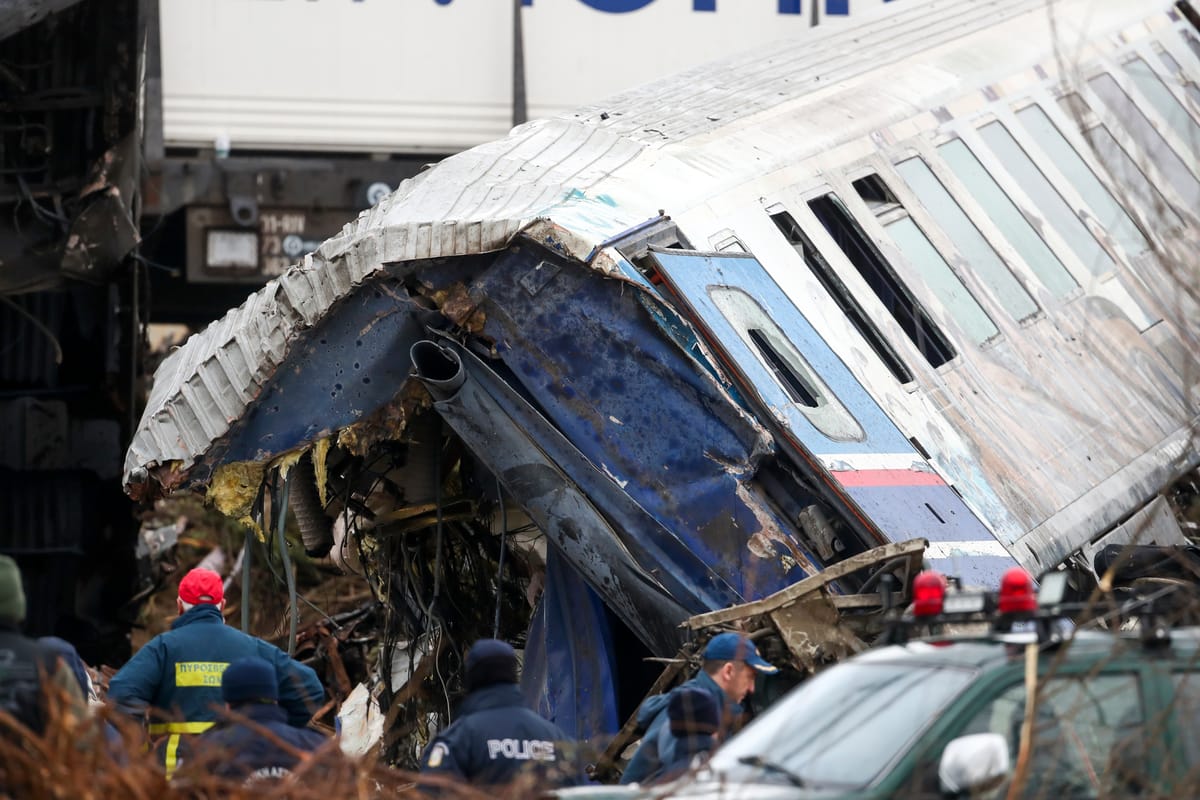
Spain awoke Monday to news of one of the most severe rail accidents in recent decades after two high-speed trains derailed and smashed into each other in the southern province of Córdoba late Sunday evening, claiming at least 39 lives with fears the toll could rise further. The collision near the town of Adamuz, roughly 370 kilometers south of Madrid, occurred around 7:45 p.m. when the rear section of a Málaga-to-Madrid train carrying about 300 passengers came off the tracks and struck an oncoming Madrid-to-Huelva service with around 200 people aboard.
Both trains were traveling at speeds exceeding 193 km/h, with the derailed train moving at approximately 210 km/h and the second at 204 km/h. Authorities reported that the impact was so violent it tore passengers from their seats and ejected them through broken windows, with some bodies discovered hundreds of meters away from the wreckage. The front carriages of the second train absorbed the brunt of the crash, derailing completely and sliding down a roughly four-meter embankment, an area where officials believe the highest number of fatalities occurred.
Transport Minister Óscar Puente described the crash as "very strange," noting that the section of track is straight and flat and had undergone maintenance as recently as May. The derailed train was less than four years old and operated by the private company Iryo, while the struck train belonged to the state-run Renfe. Puente said the investigation could take about a month to determine the cause.
Rescue teams and police continue searching the twisted wreckage, described by Andalusia regional president Juanma Moreno as "a huge pile of mangled metal." Moreno confirmed that heavy equipment will soon be brought in to lift the carriages, raising concerns that additional victims may still be trapped underneath. He added that search efforts extend to surrounding fields after bodies were found far from the impact zone, clear evidence that some passengers were thrown out during the collision.
A total of 159 people were injured, with five in critical condition and 24 listed as serious. A local sports center in Adamuz was converted into a makeshift hospital, and the Spanish Red Cross established a support center for survivors and grieving relatives. The Civil Guard opened a special office in Córdoba for families of the missing to submit identification details and DNA samples for victim identification.
Survivors recounted scenes of terror. One passenger told media it felt like an earthquake as the train left the rails. A woman named Ana, traveling with her sister and their dog from Málaga to Madrid, described the horror to British reporters through tears. She said some people were fine while others suffered catastrophic injuries, with her sister hospitalized in serious condition and their dog missing. She recalled passengers dying around her without any way to help.
Prime Minister Pedro Sánchez expressed deep sorrow, calling it a night of profound pain for the nation, and canceled his trip to the World Economic Forum in Davos to focus on the crisis. He is expected to visit the site soon.
Reuters reported that investigators discovered a broken rail joint in the accident zone, while the Spanish train drivers' union revealed it had warned infrastructure manager ADIF in an August letter about severe track wear on high-speed lines, including the very section involved. The union claimed potholes, bulges, and overhead line imbalances caused frequent faults and damage to trains, with drivers raising concerns almost daily but receiving no meaningful response. The revelations have intensified scrutiny over rail safety and maintenance standards across Spain's high-speed network.