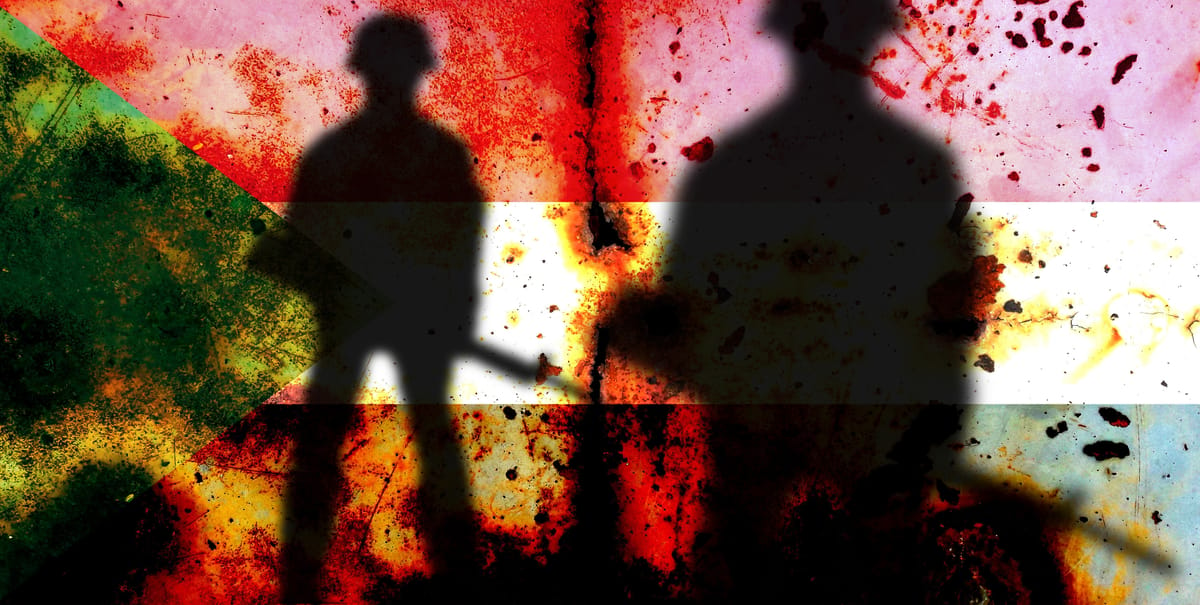
After 18 months of siege, the paramilitary Rapid Support Forces (RSF) announced that it had seized control of El Fasher, the last major stronghold of the Sudanese Armed Forces (SAF) in the Darfur region. The breakthrough has unleashed what rights groups and eyewitnesses describe as a wave of atrocities, including summary executions and ethnic targeting of civilians, trapping over 250,000 people, half of them children, in a city already ravaged by famine and bombardment.
The RSF, led by warlord Mohamed Hamdan Dagalo (known as Hemedti), stated it had overrun the SAF's Sixth Infantry Division headquarters, marking a potential end to army control in all five Darfur states and raising fears of Sudan's de facto partition along military lines.
SAF chief Abdel Fattah al-Burhan confirmed the withdrawal on October 27, citing "systemic destruction and the systemic killing of civilians" by the RSF, vowing to "avenge what happened to our people in El Fasher."
Reports of mass killings surfaced immediately after the RSF advance. The Sudan Doctors Network, a medical advocacy group, condemned the assault as a "heinous massacre" and "crime of ethnic cleansing," stating that dozens of civilians had been killed since the takeover of the military base.
The UN Human Rights Office documented "appalling reports" of summary executions, including videos showing unarmed men shot by RSF fighters, often with ethnic motivations targeting non-Arab communities like the Fur and Zaghawa.
Eyewitnesses who fled to nearby Tawila described RSF fighters detaining and killing those attempting to escape, with hundreds, including women and children, left dehydrated, malnourished, and traumatized.
The International Organization for Migration reported that 26,000 people had been displaced in the immediate aftermath. Looting of hospitals and essential infrastructure has further crippled the city, where food prices were already five times the national average due to the blockade.
Social media has flooded with graphic videos purporting to show RSF executions, including groups of blindfolded civilians shot at close range and bodies strewn in streets. One widely shared clip from October 27 depicts fighters humiliating and then gunning down refugees in the countryside.
Activists on X (formerly Twitter) have labeled it "ethnic cleansing in real time," drawing parallels to earlier RSF massacres in El Geneina, where up to 15,000 were killed.
The Sudanese Journalists Syndicate demanded the release of reporter Muammar Ibrahim, arrested by RSF forces, after viral videos showed him surrounded by fighters.
Telecommunications blackouts and Starlink outages have hampered verification, but UN officials warn the situation is "extremely precarious."
El Fasher's fall caps a grueling 18-month blockade that began in May 2024, exacerbating what the UN has called the world's largest humanitarian crisis.
The city, once home to 1.1 million, now shelters 413,000, down 62% from pre-war levels, with 260,000 trapped inside amid famine.
Recent RSF drone strikes killed at least 57 in a displacement camp on October 11, including 22 women and 17 children, and 53 more between October 5-8.
In the first half of 2025 alone, 239 children died of hunger, per the Sudan Doctors Network.
This escalation stems from Sudan's civil war, ignited in April 2023 over integration of the RSF, formerly the Janjaweed militias implicated in Darfur's 2003 genocide, into the SAF.
The conflict has killed tens of thousands and displaced millions, with external backers like the UAE (for RSF) and Egypt, Saudi Arabia, and Russia (for SAF) fueling the violence.
Sudan's Information Minister Khaled al-Aisir dismissed RSF claims as "psychological warfare," while Darfur Governor Minni Minnawi called for probes into the "violations and massacres."
U.S. officials, including Trump's Africa envoy Massad Boulos, demanded humanitarian corridors, but critics like Avaaz's Shayna Lewis accused the international community of failing to protect civilians.
As bodies pile in El Fasher's streets and refugees scatter, the world watches a city that UN investigators once warned could seal Darfur's "completion of genocide."
With indirect U.S.-brokered talks ongoing in Washington, activists plead: the silence must end before Darfur's last refuge becomes its final graveyard.