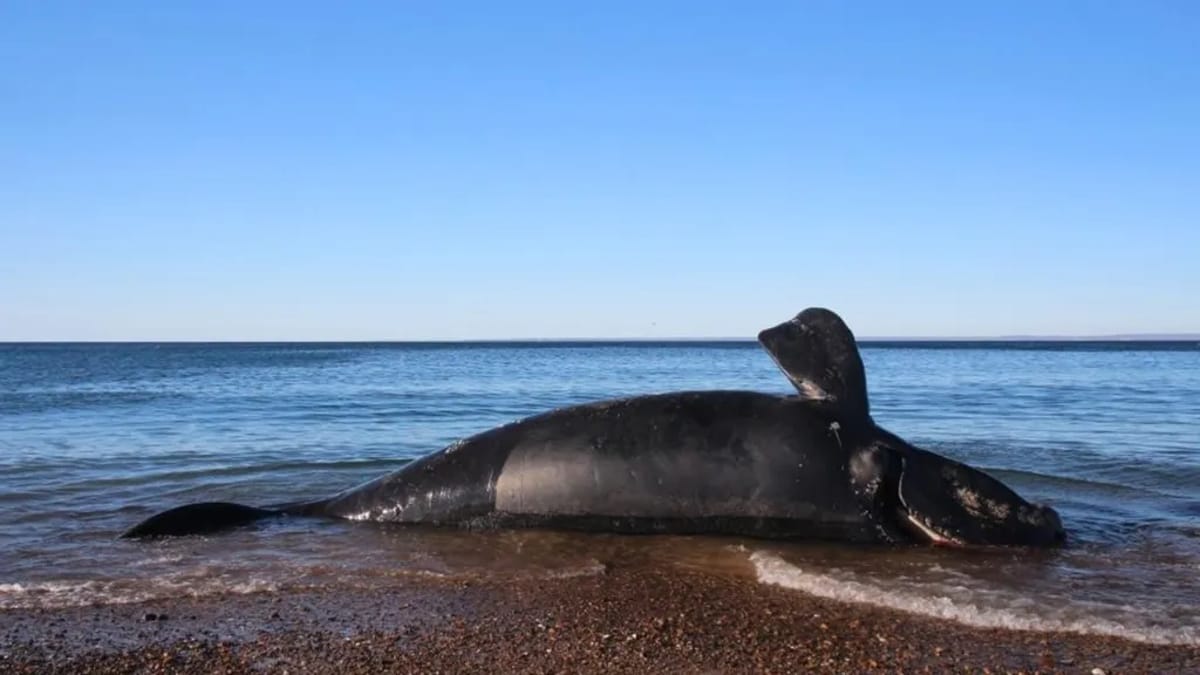
An alarming and unexplained phenomenon has been unfolding along the coast of Patagonia, Argentina, since June: more than 300 southern right whale calves have been found dead, in what scientists are calling an extraordinary mortality event. The number is nearly three times the previous record of 113 calf deaths, set in 2012.
The mass die-off was discovered along the shores of the Valdés Peninsula, one of the world's most important breeding grounds for the species. Each year, female whales arrive to give birth and raise their young in the shallow, protected waters. But this year, instead of calves swimming alongside their mothers, hundreds of carcasses have been washing up along the coast.
Initial laboratory tests detected a pathogenic bacteria called Erysipelothrix rhusiopathiae in some of the calves. The bacteria is capable of causing severe infections and death. Scientists are familiar with the organism and have found it in whales in the region before, but it remains unclear why this year has seen such a deadly outbreak.
One of the leading theories focuses on the seagulls that inhabit the area. For decades, researchers have documented seagulls pecking at the backs of whales as they surface, sometimes creating open wounds. Scientists are now investigating whether these wounds serve as an entry point for the bacteria, or whether the seagulls themselves are transmitting it between whales.
Researchers are also examining the possibility that changes in water temperature, environmental conditions or food availability have weakened the calves' resistance to infection. They have not ruled out the chance that the bacteria has mutated into a more virulent form.
Scientists emphasize that it is still too early to determine how the die-off will affect the whale population in the long term. However, they warn that if similar events occur in the coming years, the consequences could be severe.