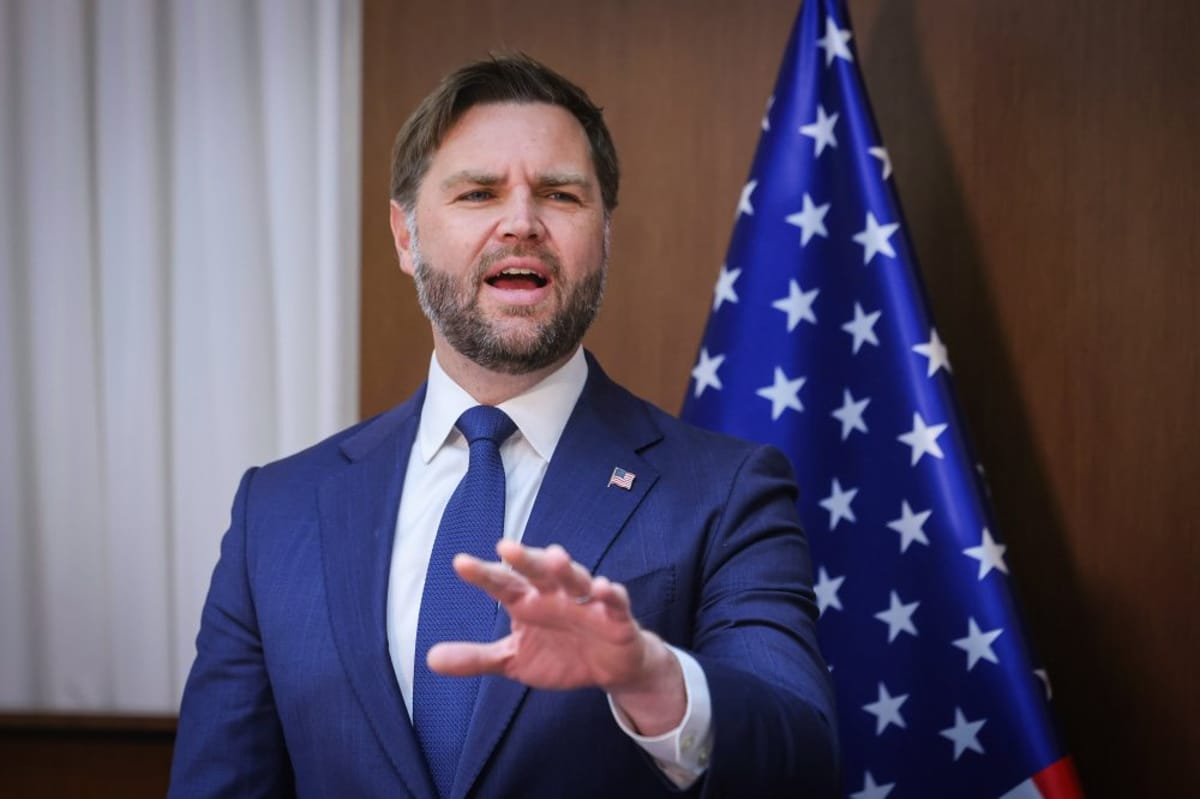
Vice President JD Vance, long seen as a leading contender for the Republican presidential nomination in 2028, surprised reporters when he said he may not run for the White House after President Donald Trump's term ends.
Vance made the statement in a conversation with reporters, catching many off guard. He had been widely viewed, alongside Secretary of State Marco Rubio, as one of two realistic options to succeed Trump at the head of the Republican Party.
The comment comes amid concern among senior Republican figures and in Israel over Vance's ties to elements of the far right, some with antisemitic leanings. Many in Israel have viewed Vance's potential rise to lead the party as the moment when Israel could lose its standing even among Republicans, given his reported close personal friendship with figures such as Tucker Carlson, a prominent antisemitic influencer.
Vance has at times expressed anger toward Israel and publicly rebuked Israeli politicians and leaders.
If Vance does not become the Republican nominee in 2028, and figures such as Marco Rubio take the reins instead, Israel may have the time it needs to rebuild ties with younger Republicans before antisemitic or anti-Israel views take root in the party the way they have in the Democratic Party.