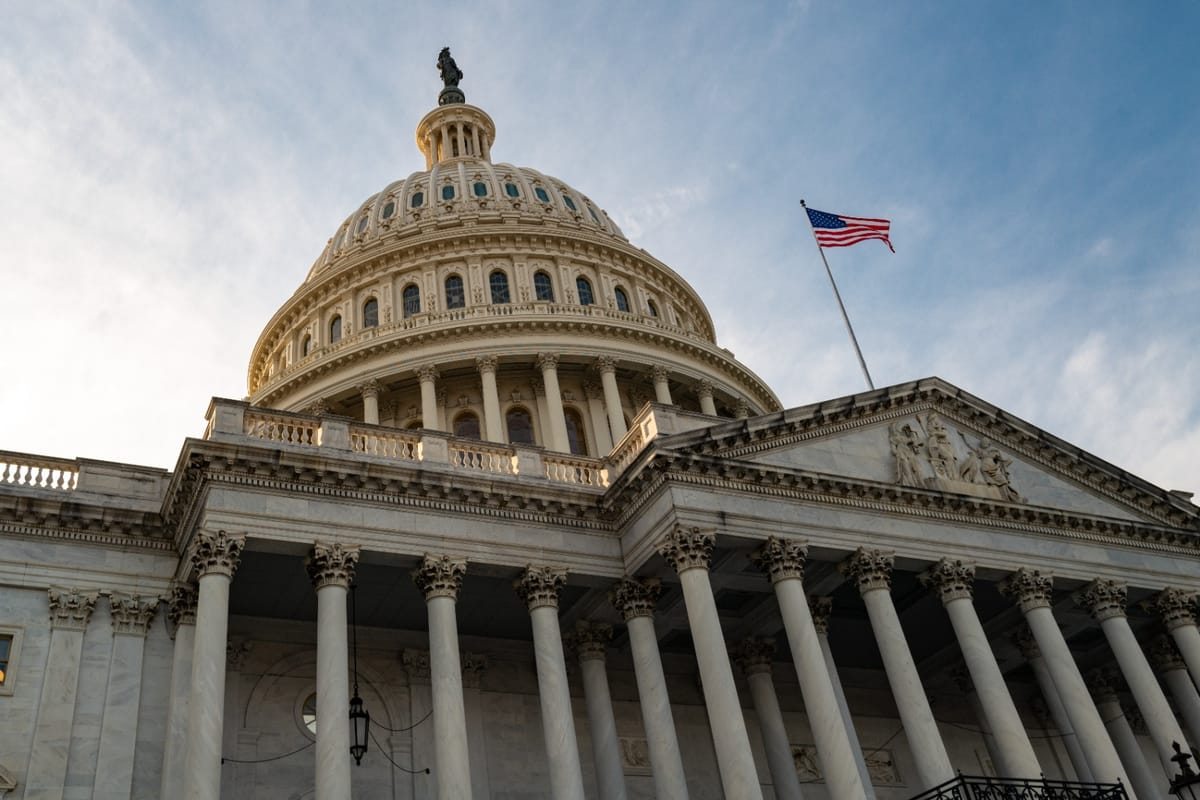
The midterm elections dealt a crushing defeat to President Donald Trump and the Republican Party he leads, and now may be the right time to understand how the system works, the one that could paralyze the sitting American administration for the next two years.
The Senate and the House of Representatives are the two "houses of power" that together form the parliament accompanying the presidential system in the United States, and together they make up the American "Congress." The division between the two houses is designed to maintain a delicate and calculated balance between the power of the large, populous states and the power of the smaller states that together form the great superpower, the United States of America.
Who against whom?
The House of Representatives (the lower house) includes 435 representatives, with the distribution of seats determined by population size, a large state like California gets dozens of representatives, while a small state like Alaska gets only one. The term length is just two years (the entire House stands for re-election in every election cycle), and the minimum age to be elected is 25. In terms of unique powers, the House initiates tax and budget bills and serves as the "prosecutor" in presidential impeachment proceedings.
The Senate (the upper house) includes only 100 senators, on the basis of equal representation, exactly two senators per state, regardless of its size. The Senate term is six years (with staggered elections, so about one-third of the body turns over every two years), and the minimum age to be elected is 30. The Senate holds unique powers to confirm the president's senior appointments (judges, cabinet members, ambassadors), to ratify international agreements, and it serves as the "court" in impeachment proceedings.
For a new federal law or budget to pass in the United States, both houses must approve the exact same text, and only then is the bill sent to the president for signature.
How it began
The system and the names of the houses were not invented by one person, but evolved over time from a historic compromise and inspiration from the ancient world and from Britain during the United States Constitutional Convention in 1787. Those behind the design of the system were the Founding Fathers of the United States (the Framers).
The deal that united America: The two-house system (bicameral parliament) was heavily influenced by the British Parliament, divided into the House of Lords and the British House of Commons. However, the specific structure of the American Congress was born thanks to a key figure named Roger Sherman, a delegate from Connecticut. At the Constitutional Convention, a fierce debate raged: the large states wanted representation by population size (the Virginia Plan promoted by James Madison), while the small states demanded equal representation for each state so they wouldn't be swallowed up (the New Jersey Plan). Sherman proposed the "Connecticut Compromise" (known as the "Great Compromise"): to establish two houses, one that would represent the people according to population size, and one that would give equal power to each state.
Rome, elders, and no classes
The Senate: The name was taken directly from ancient Rome (the Roman Senate). The word comes from the Latin root Senex, meaning "elder" or "council of elders." The Founding Fathers (especially James Madison) wanted this house to be the more mature, experienced, settled and stable body that would restrain hasty decisions by the masses.
The House of Representatives: The name reflects the direct purpose of this house, to be the body that directly and proportionally represents the citizens themselves (the "representatives" of the people). It was a democratic alternative to the British name "House of Commons," to emphasize that in America there are no classes or commoners, but representatives elected by the public.
The names of the houses and the structure of the Congress composed of them were officially approved in the United States Constitution and entered into force in 1789.